DividendeOhneEnde · June 2, 2019
Beiersdorf
Stock: Top! Dividend: Flop?
- Ticker
- BEI.F
- ISIN
- DE0005200000
- WKN
- 520000
- Country
- Germany
- Industry
- Consumer staples
- Sector
- Household & personal products
- Market cap
- $22.8 billion
- Dividend yield
- 0.70%
- Payouts
- annually
- First dividend
- 1947
- Status
- Dividend Contender
- Dividend yield
- 0.7%
- Dividend growth
- 0%
- Payout ratio
- 21.5%
- Share price growth
- 74.4%
- Earnings growth
- 2.1%
- Revenue growth
- 3.5%
- Debt ratio
- 6.1%
The DOE score was my rating at the time, based on these figures, from A (very good) to E. Figures as of October 11, 2022, shortly before the blog ended.
Contents
Skin care products everyone knows
Beiersdorf AG is probably one of the best-known German companies - apart from our auto industry, that is. Almost everyone knows and uses products like Labello, Nivea cream or Hansaplast bandages. But even though the Hamburg-based company has very strong brands in its portfolio, that doesn't mean it can rest on its laurels.
Beiersdorf puts a lot of money into researching new products. And that's necessary, too - after all, the entire consumer goods industry is currently going through an upheaval. In the past, there wasn't much choice on the supermarket shelf - you simply bought what you knew. If you're a company with strong brands, that naturally makes things easy. Today, however, consumers shop comfortably online. There, smaller manufacturers have a much easier time selling their products. But don't worry, Beiersdorf is very well positioned and will be able to hold its own in the new market too.
The history and business model of Beiersdorf AG
It all started with Paul C. Beiersdorf, when he bought a pharmacy in Hamburg in 1880. Even back then, the area around the port was densely populated, and the pharmacy earned him handsome profits. Since he also wanted to put his skills in physics to the test, he additionally set up a laboratory, where 2 years later, together with a dermatologist, he produced the first medical adhesive bandage. Beiersdorf filed the patent and Hansaplast was born.
In 1890, businessman and pharmacist Dr. Oscar Troplowitz took over the laboratory, which by then was based in Hamburg-Altona. Troplowitz thought in a more customer-oriented and business-minded way than Beiersdorf - his goal was to build a branded goods company. To that end, he also established international business contacts and eventually entered into a partnership with the American wholesaler Lehn & Fink. He also built a production plant in Hamburg-Eimsbüttel (which, by the way, is still the company's headquarters today).
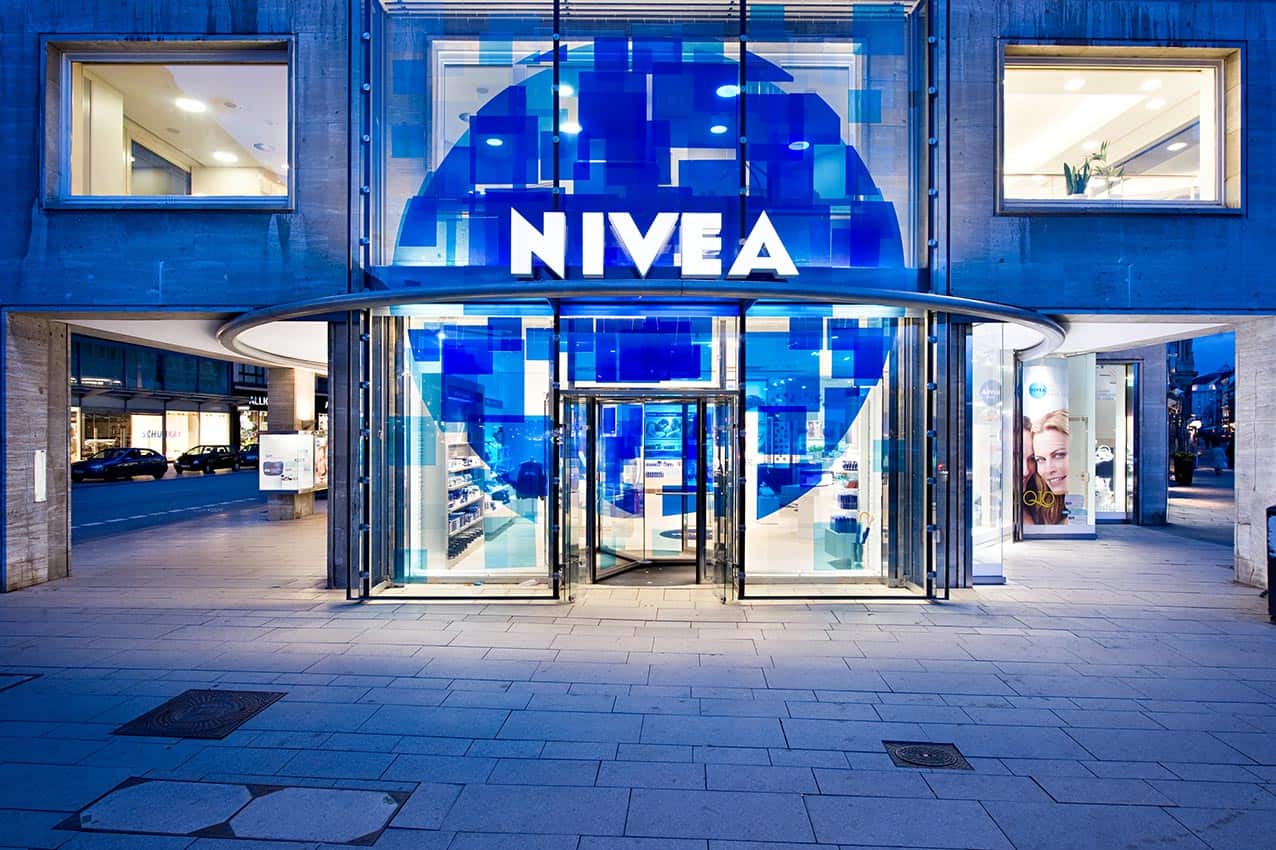
Troplowitz also continued the collaboration with Beiersdorf's dermatologist. On his recommendation, he later hired the chemist Dr. Isaac Lifschütz. In 1900, Lifschütz invented the ointment base Eucerit, a substance obtained from sheep's wool wax. A little later, products from the brands Eucerin, Labello and Nivea conquered the market. Thanks to its blue tin, the latter became a cream icon that consumers instantly recognized on the supermarket shelf.
Today, Beiersdorf does business with 12 different brands. Many of them are in cosmetics - from deodorants and perfumes to the skin care products already mentioned. But the company knows its craft in other areas too. The subsidiary Tesa, which of course specializes in adhesives, is currently growing very fast. Besides regular consumers, who mainly need adhesive tape for the office and for crafts, industry and the trades are important customers. There, adhesives are used in many ways - from sealing windows and doors to attaching touchscreens in cell phones.
What does the future hold for Beiersdorf?
As I wrote in the introduction, the consumer goods industry is going through an upheaval. Of course, Beiersdorf isn't simply backing down; instead, it's launching an investment offensive. Concretely, this means the company is providing an additional 70-80 million euros for research and for the profitability of its cosmetics products. That doesn't mean customers will be pestered with the umpteen-thousandth new version of a deodorant, though. On the contrary: the plan is to reduce the number of new launches and focus on real, meaningful innovations instead.
Beiersdorf has also expanded and modernized its research and development labs in emerging markets like China, Mexico and India. This way, the company is trying to position itself better in the respective markets. Even though these investments will shrink profits at first, I think they'll pay off in the long run.
So what's going on with the dividend?
Hm, I can't really make sense of Beiersdorf on this point. It does pay an annual dividend of currently 0.8%, but it hasn't been raised since 2007. Compared to a savings account, 0.8% isn't bad, but DividendeOhneEnde readers of course know that there are far more attractive dividend gems out there. At around 24%, the payout ratio is still very low, so a lot of money stays in the company for investments and acquisitions. But Beiersdorf hasn't found anything on that front yet either - so it's currently sitting on more than 4 billion euros that are available.
Conclusion:
Beiersdorf is a German showcase company that makes products for everyday needs and sells them very successfully. What wouldn't companies do to have brands like Nivea, Eucerin or Tesa in their portfolio? Given the ongoing investments, which will pay off in a few years, I think Beiersdorf is a great investment from a growth perspective. Dividend hunters, on the other hand, will find more lucrative investment opportunities ...
Epilogue · November 1, 2026
What became of it
7 years and 4 months have passed since this article. If you had invested €1,000 on the day it was published, this is where you would be today:
Bitcoin came out ahead.
- Beiersdorf, incl. dividends:
- The same €1,000 in Bitcoin: