DividendeOhneEnde · March 15, 2020
Linde
The air supplier
- Ticker
- LIN
- ISIN
- IE00BZ12WP82
- WKN
- A2DSYC
- Country
- Ireland
- Industry
- Materials
- Sector
- Chemicals
- Market cap
- $140.4 billion
- Dividend yield
- 1.50%
- Payouts
- quarterly
- First dividend
- 1992
- Status
- Dividend Aristocrat
- Dividend yield
- 1.5%
- Dividend growth
- 9.9%
- Payout ratio
- 64%
- Share price growth
- 110.2%
- Earnings growth
- 11%
- Revenue growth
- 26.3%
- Debt ratio
- 17.7%
The DOE score was my rating at the time, based on these figures, from A (very good) to E. Figures as of October 11, 2022, shortly before the blog ended.
Contents
Is there more to it than just hot air?
In my article on Mondelēz last week, I was still talking about a corona correction. In the meantime, the markets have plunged much further and we can now officially speak of a crash. What's special about this stock market crash is mainly its breakneck speed. Whenever the market tries to pull itself together for a day, another, even harder day down follows. How much longer will this go on? And how should investors react now?
Of course, I don't have a crystal ball either, but what's certain is that the full extent of the coronavirus fallout can't be estimated yet. As long as this uncertainty exists, the stock markets will probably keep going down. But once the virus is under control and an economic recovery is in sight, a bottom will form and stocks will rise again.
Will there be losers? Yes, definitely. For some companies that were already struggling before, an economic crash like this can be the death blow. What would I advise as an investor now? I'd look for "safe havens" for my money. Companies you can't do without. And there are a few of those, some of which are even available at a discount right now. Such as the formerly German gas producer Linde.
The history and business model of Linde Public Limited Company
Carl Paul Gottfried Linde was born on June 11, 1842, in Berndorf, Upper Franconia. His father Friedrich was an Evangelical Lutheran pastor who was supposed to take over a new parish. So the family moved to Kempten. There Carl attended the Gymnasium and passed his Abitur. At the age of 19 he moved to Zurich to study mechanical engineering. However, three years later he was expelled without a degree because he took part in a student protest. One of his former professors, the engineer Franz Reuleaux, then got him an apprenticeship at a cotton mill near Kempten. He didn't work there long either, though, and in the meantime moved first to Berlin, then to Munich. In the Bavarian capital, Linde took over management of the design office of the Krauss locomotive works. In 1868 he began teaching mechanical engineering at the Munich Polytechnic School (forerunner of the Technical University of Munich). There he focused more and more on modern refrigeration technology. In 1871 he presented an improved refrigeration process, and within a very short time the first interested breweries got in touch. For them it was especially important to get the cooling problem under control. They could fall back on natural ice, but especially in milder winters there wasn't enough of it. So Linde designed a refrigeration system for Munich's Spaten brewery (today part of AB InBev) that allowed them to carry out sensitive fermentation processes at constantly low temperatures.
Linde kept improving his systems, and more and more breweries all over Europe became his customers. He eventually gave up his teaching post and, on June 21, 1879, together with Gabriel Sedlmayr of Spaten-Bräu, his former boss Georg Krauß and three other colleagues, founded the Gesellschaft für Linde's Eismaschinen AG (Linde's Ice Machine Company). The company quickly became Europe's leading expert in refrigeration technology. By 1890 it had sold around 625 systems - mainly to breweries. That year Linde gave up his position as head of the executive board and handed it over to his employee Friedrich Schipper. Although Linde withdrew from day-to-day operations, he remained active on the supervisory board. He was drawn back to Munich, where he once again taught as a professor. There he also tinkered with a carbon dioxide refrigeration machine, with which he later developed a process for liquefying air (the Linde process).
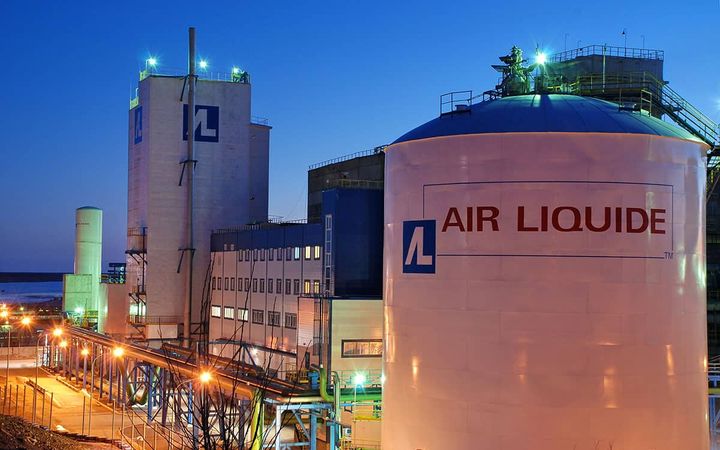
The potential of this process was quickly recognized, and the new business was integrated into the existing company. In addition, Linde founded the subsidiary Linde Air Products in the USA in 1907. During World War I, however, it was confiscated and later sold on to the Union Carbide Corporation. Although the business developed superbly, it was spun off in 1989, and the new Praxair Inc. was taken public as an independent company. The German Linde AG also developed superbly over the years. So it was only natural to reunite with the former subsidiary. In fall 2018 the mega-merger was completed, and since then they've been operating as one company again. On top of that, it has been the global market leader again ever since - the French company Air Liquide had to give up first place. The new Linde plc supplies industry with various gases that are urgently needed in manufacturing, chemicals and power generation, but also in the food industry and in healthcare. In addition, it's very well positioned as a plant builder and engineering services provider.
How will Linde plc's business develop in the future?
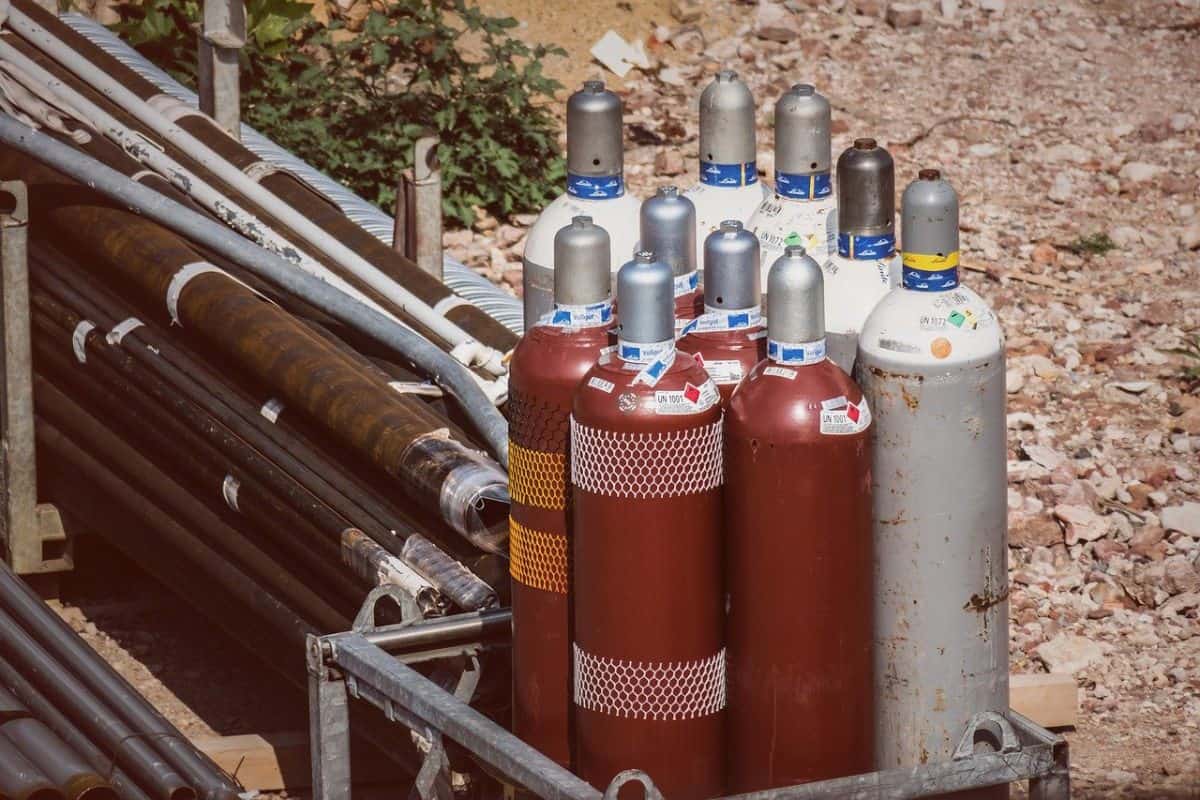
Here I'm extremely optimistic. Linde plc's products and services are needed pretty much everywhere in industry. Oil production can't do without its specialty gases, it puts the fizz in your delicious soft drink, the plump bag of chips can't do without it either, and in the electronics industry it ensures a dust-free working environment. Even the healthcare sector can't do without Linde's gases - think ventilators. Mind you, those were just a few examples of applications. So you quickly notice that Linde's products are needed everywhere. Naturally, that results in a steadily growing customer network. And since it mostly signs long-term supply contracts with its customers, it has a constant, stable and, above all, predictable cash flow.
Some investors call the newly merged Linde plc a hybrid. A German and an American company decide to merge, get domiciled in Ireland for tax reasons and are then run from England. Sure, at first that all sounds unnecessarily complicated, but the whole thing was chosen deliberately in order to set up a smooth and tax-optimized corporate structure. Since the takeover, CEO Steve Angel has been trimming the company for greater efficiency - and successfully so. Profit grew by an impressive 14 percent to 5.3 billion US dollars compared to the previous year.
Apart from the existing business, the company is of course also working intensively on hydrogen technologies. For an environmentally conscious and sustainable future, switching to hydrogen would be ideal. Unfortunately, we're not that far yet. But when the time comes, Linde will definitely benefit from it.
And what about the dividend?
Praxair shareholders have been receiving a profit distribution in the form of dividends since 1992. Since then the dividend has also been raised year after year (the average over the last 10 years is 9.3 percent). The Dividend Aristocrat currently pays a dividend yield of around 2.2 percent. The payout ratio, at just under 85 percent, is pretty high, though. You should be cautious with payout ratios that are permanently too high - after all, there still has to be enough money left in the company itself for it to keep developing.
Conclusion:
Linde has a lot more to show than just hot air. It supplies its gases to many different industries and is firmly anchored in their production chains there. With long-term supply contracts, it secures a regular inflow of cash. The future prospects also look very good. Investors looking for a stock that really steps on the gas are in great hands here.
Epilogue · November 1, 2026
What became of it
6 years and 7 months have passed since this article. If you had invested €1,000 on the day it was published, this is where you would be today:
Bitcoin came out ahead.
- Linde, incl. dividends:
- The same €1,000 in Bitcoin: