DividendeOhneEnde · October 3, 2021
MSA Safety
The safety equipment maker
- Ticker
- MSA
- ISIN
- US5534981064
- WKN
- A1XFCC
- Country
- USA
- Industry
- Industrials
- Sector
- Industrial services
- Market cap
- $4.6 billion
- Dividend yield
- 1.60%
- Payouts
- quarterly
- First dividend
- 1918
- Status
- Dividend King
- Dividend yield
- 1.6%
- Dividend growth
- 6.1%
- Payout ratio
- 176.5%
- Share price growth
- 210.6%
- Earnings growth
- -20.5%
- Revenue growth
- 4.4%
- Debt ratio
- 23.9%
The DOE score was my rating at the time, based on these figures, from A (very good) to E. Figures as of October 11, 2022, shortly before the blog ended.
Contents
Safely not a bad investment
I'm often asked whether investing in stocks is even safe. The short answer is a clear: "No!". Fact is, stocks can fall to zero, and then you have to accept a total loss of your investment. That's why, in my opinion, it's absolutely essential to study the company thoroughly before investing, to have an entry and exit scenario up your sleeve, to bring plenty of patience, to only invest money you could do without if worst comes to worst and, of course, never to put all your eggs in one basket. Unfortunately, last year I heard a lot of stories about Wirecard victims who lost huge amounts of money - money they actually urgently needed.
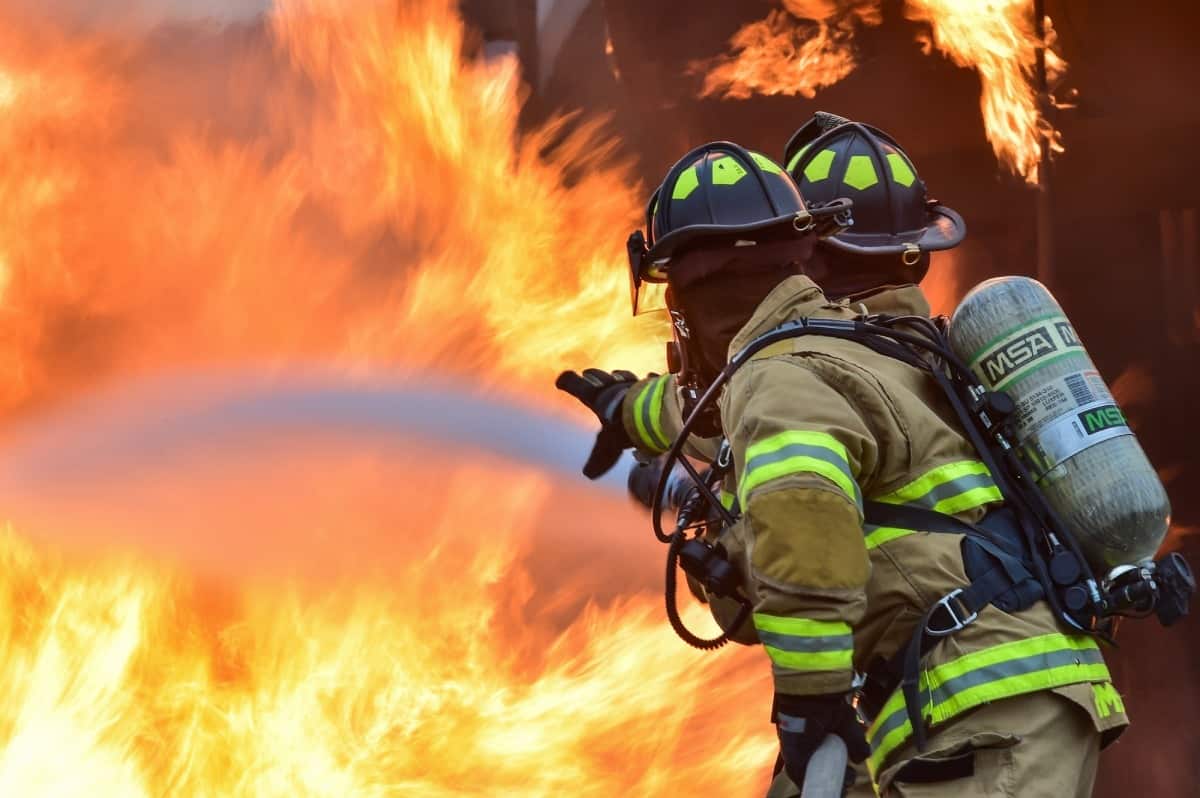
Today I'd like to introduce a rock-solid, long-term-oriented company with a rather boring business model. I'm talking about MSA Safety Incorporated - the global market leader in protective and safety products. Its customers are mainly in the oil, gas and petrochemical industries, fire departments, construction, mining and the military. So today let's take a look at whether an investment here could pay off in the long run.
The history and business model of MSA Safety Inc.
Before I turn to the history of MSA Safety Incorporated, I'd like to make a small detour into the history of mining. Working in a mine was hard and very dangerous. Some mines collapsed, now and then there was a lack of oxygen, or people came down with severe black lung disease. The most devastating and catastrophic danger, however, was explosions caused by open-flame miner's lamps igniting highly flammable gases (mainly methane in coal mines). Until the early 20th century, miners had to make light with candles or oil-wick lamps; there was no other option back then. So explosions were unfortunately not uncommon - from 1900 to 1910 alone there were more than 2,000 deaths a year. To counter this, the U.S. Bureau of Mines was founded in 1910; it investigated the explosions and introduced the first safety concepts to protect miners.
This is where John Thomas Ryan comes into the story. He was born on February 13, 1884, in Dudley (Pennsylvania), the son of a mine superintendent. At the age of 12, John started working in a coal mine himself, initially as a trapper boy. As a trapper he had to take care of opening and closing the wooden doors that supplied the mine with fresh air. Surely that wasn't physically exhausting work, but since you had to wait in the dark for 12 hours a day, it could actually become dangerous for the miners if you fell asleep. John always set aside a large part of his wages and was able to use it to attend Penn State University as a young adult. There he graduated as a mining engineer in 1908. Two years later he took a job at the U.S. Bureau of Mines and began investigating mining accidents. Even back then he was already forging his first plans for his own company, which was to focus on manufacturing devices to prevent mine disasters. On June 14, 1914, the time had come, and together with his colleague George Deike, John founded the company named Mine Safety Appliances.
From the very beginning the goal was to better protect miners and to minimize the number of mine explosions. For this purpose John turned to none other than Thomas Alva Edison and convinced him to redesign his electric batteries so they were small enough for miners to wear on their belts. Together they developed a hard hat with an integrated light bulb, which in turn was connected to the battery box. The miners were thrilled: the light was much brighter and there was no longer an open flame that could have caused an explosion. Mine Safety Appliances' business developed fantastically and it quickly made a name for itself in the industry. Today it's the global market leader in developing, producing and selling safety products to protect people and facility infrastructure. As already mentioned in the introduction, its customers are found in a wide variety of industries - from mining to industrial plants to fire departments and the construction sector. In addition to head protection products, the product range also includes portable gas detectors as well as respiratory protection and fall protection equipment.
How could MSA Safety develop in the future?
First I'd like to take a look at the numbers for the most recently completed quarter (Q2 2021 - ended June 30, 2021). Revenue from April to June of this year was $341 million. That's a solid increase of 9 percent compared to the prior-year quarter. Adjusted earnings, on the other hand, declined by about 4.5 percent to $42 million - which corresponds to earnings of $1.06 per share. The decline in earnings reflects the additional expenses of $4 million for the acquisition of Bacharach Inc. Bacharach is one of the leading providers of cleantech solutions for gas and refrigerant detectors, which are used primarily in the heating and air conditioning industry.
Bacharach wasn't the only acquisition this year, though. Back in January the company announced it was buying the British company Bristol Uniforms for around $60 million. Bristol Uniforms is a leading innovator and supplier of protective clothing for fire and rescue services, with annual revenue of about $40 million. With these acquisitions MSA Safety not only strengthens its position as the global market leader, it also further expands its international sales network. Currently it generates around 65 percent of its revenue in North and Latin America and the remaining 35 percent on the international world market.
Besides acquisitions, though, MSA Safety also wants to grow through innovation in the future. For this purpose it invests a lot of money and employs researchers every day to protect its customers' lives even better. It now also offers digital cloud solutions. For example, there's the Connected Firefighter - a product platform that connects firefighting crews with each other inside and outside an incident site. Given that MSA Safety, as market leader, is really excellently positioned with its product portfolio and its solid spread across industries, I'm definitely optimistic about the company's future.
What about the dividend?
Just 4 years after its founding, in 1918, the young company began sharing its profits with its investors in the form of dividends. Unfortunately, in my research I couldn't find any record of whether a dividend has been paid without interruption since then. But fact is, MSA Safety has been raising its payout every year since at least 1971 - which is why it now also counts as one of the Dividend Kings. The average dividend growth rate over the last 10 years is a solid 5.7 percent and the current dividend yield is 1.2 percent. The current payout ratio of 67.2 percent isn't exactly low, but it still leaves enough capital in the company to keep growing in the future.
Conclusion:
MSA Safety Incorporated has always worked to better protect its customers' lives. Thanks to numerous innovations, today it's the global market leader in protective and safety products and can enjoy solid growth numbers. I recommend that long-term investors take a closer look at this stock.
Epilogue · November 1, 2026
What became of it
5 years have passed since this article. If you had invested €1,000 on the day it was published, this is where you would be today:
Bitcoin came out ahead.
- MSA Safety, incl. dividends:
- The same €1,000 in Bitcoin: