DividendeOhneEnde · September 7, 2020
NextEra Energy
This stock has power
- Ticker
- NEE
- ISIN
- US65339F1012
- WKN
- A1CZ4H
- Country
- USA
- Industry
- Utilities
- Sector
- Utilities
- Market cap
- $152.3 billion
- Dividend yield
- 2.20%
- Payouts
- quarterly
- First dividend
- 1946
- Status
- Dividend Aristocrat
- Dividend yield
- 2.2%
- Dividend growth
- 12.4%
- Payout ratio
- 126.7%
- Share price growth
- 333%
- Earnings growth
- 42.2%
- Revenue growth
- 10.4%
- Debt ratio
- 41.9%
The DOE score was my rating at the time, based on these figures, from A (very good) to E. Figures as of October 11, 2022, shortly before the blog ended.
Contents
The No. 1 in wind & solar energy
The topic of "sustainability" is becoming increasingly relevant. I think it's great that more and more people are rethinking things and giving more thought to the future. Of course, it helps when politicians set certain guidelines, and yet I'm convinced that it's in our hands alone. As citizens of a democratic country, we decide who comes to power; as consumers, we determine what's for sale on supermarket shelves; and as investors, we decide whom we entrust our money to.
Sustainable investing doesn't have to mean giving up high returns, though. The American utility NextEra Energy is a leading producer of clean electricity and has known only one direction on the stock market for ages. The company is also convincing when it comes to the dividend - but more on that later.
The origins and business model of NextEra Energy Inc.
The story of NextEra Energy Inc. takes us back to 1847, when Thomas Alva Edison was born in Ohio. His mother, a former teacher, taught him reading, writing and arithmetic. Even as a child, the curious Thomas was interested in technology and carried out small experiments at home. To earn money, he sold newspapers and snacks on trains, and in this way was already making $50 a week at the age of 13. Of course, he immediately put the money into new experiments. Edison continuously developed into an inventive inventor with a strong business sense. He founded a total of 14 companies and, besides the light bulb, held over 1,000 other patents. In 1890, he founded the Edison General Electric Company, which was to act as the parent company of his various businesses. Two years later, it merged with its biggest competitor, and the General Electric Company was created. I'll go into the company history of General Electric (GE) in more detail at a later time.
In 1905, GE decided to use its employees' pension investment funds to found the Electric Bond and Share Group. This holding company acquired securities of numerous electric utilities. The banker J.P. Morgan, who had already been involved in the General Electric merger, had the ambitious goal of building a nationwide electricity monopoly with the Electric Bond and Share Group. The company gradually bought up smaller utility providers and bundled them under one roof. Due to political pressure, the monopoly was later broken up again, and smaller offshoots were founded. Among them was the American Power & Light Company, which from March 1924 to December 1925 bought up a number of local electricity and gas companies in Florida and combined them under the name Florida Power & Light (FPL).
At that time, the state was benefiting from a massive real estate boom and a strong population increase, which of course also drove up energy demand. With its power plants, FPL served about 76,000 customers in its first year. When a severe storm caused devastating damage to the power lines in Miami in 1926, the company decided to repair the damage and build two new power plants at the same time. This allowed it to quickly expand its customer base. To further boost electricity demand, the company hired a number of salespeople who went door to door presenting and selling electrical appliances. The local offices, too, were literally converted into showrooms for vacuum cleaners, toasters, coffee makers and refrigerators. The plan worked, and the company happily kept growing. In 1950, it separated from its parent company and went public on the New York Stock Exchange as an independent company.
When crude oil prices rose in the 1970s, triggering an economic recession, people increasingly looked for alternative energy sources. Wind and solar energy were significantly developed further, and FPL quickly realized that it had to bet on this sustainable technology. To usher in a new era, it changed its name to NextEra Energy Inc. in 2010 and, as of today, is the world's largest producer of renewable energy from wind and sun. Apart from that, it also operates power plants that run on natural gas, nuclear energy and oil.
How sustainable is NextEra Energy's business?
To answer this question, we should first summarize the business structure once more. NextEra Energy is an energy holding company with 5 subsidiaries: Florida Power & Light Company, which as one of the largest rate-regulated electric utilities in the US serves more than 5 million customers; Gulf Power Company, which supplies energy to about 470,000 customers in northwest Florida; NextEra Energy Resources, which is the largest producer of renewable energy and has by now also become the world's leading provider of battery storage; NextEra Energy Services, a retailer that sells electricity services to residential and commercial customers; and NextEra Energy Transmission, which works on integrating renewable energy into the power grid.
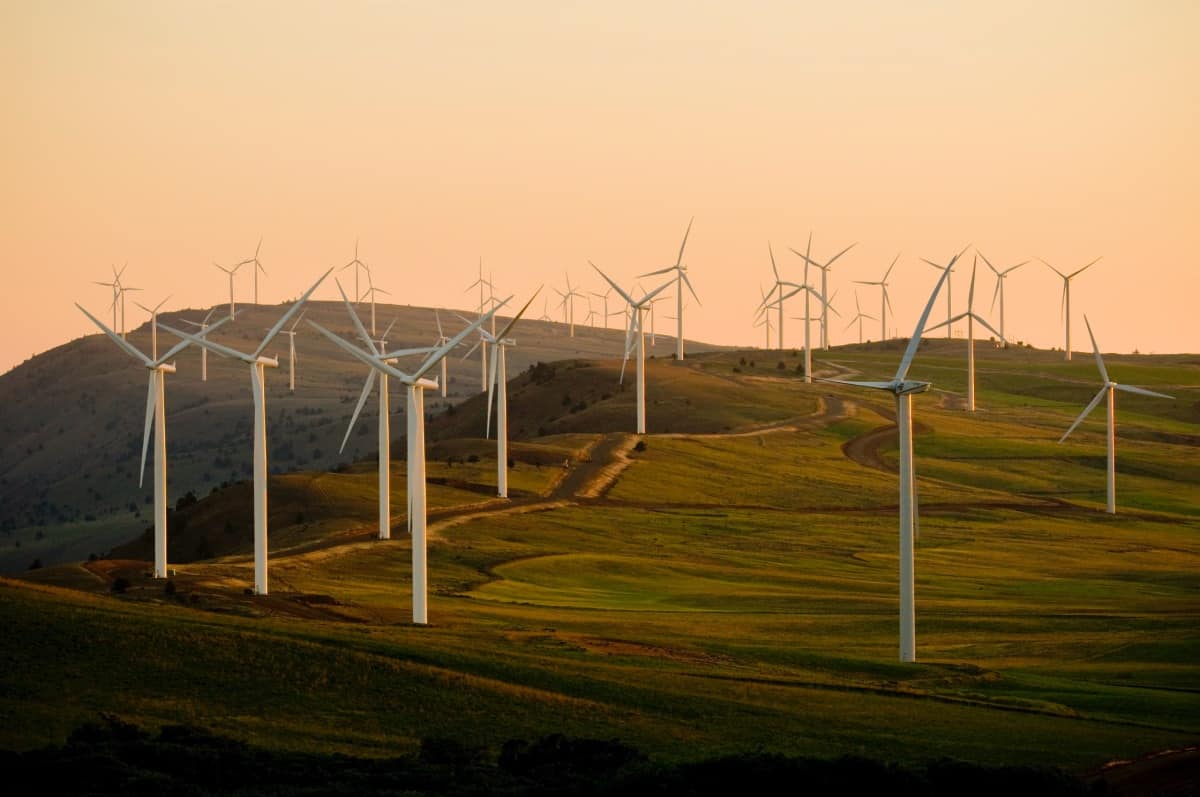
By fuel type, NextEra Energy produces 47.8% of the megawatts generated with natural gas, 24.6% with nuclear energy, 20.6% with wind energy, 3.4% with solar energy, 3.3% with coal and only 0.1% with oil. The company can't afford to switch completely to renewable energy just yet - demand for more and more energy is still rising too strongly. However, it's striking how heavily the company is investing in this area. So the focus is clearly on a green future with wind and solar energy. No wonder NextEra Energy is regularly recognized with awards for this ambition.
But it's also clear that you only make money with renewable energy sources when the wind blows and the sun shines properly. Of course, the smart engineers at NextEra Energy are aware of this and have long been working on a way to store more electricity. The company is currently putting billions of dollars into building more battery storage capacity, which is supposed to supply the base demand for electricity at any time - whether the sun is shining or not. I'm sure that high-performance energy storage is the key to a more sustainable energy supply.
What about the dividend here?
NextEra Energy shareholders received their first dividend over the counter back in 1946. Since 1995, the company has managed to raise the dividend year after year. And the fresh Dividend Aristocrat has gone full power in recent years: the dividend growth rate over the last 10 years is 11.1 percent; over 5 years it's even an impressive 13.5 percent. At 1.9 percent, the dividend yield isn't particularly high, but that's also due to the phenomenal share price. Personally, though, I find the payout ratio of almost 75 percent a bit too high.
Conclusion:
The energy company NextEra Energy has positioned itself perfectly for a sustainable and green electricity supply - and that, mind you, without political coercion like here in Germany! It's currently still dependent on fossil fuels, but it's on a very good path. If I had to choose one energy company, my choice would definitely be NextEra Energy.
Epilogue · November 1, 2026
What became of it
6 years and 1 month have passed since this article. If you had invested €1,000 on the day it was published, this is where you would be today:
Bitcoin came out ahead.
- NextEra Energy, incl. dividends:
- The same €1,000 in Bitcoin: