DividendeOhneEnde · October 27, 2019
Texas Instruments
A stock that adds up
- Ticker
- TXN
- ISIN
- US8825081040
- WKN
- 852654
- Country
- USA
- Industry
- Technology
- Sector
- Semiconductors
- Market cap
- $145.1 billion
- Dividend yield
- 3.10%
- Payouts
- quarterly
- First dividend
- 1962
- Status
- Dividend Achiever
- Dividend yield
- 3.1%
- Dividend growth
- 18.8%
- Payout ratio
- 51.3%
- Share price growth
- 460.1%
- Earnings growth
- 17.9%
- Revenue growth
- 6.2%
- Debt ratio
- 11.5%
The DOE score was my rating at the time, based on these figures, from A (very good) to E. Figures as of October 11, 2022, shortly before the blog ended.
Contents
The pioneers of microelectronics
A world without electronics? Completely unimaginable today. We have electronic support in almost every area of our lives - whether it's the calculator, the coffee machine or the navigation system in the car. And our little helpers will definitely become even more widespread in the future. They're also getting smarter and smarter - robot vacuums scan our homes to clean them more thoroughly, cars will eventually drive completely autonomously, and speakers with artificial intelligence are available to answer all our questions.
We don't have Texas Instruments to thank for electronics as such, but they played a key role in the success of microelectronics. The stock has also been convincing for ages - over the long term, the share price only knows one direction, and when it comes to the dividend, the company also stands out from other players in the industry.
The history and business model of Texas Instruments Inc.
During the Great Depression, when one in four Americans was unemployed, in 1930 to be exact, the physicist Clarence Karcher founded the company Geophysical Service Incorporated (GSI for short) together with his partner, the mechanical engineer and geophysicist Eugene McDermott; it focused on data processing for oil companies. Karcher developed a method for displaying geographic data digitally, which made life much easier for the oil industry. But when World War II broke out a few years later and sales abroad became more difficult, the management team had to change course. From then on, they produced detection equipment for military submarines. Business remained fairly stable, but after the end of the war the company had to reposition itself once again. In 1951, it changed its name to Texas Instruments Inc. and, besides military electronics and geophysical equipment, now also worked on general electronic devices.
Texas Instruments (TI) didn't invent transistors, but in 1952 it bought a license to use and further develop them. 2 years later, it launched the first silicon transistor, which was much more robust and heat-resistant than its predecessor. The electronics industry was thrilled by the innovation but kept using the familiar vacuum tubes. To demonstrate the great potential of transistors, Texas Instruments responded with the Regency TR-I radio. The plan worked, and they sold around 150,000 radios. But the TI team kept researching and in 1958 developed the first integrated circuit. With that, they kicked off the microelectronics revolution. In the following years, the first small computers and calculators saw the light of day.
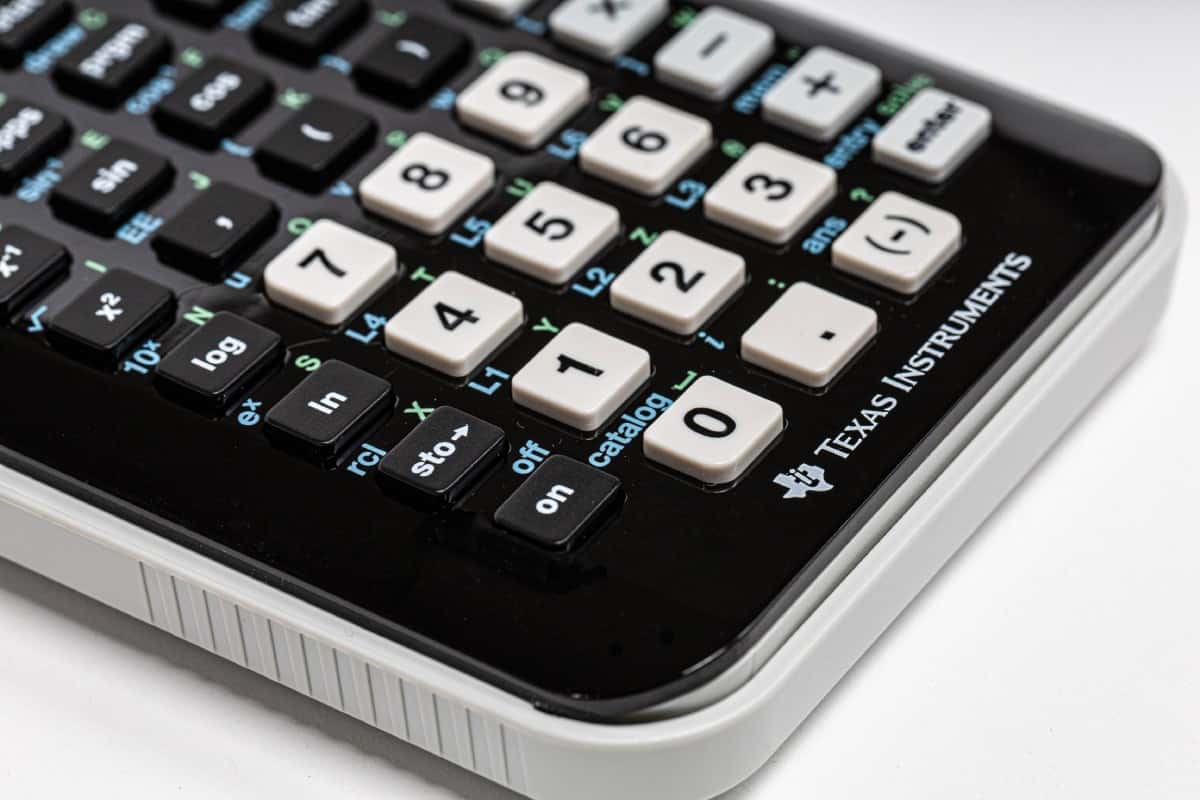
Even today, Texas Instruments is one of the big players in the semiconductor industry. Most people probably know the company for its calculators, but these now only generate around 3 percent of revenue. TI earns the largest share, 36%, in industrial, where lots of chips are built into manufacturing robots, for example. The personal electronics division contributes 23%. 20% is generated in the automotive sector, where driver assistance systems and the like rely on TI products. There's also the communications division with 11% and the enterprise division with 7%. So you can quickly see that TI is now very broadly positioned and has become indispensable today.
How will Texas Instruments' business go in the future?
Everyone should be aware that digitalization will advance significantly further in the coming years. As I already wrote in the introduction, our electronic devices are getting smarter and smarter. They're connecting with each other - many people call it the Internet of Things. And I clearly see Texas Instruments as a beneficiary of this trend. On the one hand, because you can naturally expect rising unit sales when the whole industry grows. On the other hand, because Texas Instruments isn't caught up in competition as much as, say, Apple or Samsung. While smartphone makers constantly have to woo us end consumers, Texas Instruments only has to negotiate a deal with a large manufacturer once. In addition, its components are usually built into longer-lasting products - which allows it to rake in a bigger profit margin.
But why did the share price drop by about 10% over the last few days?
Last Tuesday (10/22/2019), Texas Instruments released its new quarterly results, and they shocked many investors. Some segments are currently a bit weak, so revenue there fell by 11% compared to the previous year. TI generated "only" 3.77 billion US dollars in revenue, a profit of 1.43 billion US dollars and earnings per share of 1.49 US dollars. In my eyes, those aren't bad numbers, but experts expected more. Above all, the numbers the board expects for the current quarter scared analysts: it expects earnings per share between 0.91 and 1.09 US dollars - analysts, on the other hand, had expected 1.28 US dollars. On the other hand, Texas Instruments returned a total of $7.4 billion to its shareholders in the form of share buybacks and dividends over the past 12 months. So how should you deal with these numbers? I think in the long run, this doesn't change anything about the healthy business model and the opportunities that still lie ahead. For those who can patiently sit out a weak phase, there's currently a cheaper buying opportunity.
And what about the dividend?
Texas Instruments shareholders have been receiving a share of the profits since 1962. However, it has only been raised regularly since 2004. So the company can officially count itself among the Dividend Achievers. If you look at the dividend growth rate over the last 10 years, it comes to an average of 22 percent. Together with the current dividend yield of 2.7%, that adds up to a very respectable amount. As for the payout ratio, the high-tech company has set itself the goal of paying out its entire free cash flow - partly in the form of a dividend and partly in the form of share buybacks.
Conclusion:
Texas Instruments makes the most important components that digitalization needs. The company is extremely broadly positioned and can therefore be found in almost every area of the electronics industry. For me, the chipmaker represents a much lower-risk investment than many a competitor. Especially for shareholders who'd like to benefit from global digitalization, this is an interesting opportunity.
Epilogue · November 1, 2026
What became of it
7 years have passed since this article. If you had invested €1,000 on the day it was published, this is where you would be today:
Bitcoin came out ahead.
- Texas Instruments, incl. dividends:
- The same €1,000 in Bitcoin: