DividendeOhneEnde · December 29, 2019
Berkshire Hathaway
A True Stock Market Legend
- Ticker
- BRK-A
- ISIN
- US0846701086
- WKN
- 854075
- Country
- USA
- Industry
- Financials
- Sector
- Holding company
- Market cap
- $600.3 billion
- First dividend
- 1967
- Status
- No dividend
- Dividend yield
- 0%
- Dividend growth
- 0%
- Payout ratio
- 0%
- Share price growth
- 200.5%
- Earnings growth
- -5.3%
- Revenue growth
- 4.1%
- Debt ratio
- 12.8%
The DOE score was my rating at the time, based on these figures, from A (very good) to E. Figures as of October 11, 2022, shortly before the blog ended.
Contents
Anniversary edition: 1 year of DividendeOhneEnde
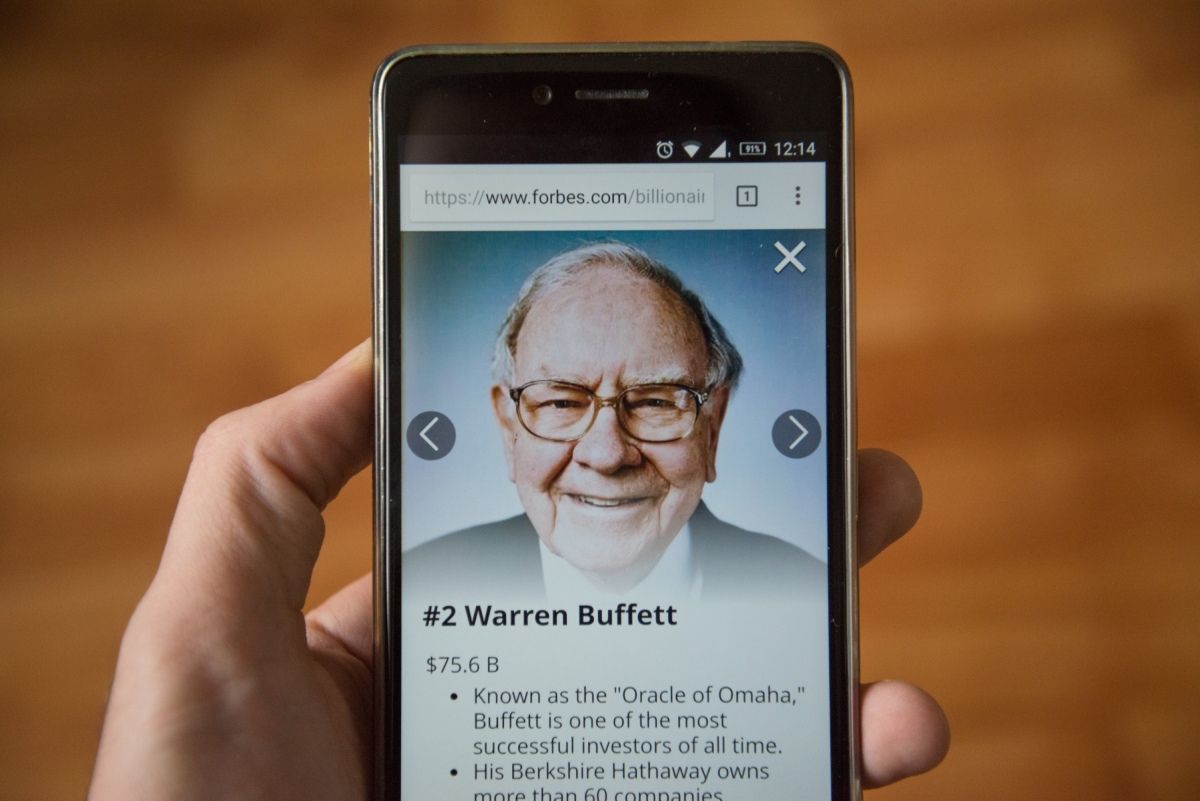
It's been one year since I decided to start this website and introduce great dividend payers here every week. And I just have to admit, it was a fantastic year! I learned so much that was new and exciting and found great new investment opportunities every week. I hope my readers were able to learn a thing or two this year as well. Today I'd like to dedicate this anniversary article to someone very special. No, not directly Warren Buffett, but my father! He's the one who got me into the stock market back then. I've been a proud shareholder since 1999, and even though my first stock (Nokia) wasn't exactly the cream of the crop, it was still an important lesson for me - the stock market simply doesn't always go up. I can always talk with my father about this topic for hours and it never gets boring. One highlight was definitely our visit to the Berkshire Hathaway annual meeting together in May 2018. Thanks, Dad :-)
But I'm also writing this article especially for people who don't know Warren Buffett and his holding company Berkshire Hathaway yet - and to my amazement, I keep finding out that that's a hell of a lot of people?! In the future, I'll simply point them to this article.
But wait a minute, Berkshire Hathaway doesn't pay a dividend at all, and isn't this site always about dividend payers? Yes, that's correct. But for the stock oracle Warren, I'm making an exception. I think hardly anyone gets paid as much in dividends as he does - so he literally collects dividends without end! Further down in the text, I'll try to calculate how much he received in profit distributions this year alone.
The history and business model of Berkshire Hathaway Inc.
The story of Berkshire Hathaway doesn't begin with Warren Buffett, but with Oliver Chace. He was born in Massachusetts on August 24, 1769 and worked as a carpenter for Samuel Slater - the founder of America's first successful textile mill. Chace learned a lot from his boss and took the step of building his own mill. And so his textile mill started operating in 1806. In 1813 and 1821 he founded two more mills. He then acquired the Valley Falls Company from Rhode Island and reorganized it. Business was booming and more mills from the surrounding area were taken over. But as early as World War I, sales started to shrink. And when the Great Depression hit in 1929, the company had to merge with the Berkshire Cotton Manufacturing Company to stay afloat. This created Berkshire Fine Spinning Associates. During World War II, the company kept its head above water with military clothing, but once that terrible time was over, business no longer ran smoothly. The competition from the southern US and the Far East was simply cheaper. Eventually, it merged with the Hathaway Manufacturing Company, founded in 1888. Berkshire Hathaway still had 15 plants, 12 thousand employees and revenue of 120 million US dollars - but the outlook was negative.
In 1962, Warren Buffett began buying up Berkshire Hathaway shares at $7.60 each. As he had learned during his training under Benjamin Graham, the grand master of value investing, he bought stocks that at that moment could be bought on the stock exchange for less than their actual asset value. Buffett knew the textile business was in decline, but he also noticed that whenever mills were closed, the stock always rose slightly. Of course, then-CEO Seabury Stanton noticed this too, and in 1964 he made Buffett a verbal offer to buy back his shares at $11.50 per share. Buffett agreed, but a few weeks later received the written offer at a price of $11.375 per share. Buffett's pride was hurt, and instead of selling his shares, he decided to buy up all the other available shares as well. When he finally took over Berkshire Hathaway in 1965, he fired Stanton himself.
However, Buffett had no interest in the textile industry; instead, he used his new company as an investment vehicle. With Berkshire Hathaway's free cash, he bought his way into the insurance and banking business. Eventually, he merged his companies Berkshire Hathaway, Blue Chip Stamps and Diversified Retailing. Since then, his longtime friend Charles Munger has also been vice chairman of Berkshire Hathaway Inc.. Under Munger's influence, Buffett changed his investment approach from pure value investor to growth investor - from then on, he no longer bought junk companies for a pittance, but preferred to pay a fair price for a good company. That's how the two built the largest holding company in the world. Today it counts 65 non-listed companies that it owns either partially or completely. On top of that, it currently holds large stakes in 49 publicly traded companies. The business areas range from primary insurance and reinsurance to utilities and financial services, wholesale and retail, and many more. As you can easily see, Berkshire Hathaway is very broadly diversified.
The life of stock oracle Warren Buffett
Warren Edward Buffett was born on August 30, 1930 in Omaha, Nebraska. His father Howard already worked as a stockbroker and later even became a congressman. That's why the family had to move to Washington D.C. back then. Little Warren lost his old friends, but soon found a new hobby in mathematics. He was very good with numbers and already had a very good memory back then. One day he found a book in his father's office: "One Thousand Ways To Make $1000". He read it attentively and quickly started taking action, because he had come across compound interest. The earlier he started, the more the compounding effect could work for him later on. So he sold lemonade, though not in front of his own house, but in front of a friend's - the traffic was better there. He also sold chewing gum & Coca-Cola bottles and delivered newspapers. At age 11, he had earned enough money to buy his first stocks. He bought 3 shares of Cities Service each for himself and his sister at $38.25 apiece. After the shares first fell to $27, he quickly sold when they reached $40. Shortly afterward, he missed the rise to $202 - he learned from his mistake.
At 14, Warren bought his first piece of land. A 16-hectare field for $1,200, which he leased to farmers. He also placed pinball machines in barbershops and then split the profits with the shop owners. When he read the book "The Intelligent Investor" by Benjamin Graham, he found a great new role model in him. At 19, he decided to go to Harvard University, since it would have been perfect for his career and his business network. However, he was rejected. But when he found out that Graham and his colleague David Dodd were teaching a course at Columbia Business School, he knew what to do. He wrote them a letter saying: "I thought you guys were dead, but now that I found out that you’re alive and teaching at Columbia, I would really like to come.". He was accepted and learned value investing there. Back in Omaha, Warren first worked at his father's firm, Buffett-Falk & Company. When he was supposed to give a lecture on investment principles, he hesitated, because speaking in front of large crowds didn't come easily to him. So he took a course with Dale Carnegie - he later said that this course was the best investment of his life.
In 1954 he worked as a securities analyst at Graham's brokerage firm, but when Graham retired in 1956, Warren had to strike out on his own. For this, he founded Buffett Partnership Ltd., through which he managed and invested money from relatives and acquaintances. By cleverly selecting lucrative stocks, business stakes and bonds, he regularly beat the index. As described above, starting in 1962 he bought into the textile company Berkshire Hathaway and gradually transformed it into his own holding company.
At this point, I'd like to link a really great and very informative series of infographics from VisualCapitalist.com.
1. Warren Buffett's early years
2. Buffett's way of thinking
3. The Buffett empire
4. His biggest wins & losses
5. 25 important Buffett quotes
Important books Warren Buffett read
Benjamin Graham: The Intelligent Investor
Of course, this important book can't be missing here. The Intelligent Investor (or "Intelligent Investieren" in the German edition) is one of the most popular books on value investing. His student Warren Buffett once said in an interview: “By far the best book about investing ever written.” And he's absolutely right - here Graham passes on his many years of knowledge and experience about investing in growth stocks, which will always help both conservative and speculative investors. An absolute must-read for every value investor.
Dale Carnegie: How to Win Friends and Influence People
Yes, I admit the title sounds a bit strange at first. The book is by no means aimed at lonely people desperately trying to find new friends. Rather, Carnegie, whose seminar Buffett once attended, has written a first-class guide on how to deal with other people. How to treat customers, employees, family members or other people in general in order to be successful, influential and well-liked. It's required reading for more charisma, happiness and success in life.
Philip A. Fisher: Common Stocks and Uncommon Profits
Like Benjamin Graham, Philip A. Fisher is regarded as one of the pioneers of value investing. His classic "Common Stocks and Uncommon Profits" is considered one of the most widely read investing books and is also an important part of the curriculum in investment courses at Stanford University. So it's no wonder that even Warren Buffett used this book as the foundation for developing his own investment strategy. In this bestseller, you learn to really see through the investment business and invest your money intelligently and profitably.
Dividend income
(As of November 2019)
| Stock | Sector | Stake in % | Number of shares | Dividend per share in $ | Total annual dividend in $ |
|---|---|---|---|---|---|
| Amazon | E-Commerce | 0.001 | 537,300 | 0.00 | 0.00 |
| American Airlines | Transportation | 9.73 | 43,700,000 | 0.40 | 17,480,000 |
| American Express | Financials | 18.15 | 151,610,700 | 1.72 | 260,770,404 |
| Apple Inc. | Technology | 5.35 | 248,838,679 | 3.08 | 766,423,131.32 |
| Axalta Coating Systems | Chemicals | 10.34 | 24,264,000 | 0.00 | 0.00 |
| Bank of America | Financials | 9.91 | 927,248,600 | 0.72 | 667,618,992 |
| Bank of New York Mellon Corp. | Financials | 8.64 | 80,937,250 | 1.24 | 100,362,190 |
| Charter Communications | Telecommunications | 2.29 | 5,426,609 | 0.00 | 0.00 |
| The Coca-Cola Company | Food | 9.4 | 400,000,000 | 1.60 | 640,000,000 |
| Costco Wholesale Corp. | Retail | 0.98 | 4,333,363 | 2.60 | 11,266,743.80 |
| DaVita Inc. | Healthcare | 23.17 | 38,565,570 | 0.00 | 0.00 |
| Delta Air Lines Inc. | Transportation | 10.94 | 70,910,456 | 1.61 | 114,165,834.16 |
| General Motors Co. | Industrials | 5.09 | 72,269,696 | 1.52 | 109,849,937.92 |
| Globe Life Inc. | Insurance | 5.77 | 6,353,727 | 0.69 | 4,384,071.63 |
| Goldman Sachs | Financials | 4.90 | 18,353,635 | 5.00 | 91,768,175 |
| JPMorgan Chase & Co. | Financials | 1.85 | 59,514,932 | 3.60 | 214,253,755.20 |
| Johnson & Johnson | Healthcare | 0.012 | 327,100 | 3.80 | 1,242,980 |
| The Kraft Heinz Company | Food | 26.7 | 325,634,818 | 1.60 | 521,015,708.80 |
| Liberty Global A Class | Telecommunications | 9.67 | 19,791,000 | 0.00 | 0.00 |
| Liberty Global C Class | Telecommunications | 1.39 | 7,346,968 | 0.00 | 0.00 |
| Liberty Latin America Ltd. Class A | Telecommunications | 5.59 | 2,714,854 | 0.00 | 0.00 |
| Liberty Latin America Ltd. Class C | Telecommunications | 1.06 | 1,284,020 | 0.00 | 0.00 |
| Liberty Sirius XM Group Series A | Telecommunications | 14.45 | 14,860,360 | 0.00 | 0.00 |
| Liberty Sirius XM Group Series C | Telecommunications | 13.96 | 31,090,985 | 0.00 | 0.00 |
| Mastercard | Financials | 0.48 | 4,934,756 | 1.60 | 7,895,609.60 |
| Mondelēz International | Food | 1.7 | 578,000 | 1.14 | 658,920 |
| Moody's Corp. | Financials | 12.9 | 24,669,778 | 2.00 | 49,339,556 |
| M&T Bank Corp. | Financials | 0.42 | 5,382,040 | 4.40 | 23,680,976 |
| Occidental Petroleum Corp. | Utilities | 0.88 | 7,467,508 | 3.16 | 23,597,325.28 |
| Phillips 66 | Utilities | 1.14 | 5,182,637 | 3.60 | 18,657,493.20 |
| PNC Financial Services Group Inc. | Financials | 1.94 | 8,671,054 | 4.60 | 39,886,848.40 |
| Procter & Gamble Co. | Consumer goods | 0.011 | 315,400 | 2.984 | 941,153.60 |
| Restaurant Brands International | Food | 1.79 | 8,438,225 | 2.00 | 16,876,450 |
| Restoration Hardware Holdings Inc. | Retail | 5.03 | 1,207,844 | 0.00 | 0.00 |
| Sirius XM Holdings Inc. | Media | 2.98 | 136,275,729 | 0.053 | 7,222,613.64 |
| Southwest Airlines Co. | Transportation | 10.04 | 53,649,213 | 0.72 | 38,627,433.36 |
| StoneCo Ltd. | Software | 5.02 | 14,166,748 | 0.00 | 0.00 |
| Store Capital Corp. | Real estate | 7.99 | 18,621,674 | 1.40 | 26,070,343.60 |
| Suncor Energy Inc. | Utilities | 0.69 | 10,758,000 | 1.265 | 13,608,870 |
| Synchrony Financial | Financials | 3.14 | 20,803,000 | 0.88 | 18,306,640 |
| Teva Pharmaceutical Industries Ltd. | Healthcare | 3.96 | 43,249,295 | 0.00 | 0.00 |
| The Travelers Companies Inc. | Insurance | 2.27 | 5,958,391 | 3.28 | 19,543,522.48 |
| United Airlines Holdings Inc. | Transportation | 8.56 | 21,938,642 | 0.00 | 0.00 |
| United Parcel Service Inc. | Logistics | 0.006 | 59,400 | 3.84 | 228,096 |
| U.S. Bancorp | Financials | 8.39 | 132,459,618 | 1.68 | 222,532,158.24 |
| VeriSign Inc. | Software | 10.88 | 12,952,745 | 0.00 | 0.00 |
| Visa Inc. | Financials | 0.41 | 10,562,460 | 1.20 | 12,674,952 |
| Wells Fargo and Co. | Financials | 8.61 | 378,369,018 | 2.04 | 771,872,796.72 |
So Berkshire Hathaway earned a whopping $4,832,823,681.95 from dividends alone in 2019.
Just to put that in perspective:
That's $13,240,612.83 a day.
$551,692.20 an hour.
$9,194.87 a minute.
And a full $153.25 a second!
Outlook
How will Berkshire Hathaway's business continue in the future?
Of course, nobody can predict that exactly. But it's a fact that Berkshire Hathaway is super broadly diversified and can easily sit out periods of economic weakness. On the contrary: I think when the stock market heads down again, Buffett, Munger & Co. will strike all the more. Right now the holding company is sitting on a whopping 128 billion US dollars in cash, just waiting to be invested properly. Buffett is often criticized for sitting on such a huge pile of cash, but I think he knows exactly what he's doing. If no really suitable opportunity comes along for him and his team, they simply wait. They won't rush into paying too high a price for an investment. If in doubt, they'll simply buy back their own Berkshire shares again.
Warren Buffett and Charlie Munger have investment principles such as the "Circle of competence". That means they only invest in a company whose business model they understand 100 percent. For a long time, that's why they didn't invest in the booming tech industry - in their opinion, they didn't know enough about it. However, for a few years now they've had the two very talented investment managers Ted Weschler and Todd Combs on the team, who also understand new business models very well and can invest accordingly. Thanks to them, Berkshire Hathaway is now also invested in Apple and Amazon. By the way, to get to know new stocks and understand the companies behind them better, you don't need to hire investment managers - just stop by this website regularly. Just kidding ;-)
But what actually happens when Buffett or Munger die?
Charlie Munger turns a proud 96 on 01/01/2020, and Warren Buffett will turn 90 in August. But as harsh as it may sound, Berkshire Hathaway's business will carry on even without the two investment legends. Right from the start, the two invested in running, fast-growing business models that didn't create any work for them. Buffett and co. rarely interfere in what goes on at individual companies. Nevertheless, the two have of course long since made arrangements for the event of their death. Responsibilities are already clearly defined today. I can also imagine the stock really blossoming once more in that tragic case, because people want to "prove" it to everyone, or maybe go full throttle all the more in honor of the deceased. But let's not even go there...
Will there ever be a dividend?
Berkshire Hathaway actually did pay a dividend to its shareholders once. In 1967, shareholders received $0.1 per share - when Buffett was asked about it, he said he was in the bathroom when that decision was made. He loves dividends himself, but doesn't pay any out to his investors because he believes he can earn significantly more money by reinvesting. Investors who would want to reinvest it themselves would, first, have to pay more taxes and would have to think they could invest their money more wisely than the Oracle of Omaha. I think Berkshire Hathaway will stay true to this principle - but who knows?!
Conclusion
For me, Berkshire Hathaway is a very special investment. Once you've taken a closer look at Warren Buffett as a person, you quickly realize what a genius he is. He turned a struggling textile company into one of the most valuable companies in the world, and only by picking the right stocks and stakes. In any case, I'll keep buying the stock monthly through my savings plan and hopefully make the pilgrimage to Omaha again soon for the "Woodstock for Capitalists".
Epilogue · November 1, 2026
What became of it
6 years and 10 months have passed since this article. If you had invested €1,000 on the day it was published, this is where you would be today:
Bitcoin came out ahead.
- Berkshire Hathaway, incl. dividends:
- The same €1,000 in Bitcoin: