DividendeOhneEnde · April 5, 2020
T. Rowe Price Group
The Father of Growth Investing

- Ticker
- TROW
- ISIN
- US74144T1088
- WKN
- 870967
- Country
- USA
- Industry
- Financials
- Sector
- Investment services
- Market cap
- $23.9 billion
- Dividend yield
- 4.60%
- Payouts
- quarterly
- First dividend
- 1986
- Status
- Dividend Aristocrat
- Dividend yield
- 4.6%
- Dividend growth
- 17.3%
- Payout ratio
- 45.2%
- Share price growth
- 60%
- Earnings growth
- 13%
- Revenue growth
- 9.2%
- Debt ratio
- 1.7%
The DOE score was my rating at the time, based on these figures, from A (very good) to E. Figures as of October 11, 2022, shortly before the blog ended.
Contents
An asset manager with a growth approach
How do you become successful on the stock market in the long run? In the end, in my opinion, there are only 3 aspects that separate the wheat from the chaff. You have to be optimistic - if you weren't, you wouldn't invest in companies that are supposed to grow in the future. You need clear, sound common sense - if you go through the world with your eyes open, you'll find lucrative investment opportunities around every corner. And you need a lot of patience: the stock market can correct at any time - in those times, you mustn't get impatient and dump your securities. That's exactly when you need the optimism to seize the great buying opportunities. Admittedly, that's all easier said than done.
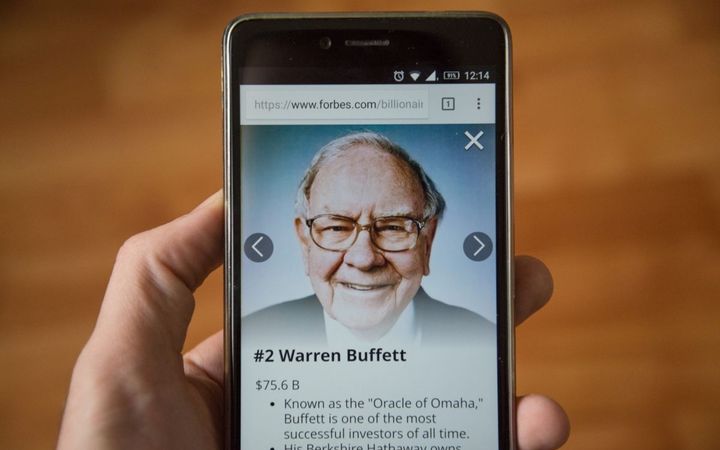
In times of crisis, I often ask myself: what would Warren Buffett or Charlie Munger do now? What would Benjamin Graham, the founder of value investing, perhaps pay attention to right now? Or how would Thomas Rowe Price Jr., who first pursued the growth approach, act in a market phase like this? So today, let's take a look at the company that Thomas Rowe Price Jr. built and made successful.
The history and business model of T. Rowe Price Group Inc.
Thomas Rowe Price Jr. was born on March 16, 1898 in Glyndon, a small town near Baltimore. His father, Thomas Rowe Price Sr., worked as a doctor, just like his own father Benjamin F. Price before him. Breaking with family tradition, however, Thomas Rowe Price Jr. decided to study chemistry. After successfully graduating from Swarthmore College in Pennsylvania, he began working for the chemical company DuPont. Thomas quickly realized that chemistry wasn't the right thing for him after all. He dreamed of investing in stocks and turning his passion into his profession. Without further ado, he quit his job at DuPont and started working, first at a small brokerage firm and later at a bond house. This gave him enough experience to start as a stockbroker in 1925 at the Baltimore investment firm Mackubin, Goodrich & Co. (later known as Legg, Mason & Co.). There he climbed the career ladder, became head of the bond department and, in 1930, head of the investment management department. During this time, he also developed his own investment concept, in which he focused on growth stocks. He wanted to convince management of his innovative concept, but they were committed to the value investing that was common at the time. On top of that, the entire industry was still struggling with the effects of the Great Depression of the late '20s. Price's concept was simply rejected and he felt forced to go his own way. 4 other colleagues joined him, and together they founded the company Price Associates in 1937.
The young investment firm didn't have it easy. Of course, it had to win its first clients, but at that time the financial markets were anything but favorable, too. Convincing clients of Price's new investment method cost a lot of time and money. Fortunately, his business partners accepted the irregular pay and often traded their salaries for shares in the company. Price's wife, who came from a financially well-off family, also actively supported her husband. It wasn't until the late 1940s that T. Rowe Price realized the full potential of his growth investing method, and he quickly achieved his first successes. The key to this was the careful research he did. From then on, he invested exclusively in companies whose CEO had been interviewed by one of his analysts. The result was top investments that often generated returns of several hundred percent. Among them were well-known companies like Abbott Laboratories, 3M Company and IBM. By 1950, the client base had grown so rapidly that it was impossible to manage all accounts individually. So the firm launched its first mutual fund, the T. Rowe Price Growth Stock Fund. The fund benefited from the rising stock markets, which were recovering as World War II came to an end.
Gradually, T. Rowe Price's successes became more and more widely known and the firm was able to expand. New funds and further financial services were added. Even today, T. Rowe Price Group Inc. is known for its conservative yet strongly growing investment business. Clients are offered a wide range of mutual funds and retirement plans, with individual advice from financial advisors and asset managers. As of February 2020, the firm manages total assets of 1.15 trillion US dollars.
How will T. Rowe Price Group's investments and business develop in the future?
Even if some people may find it hard right now, I'm convinced in the long run that the stock market, and with it T. Rowe Price Group, will recover from the coronavirus crisis. At the moment, however, the asset manager is seeing clients withdraw their money. While it still managed around 1.21 trillion US dollars at the end of January, it was only 1.15 trillion US dollars at the end of February 2020. You can assume that even more clients will withdraw money early from their mutual funds or retirement plans in the coming weeks and months. T. Rowe Price has recognized the seriousness of the situation and therefore welcomes the new CARES Act, which is meant to make it easier for clients to access their money early during this financially difficult phase. The company also provided 500,000 US dollars to global and local relief organizations fighting the Covid-19 virus.
T. Rowe Price has been running a share buyback program for quite a while. It was recently expanded by another 15 million shares. So the company is currently taking more than 24 million shares off the market (that's around 10% of all outstanding shares). That's no surprise either - after all, the company knows its own intrinsic value, and if it can buy back cheaply, it should take the opportunity. By the way, that's exactly what we shareholders should do too. When stocks are cheap, you have to grab them, not wait until they're rising again!
The asset manager's headquarters are still in Baltimore, USA. Nevertheless, it is now very well positioned globally. In Germany, too, it now wants to grow its team and expand its presence in the German market. In the long run, this plan will surely pay off.
Can the dividend continue to be paid?
Short and sweet: yes. The asset manager has paid a quarterly dividend to its shareholders since its IPO in 1986. But that's not all. The dividend has also been raised every year since then. T. Rowe Price's average dividend growth rate over the last 10 years is a proud 12.38 percent. The Dividend Aristocrat currently pays a solid 3.3 percent dividend yield - and that with a low payout ratio of just 36.5 percent.
Conclusion:
Thomas Rowe Price Jr. turned his passion into his profession and never doubted his new investment concept - no matter which crisis sent stocks plunging. I think we investors can still learn quite a bit from him today. His investment company has also developed excellently and offers great prospects for long-term dividend investors. In my eyes, a rock-solid investment.
Epilogue · November 1, 2026
What became of it
6 years and 6 months have passed since this article. If you had invested €1,000 on the day it was published, this is where you would be today:
Bitcoin came out ahead.
- T. Rowe Price Group, incl. dividends:
- The same €1,000 in Bitcoin: