DividendeOhneEnde · April 26, 2020
Visa
The Credit Card Moat
- Ticker
- V
- ISIN
- US92826C8394
- WKN
- A0NC7B
- Country
- USA
- Industry
- Financials
- Sector
- Banks
- Market cap
- $391.4 billion
- Dividend yield
- 0.80%
- Payouts
- quarterly
- First dividend
- 2008
- Status
- Dividend Contender
- Dividend yield
- 0.8%
- Dividend growth
- 15.9%
- Payout ratio
- 23.4%
- Share price growth
- 418.1%
- Earnings growth
- 19.9%
- Revenue growth
- 9.4%
- Debt ratio
- 27.9%
The DOE score was my rating at the time, based on these figures, from A (very good) to E. Figures as of October 11, 2022, shortly before the blog ended.
Contents
Beneficiary of the cashless future
To trade successfully on the stock market, it's absolutely essential to come up with a suitable strategy that you stick to both in good times and in times of crisis. So it simply has to be a strategy you feel comfortable with. Personally, I focus on companies whose business model I understand, that also show great growth and that pursue an exemplary dividend policy.
Today let's take a look at Visa, a company I've known forever but never really understood. I guess I always steered clear of the company myself because I was too quick to file it under the unattractive banking sector. What a mistake! Only after researching this article did I notice the brilliant and lucrative business model behind the credit card leader.
The history and business model of Visa Inc.
People have always wanted to optimize the process of paying. It all started with us trading goods for other goods. At marketplaces, for example, a sack of rice was traded for a chicken. People quickly started using various intermediate means of exchange, such as shells, gold & silver or pieces of jewelry, which were traded several times to get to the desired object. This was so useful that at some point small coins and bars developed from it, which were weighed in order to pay with them. Since people didn't always want to lug such heavy metal around, the Chinese introduced paper money as early as the 11th century. Over the years, this developed into the cash we know. Let's jump ahead a bit to 1894, when some hotels in the USA began issuing credit cards to their best customers. Customers could use the service immediately but only had to pay later. This concept was so well received that in 1950 the Diners Club was founded, which allowed the richest New Yorkers to dine at various restaurants in the city and only settle the outstanding bill at the end of the month. Unlike the hotels' credit cards, the Diners Club card was accepted wherever there was an acceptance point.
The first bank card was issued in 1951 by the Franklin National Bank from Long Island. This card, too, was only accepted by a few local merchants. Soon, however, more than 100 other banks followed with their own cards and credit programs. Among them was the Bank of America, which launched the BankAmericard in California in 1958. Back then, the credit card was mailed to 60,000 bank customers without checking their creditworthiness beforehand. Even though some overdrew their balance and the bank had to be liable for it, this marketing strategy was very successful. The novel credit program, which allowed customers to pay off their outstanding balances in monthly installments, quickly became very popular. Soon Bank of America also allowed other banks outside California to issue the BankAmericard for a license fee. At the same time, several small banks also joined forces to jointly launch the Master Charge (later Mastercard). In view of the success of these two credit cards, most regional banks ended their card programs and joined either BankAmericard or Master Charge.
In 1968, Dee Ward Hock, a manager at the National Bank of Commerce, was tasked with overseeing the introduction of its own licensed version of the BankAmericard. He quickly realized, however, that there was a big mess between the banks and called for a joint committee to be formed to solve the various problems. Hock became chairman of this committee and eventually persuaded Bank of America to give up control of the BankAmericard program. Together, all the licensee banks founded National BankAmericard Inc. (NBI for short). Bank of America, however, still had the right to grant licenses for its credit cards outside the USA. But these banks also quickly ran into problems, and Hock was brought in as a consultant. Just as in the home country, he got the various banks to join forces and found the International Bankcard Company (IBANCO for short). Since the credit cards were still associated with Bank of America, it was decided in 1976 to rename them VISA USA and VISA International, respectively. Since then the company has kept evolving, improved security processes and introduced new technologies. Today Visa has one of the world's largest acceptance networks, which profits from every little transaction.
How will Visa fare in the future?
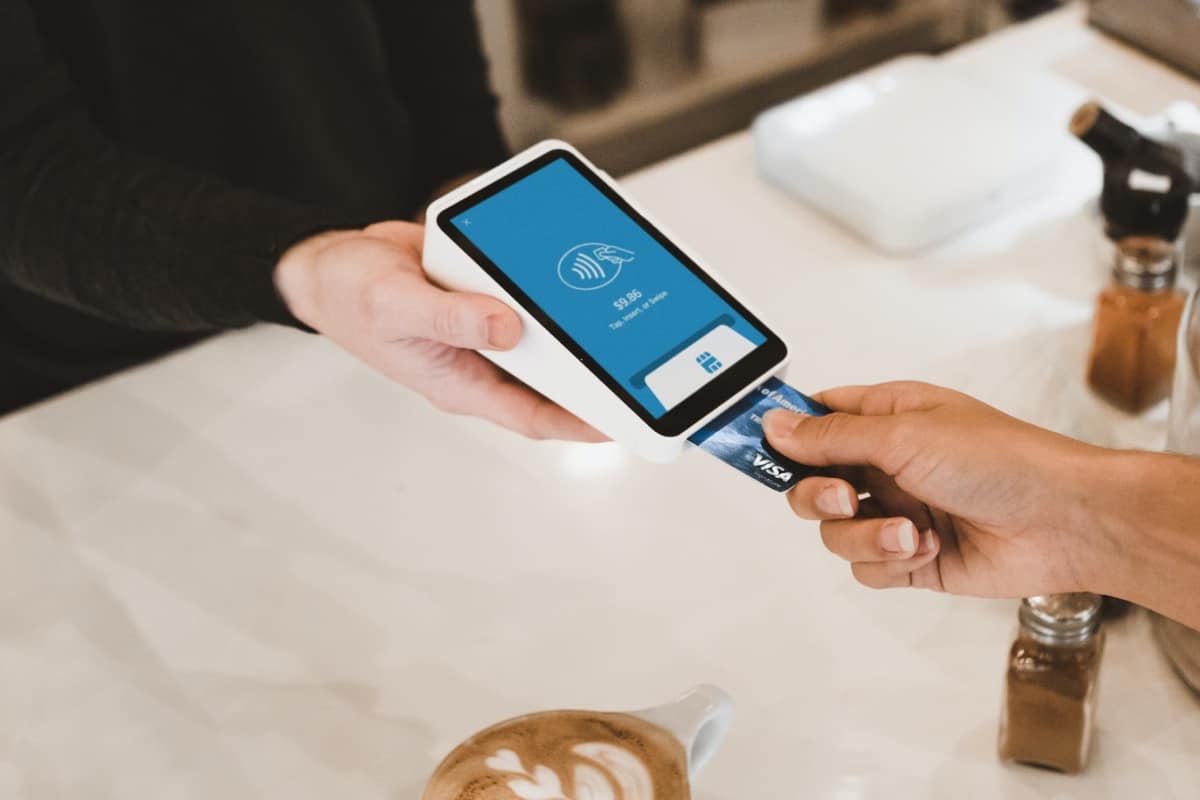
Visa has a nearly insurmountable moat and such a lucrative business model that it seems almost impossible we could do without the company in the future. Visa itself isn't actually a financial company per se. It doesn't even issue the credit cards itself and therefore hardly has to shoulder any risks. Consumers get the credit card from the respective licensee banks. Let's illustrate the whole process with an example: a customer has a Visa credit card from Bank A. He uses it to pay when shopping. So the money moves from the customer to Bank A. Bank A sends it via the Visa network to the merchant's Bank B and then on to the merchant. The merchant in turn pays a small fee to his Bank B. This fee is split between Bank A and B, with Bank A getting the larger share, since it carries the customer's risk after all. By the way, up to this point Visa hasn't earned a single cent. Finally, Visa charges a mere 0.1 percent of the volume sent through its network. Sounds like little, but in the last fiscal year it resulted in around 23 billion US dollars in revenue and over 12 billion US dollars in profit. Now that's what I call a great profit margin!
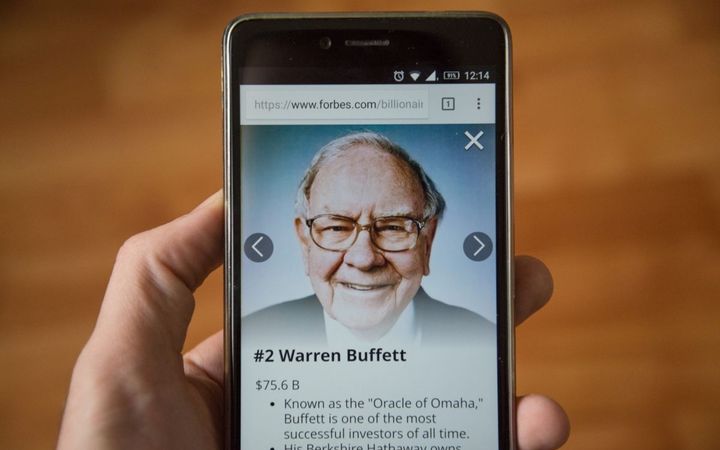
In general, Visa has very good prospects. We're in a megatrend - in the long run, less and less is paid in cash and more and more happens digitally. Naturally, the company benefits from this. Apple Pay, Google Pay or PayPal don't pose any competition either. All three depend on Visa's network infrastructure, which makes them more of a partner than a competitor of Visa. The company recently announced it would acquire the fintech Plaid for around 5.3 billion US dollars. Plaid offers software that links payment apps to bank accounts. A lucrative technology that fits perfectly with Visa's vision. It's also well positioned in the area of cryptocurrencies by now. The only notable competitor is Mastercard, which pursues a similar business model and also relies on the same technology. Little side fact: Warren Buffett couldn't decide which of the two stocks to bet on, so in the end he bought both.
And how is Visa doing now in the coronavirus crisis?
In fact, it had to lower its revenue forecasts somewhat. No wonder, since Visa earns above-average money on international payments. These are currently at a standstill. Nonetheless, I think Visa is one of the coronavirus winners. Almost everywhere people are now paying cashless, and once consumers have gotten used to the convenience, many won't go back to cumbersome cash after the crisis. Even in the event of an economic crisis, it will hit the banks harder than Visa itself.
What about the dividend?
Since going public in 2008, the company has always paid a dividend. And not only that, the payout has also been raised every year. And at a phenomenal pace: over 10 years, the dividend growth rate is an incredible 25.95 percent! Okay, admittedly the dividend yield of 0.66 percent is still relatively low, but that's also due to the Visa stock's excellent price performance. And the best part: there's still plenty of room to grow, as the payout ratio is currently only around 20 percent. So chances are good that dividend growth will merrily continue over the next few years.
Conclusion:
Today's article showed me personally that I need to set aside my prejudices toward certain companies more often so as not to miss great investment opportunities. But before I get annoyed about the missed price gains, I'd rather look for a suitable entry point. And for that, of course, it suits me if the Visa share price comes down a bit. It's exactly this habit of regularly rethinking things that I'd like to pass on to you today.
Epilogue · November 1, 2026
What became of it
6 years and 6 months have passed since this article. If you had invested €1,000 on the day it was published, this is where you would be today:
Bitcoin came out ahead.
- Visa, incl. dividends:
- The same €1,000 in Bitcoin: