DividendeOhneEnde · December 13, 2020
Carlisle Companies
A lesser-known industrial conglomerate
- Ticker
- CSL
- ISIN
- US1423391002
- WKN
- 871884
- Country
- USA
- Industry
- Industrials
- Sector
- Industrial conglomerates
- Market cap
- $15.6 billion
- Dividend yield
- 0.80%
- Payouts
- quarterly
- First dividend
- 1950
- Status
- Dividend Aristocrat
- Dividend yield
- 0.8%
- Dividend growth
- 14.3%
- Payout ratio
- 16.7%
- Share price growth
- 456.1%
- Earnings growth
- 22.4%
- Revenue growth
- 9%
- Debt ratio
- 29.9%
The DOE score was my rating at the time, based on these figures, from A (very good) to E. Figures as of October 11, 2022, shortly before the blog ended.
Contents
Diversification is the name of the game here
Every now and then I get asked how many positions you should hold in a sensible stock portfolio. There really is no one-size-fits-all answer here. One person goes by the motto "Spread it wide, never regret it!" and builds a broadly diversified portfolio, the other prefers things more concentrated and easier to keep track of. I belong to the first group: if I like a company, I buy a few shares when a suitable opportunity comes along. Admittedly, it would be pretty hard for me to limit myself to just a handful of companies, after all, I discover great new stocks every week. In the end, everyone has to do whatever they feel most comfortable with!
Today I'm introducing the American industrial giant Carlisle Companies. This Dividend Aristocrat is present with its products in many smaller niche markets and also pursues an extensive acquisition policy.
The origins and business model of Carlisle Companies Inc.
Today's industrial conglomerate Carlisle Companies Inc. has its origins on May 12, 1880, when Charles S. Moomy was born in Erie County (Pennsylvania). At that time his family had long been in the rubber business and owned a production site of several hectares in the northwest of the city, which at its peak even employed over 100 people. That Charles would also start working at the Keystone Rubber Manufacturing Company after finishing school was already predetermined. Over the years he became vice president and sales manager of the company, but he also knew that sooner or later he wanted to build something of his own. For this reason Charles started saving his money, and in 1917 he used his savings to buy $4,000 worth of manufacturing machines needed to produce bicycle inner tubes. In Carlisle, almost 300 miles (approx. 483 km) away, he acquired a vacant factory, struck a purchase agreement with Montgomery Ward & Company and found a loyal business partner in James T. Johnstone, a New York rubber broker, who quickly invested $30,000. The Carlisle Tire and Rubber Company was born.
Thanks to the purchase agreement, the order books were always full and the company was able to develop quickly. Charles and his employees did real pioneering work and by 1928 produced the country's first commercially extruded and fully molded bicycle inner tube. They produced more than 10,000 tubes a day and at record times employed 388 people in their factories. Eventually they also expanded their production line to high-performance car tires. But then the stock market crash of 1929 threw a massive wrench into that growth. Within a very short time the price of natural rubber fell to a low of 3 cents per pound, and shares of Montgomery Ward & Co. also plunged by over 50 percent. Charles knew that he depended on his business partner and offered to support it financially. Unfortunately, this made his own financial situation worse, and the Carlisle Tire and Rubber Co. was now itself on the verge of bankruptcy. Fortunately, the National Industrial Recovery Act of 1933 forgave the company debts amounting to $452,938.
The company did pull itself together somewhat in the following years, but the effects of the Great Depression could still be clearly felt. In the course of World War II, competitor Pharis Tire and Rubber Company secured many government contracts and now needed production capacity. Without further ado, it bought the Carlisle Tire and Rubber Co. for about $330,000 by the end of 1943. A few years later, however, it was itself acquired by G.L. Ohlstrom & Co., which allowed Carlisle Companies, as it was now called, to flourish once again. Under the new leadership, the product portfolio was expanded to include radiator hoses, brake pads, wires and cables. With just 550 employees, Carlisle managed to generate net sales of over 23 million USD by the end of the 1950s, which paved the way to today's industrial group. From then on, it put its profits into acquiring suitable companies itself, which is how Carlisle Companies Inc. has since developed into a broadly diversified, global conglomerate that is active in many niche markets.
How could Carlisle Companies Inc. develop in the future?
First, I'd like to quickly sum up the industrial group's business model once more. The company describes itself as a diversified portfolio of various niche brands and businesses that manufacture highly engineered products and solutions for its customers. It operates mainly in four segments.
- Construction Materials: Here it produces various roofing and waterproofing products for commercial, industrial and residential buildings.
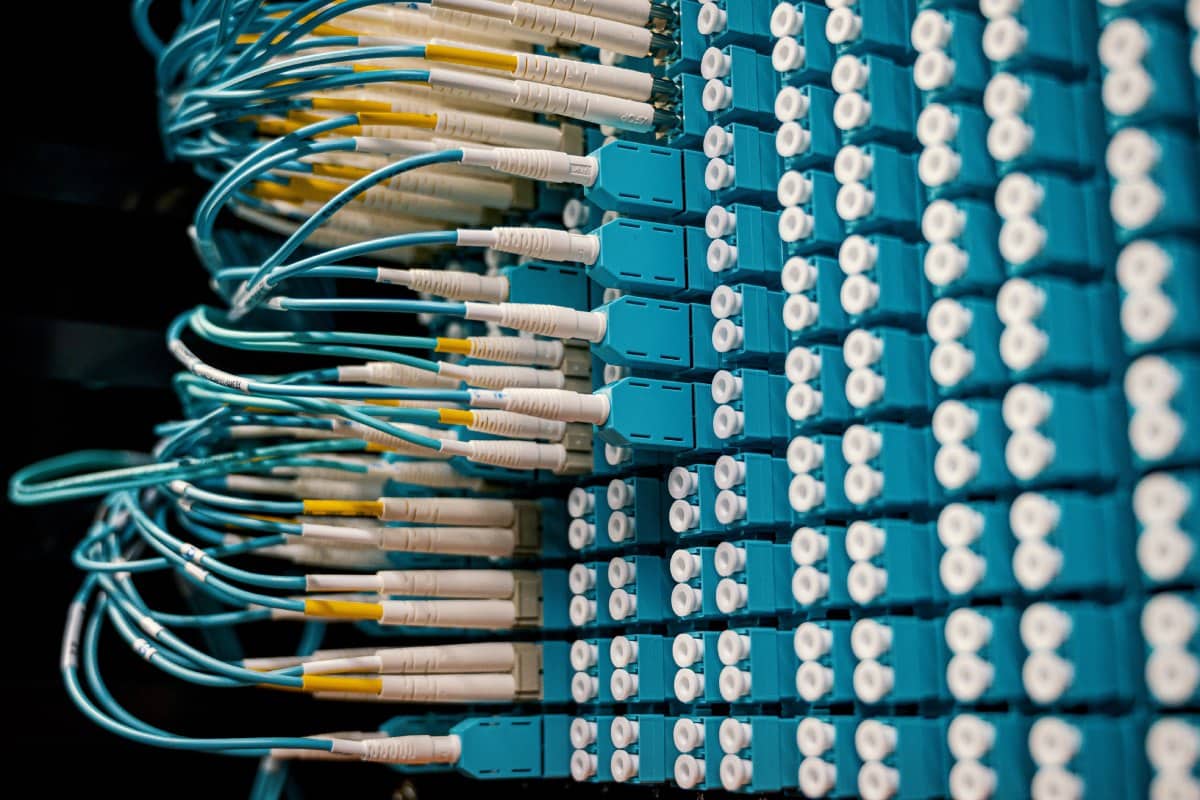
- Interconnect Technologies: This business segment focuses on manufacturing high-performance wires and cables, including fiber optic cables.
- Fluid Technologies: There it provides industry-leading solutions for all areas of spraying and painting applications.
- Brake & Friction: With this segment it is the global market leader in the development and manufacture of innovative braking and friction system solutions.
Now let's take a look at the most recently published figures for the third quarter of 2020 (ended September 30, 2020). Revenue came to 1,126.7 million US dollars, which corresponds to a decline of 12 percent compared with the prior-year quarter. Profit also fell by 18.5 percent over this period to 155.7 million US dollars. It shouldn't come as a surprise that earnings per share were also weaker as a result: instead of $2.40 in Q3 2019, the company now realized $1.87/share. It attributes this less pleasing result primarily to a decline in orders due to Covid-19. But higher labor costs and increased restructuring measures also led to this result. Interestingly, analysts had expected an even worse result, which is why the stock has gained over 23 percent since then. In the long run, I'm definitely convinced by Carlisle Companies. However, I personally will wait for the next quarterly figures before possibly adding a few shares to my portfolio. The current euphoria on the stock market makes me a bit more cautious.
In order to stay high-growth and highly profitable in the future, the company set up Vision 2025 a few years ago. In it, it lays down various goals that it has been working on at full speed ever since. For example, by 2025 it wants to reach annual revenue of 8 billion USD, increase the operating margin to 20 percent and realize earnings per share of 15 USD. That's certainly an ambitious goal, which it wants to achieve on the one hand through sensible business acquisitions and on the other through the training and development of promising young employees. The year 2020 has surely put a few obstacles in the way of this vision, but I can well imagine that the company will emerge stronger from the crisis.
What about the dividend?
Shareholders received their first share of the profits in the form of dividends as early as 10 years before the IPO in 1960. Since 1976, the industrial giant has also managed to raise its dividend every year. The dividend growth rate over the last 10 years is a solid 6.6 percent - looking at the last 5 years it's even a remarkable 11.5 percent. The current dividend yield of 1.4 percent and the low payout ratio of 33.5 percent are quite respectable too. In my view, there's nothing standing in the way of Carlisle Companies joining the elite circle of Dividend Kings in a few years.
Conclusion:
The days when the company focused entirely on making bicycle inner tubes are long gone. Carlisle Companies Inc. has developed into an industrial conglomerate that is present worldwide with its diverse product range and will thus surely put a smile on long-term investors' faces in the future as well.
Epilogue · November 1, 2026
What became of it
5 years and 10 months have passed since this article. If you had invested €1,000 on the day it was published, this is where you would be today:
Bitcoin came out ahead.
- Carlisle Companies, incl. dividends:
- The same €1,000 in Bitcoin: