DividendeOhneEnde · January 3, 2021
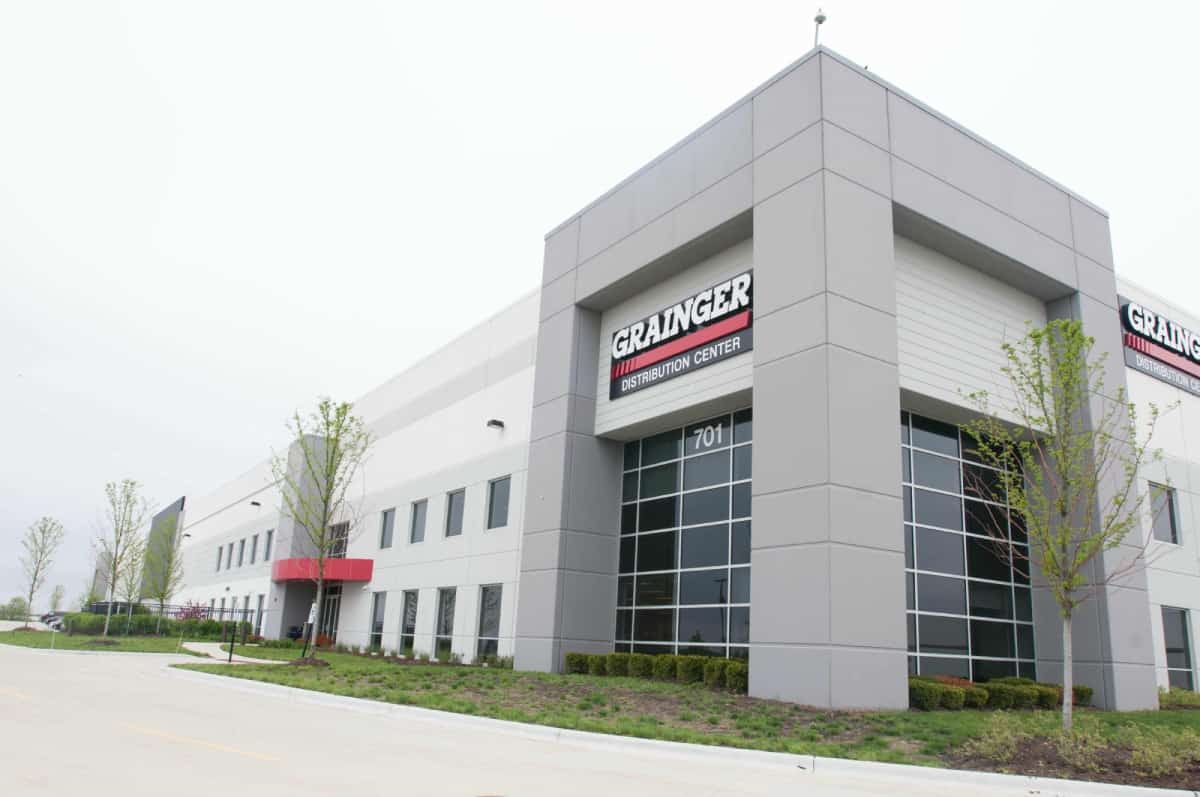
W.W. Grainger
The industrial middleman
- Ticker
- GWW
- ISIN
- US3848021040
- WKN
- 857498
- Country
- USA
- Industry
- Industrials
- Sector
- Machinery
- Market cap
- $26.5 billion
- Dividend yield
- 1.30%
- Payouts
- quarterly
- First dividend
- 1965
- Status
- Dividend King
- Dividend yield
- 1.3%
- Dividend growth
- 6.4%
- Payout ratio
- 26.2%
- Share price growth
- 133.4%
- Earnings growth
- 19.5%
- Revenue growth
- 7.1%
- Debt ratio
- 16.6%
The DOE score was my rating at the time, based on these figures, from A (very good) to E. Figures as of October 11, 2022, shortly before the blog ended.
Contents
Will it be crowned Dividend King this year?
Based on which factors do you decide whether a stock makes it into your portfolio or not? Is it appealing metrics, like a high dividend yield, solid revenue growth or an attractive price/earnings ratio? Or do you pay more attention to promising future prospects and great entry opportunities? For my part, I look at the most important dividend and growth metrics, but I place just as much importance on my existing portfolio. Which industry or which country isn't strongly represented in my portfolio yet? And where can I diversify more broadly?
Today I get to introduce you to another rather defensive and fairly boring stock that might enrich one portfolio or another. W.W. Grainger Inc. supplies its more than 3.8 million customers with all kinds of industrial supplies. From the small hex bolt to hearing protection all the way to electric motors and light bulbs - at W.W. Grainger you're guaranteed to find what you need, much to the delight of investors.
The origins and business model of W.W. Grainger Inc.
The story of the industrial wholesaler begins on July 5, 1895, when William Wallace Grainger was born in Chicago. Just a few years later, the Graingers decided to buy and farm a 40-hectare farm in the countryside north of Chicago. Even back then, an inventive entrepreneurial spirit was slumbering in William: on his way to school, he regularly dug earthworms out of the ground and later sold them to local fishermen for a few cents. At the age of 20, he joined the US Navy and worked his way up to the rank of Chief Petty Officer. Almost 3 years later, in 1918, he gave up his military career and decided to study at the University of Illinois. Since he was very interested in revolutionary electrical engineering, he earned a Bachelor of Science and eventually became an electrical engineer. Bill, as he was usually called, found a job in a small tinkerer's workshop and from then on designed his own electric motors. Occasionally he helped out in sales and discovered a new talent in selling his motors. In fact, he had to be reined in because his sales commissions were getting too high.
In 1927, Bill took the initiative and founded his own mail-order motor business, which he promptly named after himself - W.W. Grainger Inc. was born. Together with his sister Margaret, he rented a small office in Chicago and published his first 8-page sales catalog called MotorBook, which back then contained just 41 different electric motors. His timing couldn't have been better: at that time, many industrial companies that had previously driven their entire production line with a single motor were switching to individual motors per workstation. In addition, city utilities were gradually starting to switch from direct current to alternating current, which also boosted demand for new electric motors. The mail-order business went so well that in its very first fiscal year the company decided to significantly expand its sales catalog. Now W.W. Grainger also offered drills, pumps, saws, testing equipment and other electrical equipment.
Because demand for Grainger's products was so great, the young company even managed to keep making a profit during the devastating Great Depression. To offer its customers better service, it opened its first branch in Philadelphia in 1933. Grainger opened more branches just one year later in Atlanta, Dallas and San Francisco. By 1937, it had 16 branches and cracked the impressive mark of one million US dollars in annual revenue. W.W. Grainger was also able to keep developing nicely during World War II. Although the normal market stagnated somewhat and the company now also sold Bibles, wristwatches and toys as a substitute, revenue rose from 2.6 million US dollars in 1941 to 7.8 million US dollars in 1948. After the war, growth began to explode, and W.W. Grainger was able to become the leading nationwide distributor of all kinds of industrial materials. Today the company markets over 1.6 million products from about 5,000 manufacturers and generated 11.5 billion US dollars in revenue with them in fiscal year 2019. With its online stores, W.W. Grainger Inc. is also extremely well positioned for the future.
How could W.W. Grainger develop in the future?
First, I'd like to summarize the business model of this industrial middleman once more. W.W. Grainger currently has a total of 32 distribution centers and 454 branch locations worldwide. Most of them, of course, in its home country, the USA, and in Canada. It serves customers of all sizes with their specific industrial needs. It divides its sales channels into two different models.
- High-Touch Solutions: Here it serves its business customers with complex purchasing requirements and develops tailor-made solutions together with them, in order to build deeper customer relationships. Orders are placed through an on-site sales representative, at a branch, by phone or through one of the online stores.
- Endless Assortment: This sales channel is suited to less complex ordering processes. Customers in the USA and Europe order via the online platform Zoro and customers in Japan via MonotaRo. Using the optimized online search functions, customers quickly find the products they want in the extensive range.
Now let's take a look at the most recently published numbers for the third quarter of 2020 (ended September 30, 2020). In this quarter, W.W. Grainger generated revenue of 3.02 billion US dollars, which represents solid growth over the prior-year quarter's 2.95 billion US dollars. Along with that, it also increased earnings per share from 4.26 USD to 4.52 USD - and that, mind you, in this economically strained crisis year.
In general, I have to say that W.W. Grainger has positioned itself very well in a profitable market. However, there are of course also risks, which I'd like to briefly go into now. It's no secret that the company operates in a highly competitive business and has to hold its own against competitors like Fastenal, Home Depot, Lowe's Companies, but also Amazon. The latter in particular has said it wants to expand more into the B2B space in the future, which would certainly not be a good sign for Grainger. Of course, the company is aware of this danger and therefore invested early in expanding its digital infrastructure. I'm curious to see how all of this will develop in the future.
What's the story with the dividend?
Since 1965, W.W. Grainger shareholders have received a share of the profits in the form of dividends. Since 1971, the industrial supplier has also managed to raise the dividend year after year. If everything goes according to plan, it should be promoted to the coveted circle of Dividend Kings this year. The current dividend yield is a solid 1.4 percent, and the dividend growth rate over the last 10 years looks quite respectable at almost 10 percent. However, if you look at this growth rate over just the last 5 years, the figure shrinks to 5.3 percent. The payout ratio, though, is in the green zone at 50.9 percent.
Conclusion:
Over the years, W.W. Grainger has grown from a catalog seller into one of the leading suppliers to industry. I'm confident that the company can keep growing in the future and that long-term investors will be happy with this stock in their portfolio.
Epilogue · November 1, 2026
What became of it
5 years and 9 months have passed since this article. If you had invested €1,000 on the day it was published, this is where you would be today:
The stock came out ahead.
- W.W. Grainger, incl. dividends:
- The same €1,000 in Bitcoin: