DividendeOhneEnde · February 14, 2021
TOMRA Systems ASA
A sustainable sorting champion
- Ticker
- TOM.OL
- ISIN
- NO0005668905
- WKN
- 872535
- Country
- Norway
- Industry
- Industrials
- Sector
- Industrial services
- Market cap
- $4.6 billion
- Dividend yield
- 1.90%
- Payouts
- annually
- First dividend
- 1993
- Status
- Dividend Achiever
- Dividend yield
- 1.9%
- Dividend growth
- 10.6%
- Payout ratio
- 81.7%
- Share price growth
- 592%
- Earnings growth
- 13.6%
- Revenue growth
- 10.2%
- Debt ratio
- 24.4%
The DOE score was my rating at the time, based on these figures, from A (very good) to E. Figures as of October 11, 2022, shortly before the blog ended.
Contents
World market leader with high growth potential
In 2011 I moved to Munich for my apprenticeship. At first I lived in a youth residence that was very comfortable, but correspondingly pretty expensive. I still remember very well that things didn't look all that rosy for me financially back then - in fact, in some months I even had to pay more for the residence than I earned in my apprenticeship. To get some money, I regularly collected my roommates' deposit bottles. Well, if I'd paid a bit more attention at the bottle return machine back then, I probably would have discovered a first-class quality company - and, just as a side note, an investment since September 2011 would have returned about 935 percent (excluding dividends).
So today, let's take a look at TOMRA Systems ASA, the Norwegian market leader in reverse vending machines and sorting systems, which makes both long-term investors and environmental activists happy.
The history and business model of TOMRA Systems ASA
The founding of TOMRA Systems ASA goes back to the two brothers Petter Sverren and Tore Planke. Petter Sverre, the elder of the two, was born in Oslo on March 7, 1936, and his younger brother Tore on January 25, 1943. Both enjoyed a sheltered childhood and an outstanding education. Petter first chose to study art, which he successfully completed in 1955. About 3 years later he retrained as a sales representative and eventually found a job at the label company Antonson-Avery (the Scandinavian offshoot of Avery Zweckform). There he developed a good sense for customer needs while also honing his sales talent. Tore, on the other hand, had been fascinated by technology since he was little, which is why in 1969 he finally enrolled in the engineering cybernetics program at the Norwegian University of Science and Technology in Trondheim. He also studied computer science for controlling industrial processes and numerical control of machine tools.
With the boom of supermarkets and grocery stores, demand for a suitable bottle return system grew as well. Glass bottles in particular were expensive to produce, which is why people wanted to encourage customers to return them intact, in exchange for a deposit. However, manual returns were very time-consuming and costly, which is exactly what retailer Aage Fremstad from Asker complained about to Petter Planke one day. Without further ado, Petter teamed up with his brother Tore, and the two of them tinkered in their basement on the world's first fully automatic deposit bottle machine. For this, Tore developed an innovative system that could identify different types of bottles using photocells. After a few successful tests, the machine was installed in Fremstad's store on January 2, 1972. Just a few months later, both brothers decided to quit their jobs, and they founded Petter Planke A/S in an old workshop hall. Petter was managing director and head of sales, his wife Grete took care of the office, mother Vivien managed the switchboard, Tore could let off steam as technical director, and father Sverre became chairman of the young family business.
By the end of the year they had installed 29 machines in Norway, and interest abroad grew quickly. They were looking for a new name for their reverse vending machines that would be easy to pronounce all over the world - so they settled on TOMRA, derived from Tomflaske (Norwegian for "empty bottle") and Retur Automat (return machine). A little later, TOMRA also became the company name. Business was going brilliantly, and they were able to sign distribution agreements in Europe and the United States. When a Swedish wine merchant ordered 100 machines at once in 1974, it led to a revenue breakthrough, and the company was able to expand even faster. To raise capital, TOMRA was listed on the Oslo Stock Exchange in 1985. It wasn't until 2000 that TOMRA Systems began to diversify its business areas more broadly. After a few strategic acquisitions, it built up an additional growth driver with smart sorting systems for the food, recycling and mining industries. Today TOMRA Systems is by far the market leader with its reverse vending machines and is also perfectly positioned for the future with its sorting systems.
How can TOMRA Systems develop in the future?
First, I'd like to briefly sum up TOMRA Systems' business model again. The manufacturer of sorting systems for various applications divides its business mainly into two segments: Sorting Solutions and Collection Solutions. In the Sorting business, it makes machines used for sorting raw materials - mainly food sorters and peelers, waste sorting systems and mineral and ore sorting equipment. Under Collection Solutions, TOMRA offers not only its reverse vending machines, but also systems that break the collected bottles down into their components and then recycle them in an environmentally friendly way.
Now let's take a look at the figures from the most recently published quarter (Q3 2020). Revenue in this period amounted to 2,578 MNOK (million Norwegian kroner - roughly €278.5 million), which is a decent increase over the prior-year quarter's 2,378 MNOK. The Collection Solutions segment actually had to accept a slight revenue decline of one percent, whereas Sorting Solutions grew by a whopping 7 percent. I think that, especially due to COVID, some retailers had to pause or scale back investments. Thanks to lower operating expenses, profit rose from 414 MNOK in Q3 2019 to 501 MNOK now, which is something to be really happy with.
Below I'd like to briefly explain why I think TOMRA Systems can be a nice addition to a portfolio, especially for long-term investors. The world is drowning in plastic waste, and I think it's great that more and more governments and organizations are deciding to do something about it. Here in Germany we've had a working deposit bottle system since 2006 - if you look at other European countries, that's hardly the case there. Fortunately, several countries have now decided to introduce corresponding regulations, which will of course play into the hands of the world market leader in reverse vending machines.
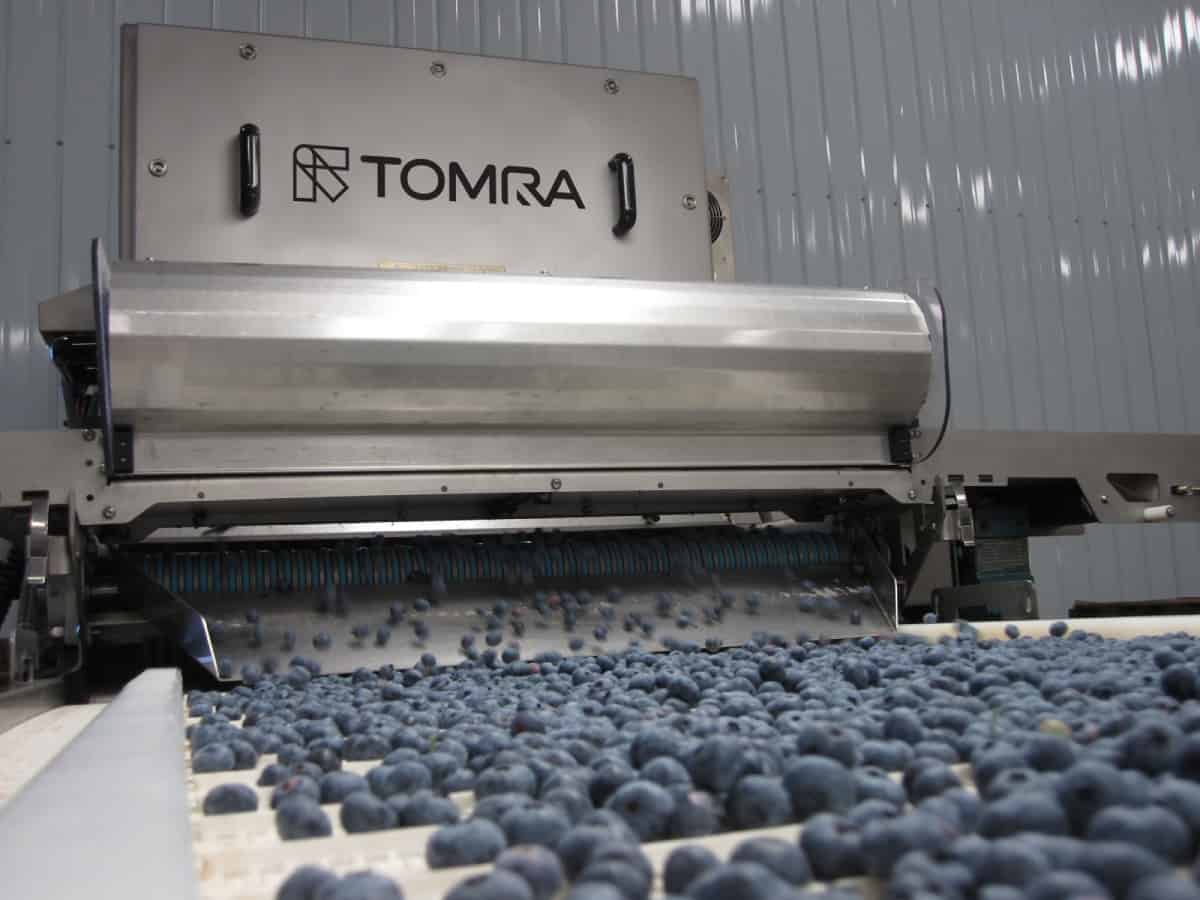
TOMRA has also positioned itself optimally with its sorting solutions. It isn't the market leader here yet, but demand keeps picking up, which is also due to the outstanding quality of its innovative machines. Farmers need fewer staff to sort out bad fruit or vegetables, mining companies can work in a much more resource-efficient way, and waste sorting facilities are many times more efficient too. I have no doubt that TOMRA can grow strongly in this segment in the future as well.
What about the dividend?
Since 1993, TOMRA Systems shareholders have received a share of the profits in the form of dividends. The machine maker hasn't always managed to raise the dividend every year since then, but the average dividend growth rate in recent years is still more than remarkable. Looking at the last 10 years, it raised its dividend by a whopping 27.8 percent per year - if you look at just the last 5 years, you get a figure of 33.1 percent. The current dividend yield is a solid 1.4 percent. Only the payout ratio is clearly too high at the moment at 111 percent - management is aiming for a figure of 40-60 percent here, which I think is reasonable.
Conclusion:
Go through the world with your eyes open - lucrative investment opportunities can be lurking around every corner or in every supermarket! TOMRA Systems runs a sustainable yet very high-growth and future-proof business model that can keep shareholders happy for a long time to come.
Epilogue · November 1, 2026
What became of it
5 years and 8 months have passed since this article. If you had invested €1,000 on the day it was published, this is where you would be today:
Bitcoin came out ahead.
- TOMRA Systems ASA, incl. dividends:
- The same €1,000 in Bitcoin: