DividendeOhneEnde · September 15, 2019
PepsiCo
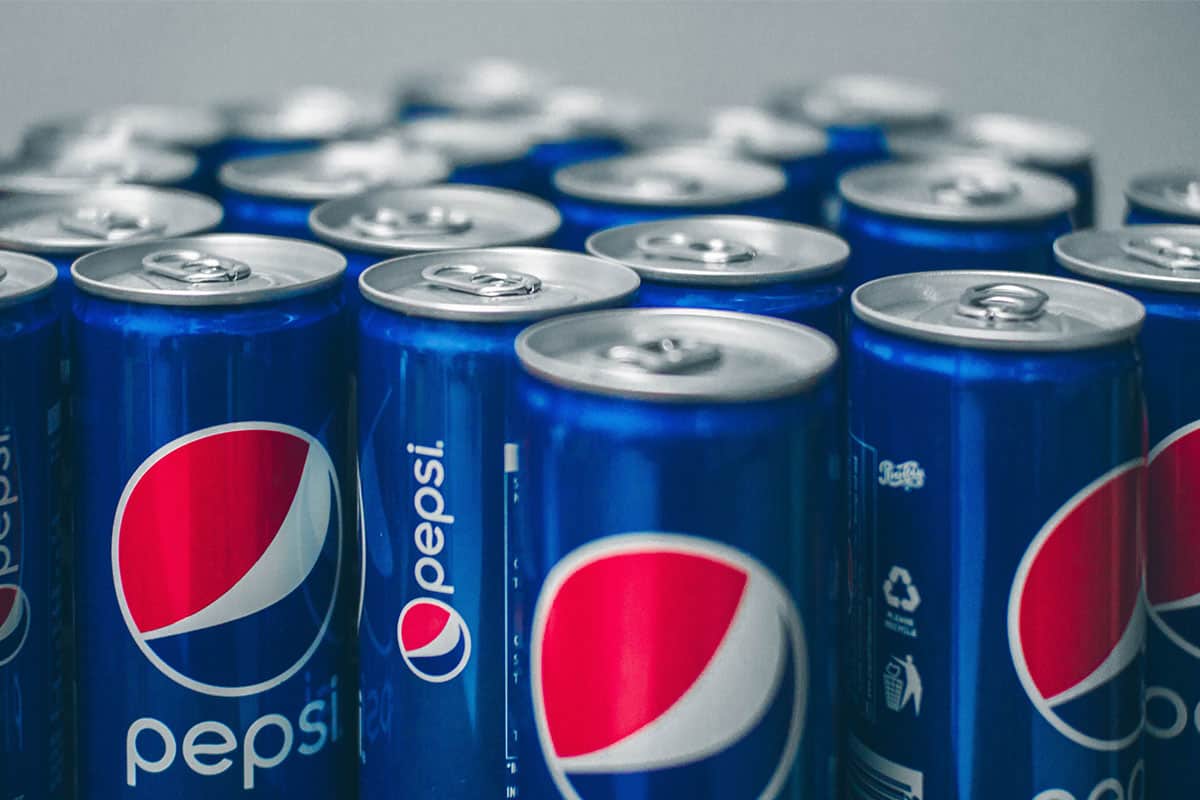
The cola with pep
- Ticker
- PEP
- ISIN
- US7134481081
- WKN
- 851995
- Country
- USA
- Industry
- Consumer staples
- Sector
- Beverages
- Market cap
- $231.1 billion
- Dividend yield
- 2.70%
- Payouts
- quarterly
- First dividend
- 1965
- Status
- Dividend King
- Dividend yield
- 2.7%
- Dividend growth
- 7.8%
- Payout ratio
- 67%
- Share price growth
- 133.5%
- Earnings growth
- 5.7%
- Revenue growth
- 5.8%
- Debt ratio
- 29.8%
The DOE score was my rating at the time, based on these figures, from A (very good) to E. Figures as of October 11, 2022, shortly before the blog ended.
Contents
Don't they have more to offer than soft drinks?
Most Germans will naturally associate PepsiCo with the sugary thirst quencher Pepsi. Everyone knows about the rivalry between Pepsi Cola and the original Coca-Cola. And even though Pepsi will forever remain number 2 for many consumers, the company behind the soft drink has a lot more to offer than you might think at first.
PepsiCo is now number 3 among the world's largest consumer goods manufacturers, behind Nestlé and Procter & Gamble. The company has positioned itself very well in the snack segment. In the beverage market, too, PepsiCo takes 3rd place - AB InBev and Coca-Cola are still ahead of it. But what counts is that the stock has been climbing phenomenally for ages. And what makes me particularly happy as a dividend investor, of course: the dividend has been raised year after year since 1973. So I really don't care who has the better cola recipe ...
The history and business model of PepsiCo Inc.
Caleb Davis Bradham was born in North Carolina in May 1867. After finishing school, Caleb went to the University of Maryland to study medicine - his plan was to become a doctor. To earn some extra money during his studies, he worked part-time in a small pharmacy. For family reasons, however, he had to drop out and move back to North Carolina. So he couldn't become a doctor for the time being, and Bradham decided to open his own pharmacy in downtown New Bern. At that time it was common for pharmacists to have a soda machine in their shop for carbonating water. Bradham soon came up with the idea of mixing a soft drink that would be both tasty and good for digestion. After several attempts, he hit on a bestseller in the summer of 1893. He called the mixture of sugar, water, caramel, lemon oil, nutmeg and other natural additives "Brad's drink". By the way, the digestive enzyme pepsin was not part of the recipe.
In 1898 the drink was renamed Pepsi-Cola. At that time Bradham made the syrup himself in the basement of his pharmacy and sold it by the gallon to nearby pharmacies. Since its popularity and demand kept growing, Bradham decided in December 1902 to found the Pepsi-Cola Company. In 1904 the company decided to offer Pepsi-Cola in bottles as well. The first franchisees came on board and Pepsi quickly became known across the whole country. But then the rosy times ended for Pepsi. During World War I, sugar was heavily rationed and the price rose from 5.5 cents to a high of 26.5 cents per pound. Bradham had the choice of shutting down his business and waiting until prices fell again, or buying a large amount of sugar to keep producing. He chose the latter, but shortly afterwards the price of sugar fell to a low of 2 cents. This crash led to the bankruptcy of the Pepsi-Cola Company. In 1923 the company was sold to investment banker Roy C. Megargel for 30,000 dollars.
More takeovers followed, until Pepsi-Cola was bought in 1931 by Loft Candy Inc., a candy manufacturer. However, business didn't really take off, since most consumers by then simply reached for Coca-Cola. Only when the company offered its cola in bottles twice as big, but at the same price as the competition, did sales gradually pick up again. In 1965 it finally merged with Frito-Lay Inc., a chips & snack manufacturer, and PepsiCo Inc. was born. Today PepsiCo has a multitude of brands in its portfolio, and 22 brands alone each generate annual revenue of 1 billion US dollars. These of course include Pepsi itself, but also Lay's chips, Doritos nachos, Tropicana, Aquafina, Cheetos, 7up and even Starbucks Frappuccino.
What is PepsiCo planning for the future?
Just like at Coca-Cola, the health trend hasn't passed PepsiCo by without leaving a mark. More and more people are paying attention to their fitness, and sugary soft drinks don't really fit into their diet. You can see this quite well in this statistic. While PepsiCo's beverage division still generated 52% of net revenue in 2011, in 2018 it was "only" 46%. Of course, management noticed this too and responded accordingly. So by now the portfolio includes not only the sports drink brand Gatorade, but also the popular soda maker brand Sodastream. The latter was acquired last year for $3.2 billion.
Since October 2018, PepsiCo has had a new boss. The Spaniard Ramon Laguarta has been with the company for 22 years and knows the business inside out. Just like his predecessor, he will continue to focus on sustainability and a healthier image. That's also one reason why PepsiCo wants to invest around $4 billion in Mexico over the coming years. The aim there is not only to boost agriculture, but also to expand infrastructure and become more sustainable in general.
Management also announced that the restructuring program originally planned to run until the end of 2019 has been extended until 2023. By introducing new technologies, a leaner corporate structure and automated processes, the company wants to save more money in the long run. This overhaul is expected to cost around 2.5 billion US dollars. For this reason, a forecast of declining profits for 2019 was also issued. In the long run, of course, this restructuring will pay off.
And what about the dividend?
The first profit distribution was paid out to shareholders in 1965. Since 1973 it has even been raised every year. If that continues for the next 4 years, then by simple math PepsiCo will join the elite circle of Dividend Kings in 2023. The current dividend yield is 2.8% and the dividend increase is around 8% (10-year average) per year. That's respectable, although with a relatively high payout ratio of 70% you do have to watch out that not too little stays in the company itself. But as long as the share price and profits keep growing, I see no reason to worry.
Conclusion:
PepsiCo has long been more than just a Coca-Cola competitor. With its snack division, the New York-based company generates growing revenue, and the beverage division is running steadily as well. Western countries are certainly paying close attention to their diets right now, but in emerging markets sugary drinks are still in high demand. If you want to own a long-term stake in this (hopefully) soon-to-be Dividend King, you can do so even at an all-time high.
Epilogue · November 1, 2026
What became of it
7 years and 1 month have passed since this article. If you had invested €1,000 on the day it was published, this is where you would be today:
Bitcoin came out ahead.
- PepsiCo, incl. dividends:
- The same €1,000 in Bitcoin: