DividendeOhneEnde · March 24, 2019
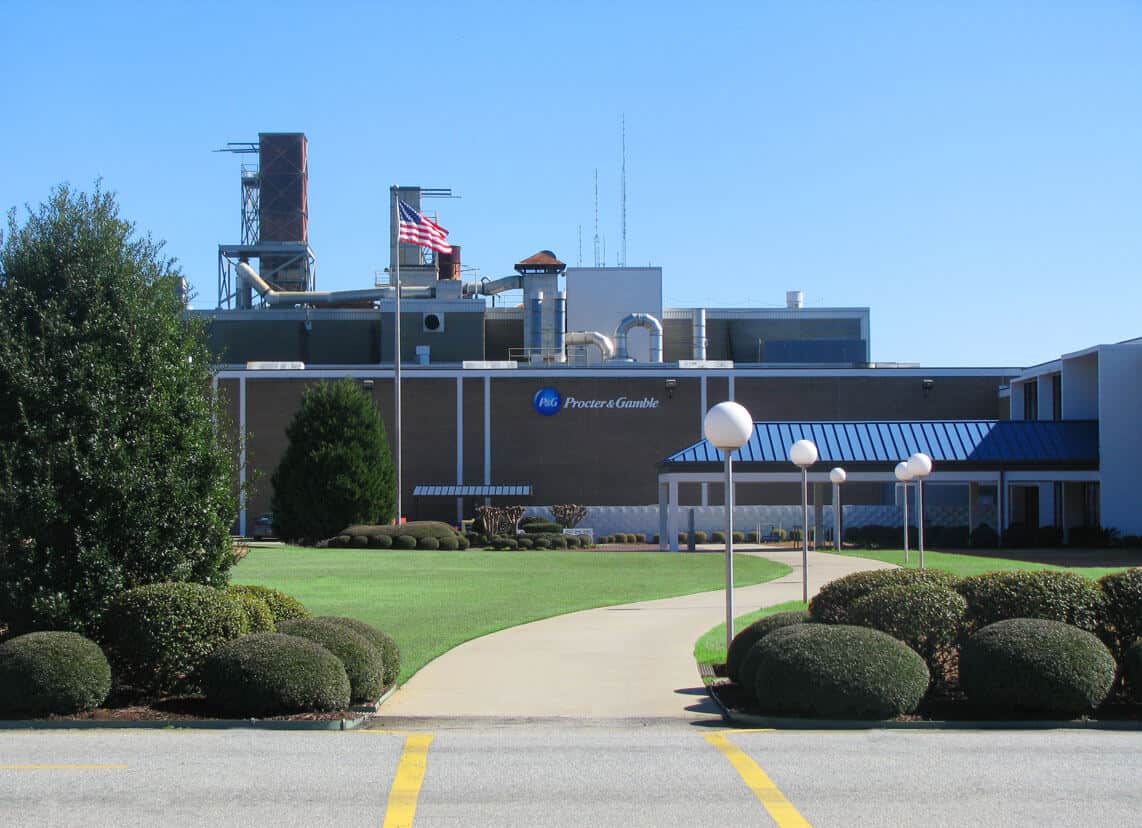
Procter & Gamble
From Cincinnati to the supermarket shelf
- Ticker
- PG
- ISIN
- US7427181091
- WKN
- 852062
- Country
- USA
- Industry
- Consumer staples
- Sector
- Household & personal products
- Market cap
- $320.4 billion
- Dividend yield
- 2.90%
- Payouts
- quarterly
- First dividend
- 1890
- Status
- Dividend King
- Dividend yield
- 2.9%
- Dividend growth
- 5.9%
- Payout ratio
- 61.6%
- Share price growth
- 82.9%
- Earnings growth
- 9.3%
- Revenue growth
- 4.1%
- Debt ratio
- 13.4%
The DOE score was my rating at the time, based on these figures, from A (very good) to E. Figures as of October 11, 2022, shortly before the blog ended.
Contents
The standard dividend investment
Consumption. We live in a crazy world! More and more people are falling for consumerism and becoming its victims. They only work so they can keep consuming. And the banks encourage it. They hand out loans for pricier purchases, like a new Rolex watch or a stylish Louis Vuitton bag. But negative interest rates are also meant to lead to more consumption and boost the economy. So the population is being instrumentalized and used! But enough of that - today we're talking about a different kind of consumption.
Do you wash your hair with shampoo? Do you brush your teeth every day? Do you use a razor or wash your clothes? Do your kids maybe still wear diapers? This is exactly the kind of consumption Procter & Gamble has specialized in. Everyday items we have to use regularly. And business has been booming for over 180 years. No wonder the consumer goods maker's stock is a staple in many portfolios.
The origins and business model of the Procter & Gamble Company
You can certainly call it a coincidence that the consumer goods giant Procter & Gamble exists today. In 1837, the two founders William Procter and James Gamble married the sisters Olivia and Elizabeth Norris and got to know each other that way. William Procter came from England and settled in Cincinnati as a candle maker. James Gamble immigrated from Ireland and had trained as a soap maker. Their new father-in-law, Alexander Norris, noticed that both needed fat as a raw material and therefore suggested they go into business together. That way they could buy fat in larger quantities more cheaply.
The two loved the idea, and so on October 31, 1837, they signed the partnership agreement that had been drawn up, and the Procter & Gamble Company was born. At that time, however, starting your own business was extremely risky. Besides the fact that the USA was in a financial emergency, it didn't play into their hands that there were 14 other candle makers and soap manufacturers in Cincinnati alone. But the two weren't deterred and strictly followed through with their plan. To stand out from the competition, they constantly refined their quality. Customers quickly noticed, and the Star Candle became a bestseller.
Through constant expansion of the product range and clever marketing ideas, the company quickly made a name for itself. Procter & Gamble is considered a pioneer of brand management - here, it's mainly the brand of the respective product that's advertised, while the company itself usually stays in the background (e.g.: many people know the shampoo head&shoulders, but few know the manufacturer Procter & Gamble). From the 1930s on, the company sponsored radio shows aimed mainly at housewives - incidentally, that's how the term Daily Soap, or in German Seifenoper (soap opera), came about.
Today, consumer giant Procter & Gamble has some of the world's best-known brands on supermarket shelves. Besides feminine hygiene products from always, there's also laundry detergent from Ariel or toothpaste from Oral-B. Then there's air freshener from Febreze, diapers from Pampers or the popular razors from Gillette and Braun. And those aren't nearly all of the well-known brands. By now, it should be clear to everyone that the company is very broadly diversified and can therefore generate revenue continuously.
What does Procter & Gamble have planned for the future?
If you look at the stock chart, you'll quickly spot a small correction last year. Retailers are under enormous price pressure, so it's no wonder they're also putting pressure on their suppliers. In addition, new competitors have pushed into the market. Fortunately, P&G's management reacted years ago and initiated a restructuring. From 2013 to '17, the product range was shrunk from 170 to 65 brands. True to the motto: less is more! That way the company can better focus on its most successful brands.
And the new structure is already bearing fruit. With annual revenue of 65 billion US dollars, Procter & Gamble is one of the most profitable companies in the consumer goods industry. No reason for the board to take a break. By 2021, it wants to cut costs by another 10 billion dollars. It also wants to drive growth with lucrative and fitting acquisitions.
What's next for the dividend?
A payout has been made to shareholders year after year since 1890. Since 1957, this dividend has also been raised every year - over the last 10 years by an average of 7% per year. With such an exemplary dividend policy, the company can of course adorn itself with the title "Dividend King". It can be assumed that this behavior won't change anytime soon. The payout ratio is already relatively high at 73%, but there's still enough money left in the company to keep growing and to develop new products.
Conclusion:
Procter & Gamble is rightly a standard dividend stock in many portfolios. With so many brands that are bought by the heap every day, it's extremely well positioned. Even in weaker economic phases, we have to wash ourselves and diaper babies. So with a growing world population, revenue will shoot up too. A great investment for dividend hunters or long-term strategists.
Epilogue · November 1, 2026
What became of it
7 years and 7 months have passed since this article. If you had invested €1,000 on the day it was published, this is where you would be today:
Bitcoin came out ahead.
- Procter & Gamble, incl. dividends:
- The same €1,000 in Bitcoin: