DividendeOhneEnde · June 21, 2020
Ross Stores
Clothing for Everyone
- Ticker
- ROST
- ISIN
- US7782961038
- WKN
- 870053
- Country
- USA
- Industry
- Consumer discretionary
- Sector
- Specialty retail
- Market cap
- $30.1 billion
- Dividend yield
- 1.40%
- Payouts
- quarterly
- First dividend
- 1994
- Status
- Dividend Contender
- Dividend yield
- 1.4%
- Dividend growth
- 15.3%
- Payout ratio
- 28.9%
- Share price growth
- 174.2%
- Earnings growth
- 7.5%
- Revenue growth
- 6.8%
- Debt ratio
- 40.9%
The DOE score was my rating at the time, based on these figures, from A (very good) to E. Figures as of October 11, 2022, shortly before the blog ended.
Contents
The off-price retailer
As investors, we constantly have to ask ourselves which stocks we want to invest in. Of course they should be promising, high-growth companies that can also weather a more severe economic crisis. And if you look at the current unemployment statistics, you could conclude that a recession might be coming. Emphasis on "might", nobody knows for sure! So should we now start stashing our money under the pillow? Definitely not, because there are also companies that do well in times like these.
What always helps me here is asking: how are people more likely to behave in a crisis? Do they buy the new BMW, or do they save and go eat at McDonald's? Do people buy expensive luxury brands, or do they maybe go shopping at the discount clothing store after all? And for exactly this reason, today I'm presenting the Californian apparel company Ross Stores.
The history and business model of Ross Stores Inc.
In 1909, Morris "Morrie" Ross was born in California. He grew up in San Rafael, near San Francisco. After successfully graduating from high school, he was hired by Levi Strauss & Company. However, Ross was fired on his very first day of work when the textile company found out that he didn't live in San Francisco and would have to commute every day. Back then the Golden Gate Bridge hadn't been built yet, so his commute was pretty long. But that didn't put off the motivated young man. Instead, from then on he worked at two import-export companies in San Francisco that had no problem with his commuting. He was employed there until his military service in 1943. After the end of the war, in 1950 to be exact, he opened his first clothing store with capital borrowed from his family and named it after his family name. He opened this first Ross Store on San Mateo Avenue in San Bruno (south of San Francisco). The business was so profitable that auditors and competitors could hardly believe it. Ross's recipe for success was his total control - he worked 85 hours a week and did all the purchasing and bookkeeping by himself.
After 8 years trapped in his own hamster wheel, Ross finally decided to sell his company to William Isackson. Isackson first had to hire 4 more employees to do the work that Ross had done alone. Unlike Ross, Isackson was more of an entrepreneur than a worker and therefore focused on growth and opening new stores. Over the next 24 years he therefore opened 5 more Ross Stores. Then a group of investors took notice of the profitable business and made Isackson a takeover offer he couldn't refuse. So 1982 marked a decisive turning point in the history of Ross Stores Inc.. The masterminds of the investor group were Stuart Moldaw and Donald Rowlett. Both already had many years of experience in the off-price retail sector. These are stores that offer brand-name goods at significantly lower prices than is usual in other shops. Discounts of up to 60 percent were not uncommon. The two also expanded the product range to include brand-name clothing for men, women and children as well as housewares, shoes and accessories.
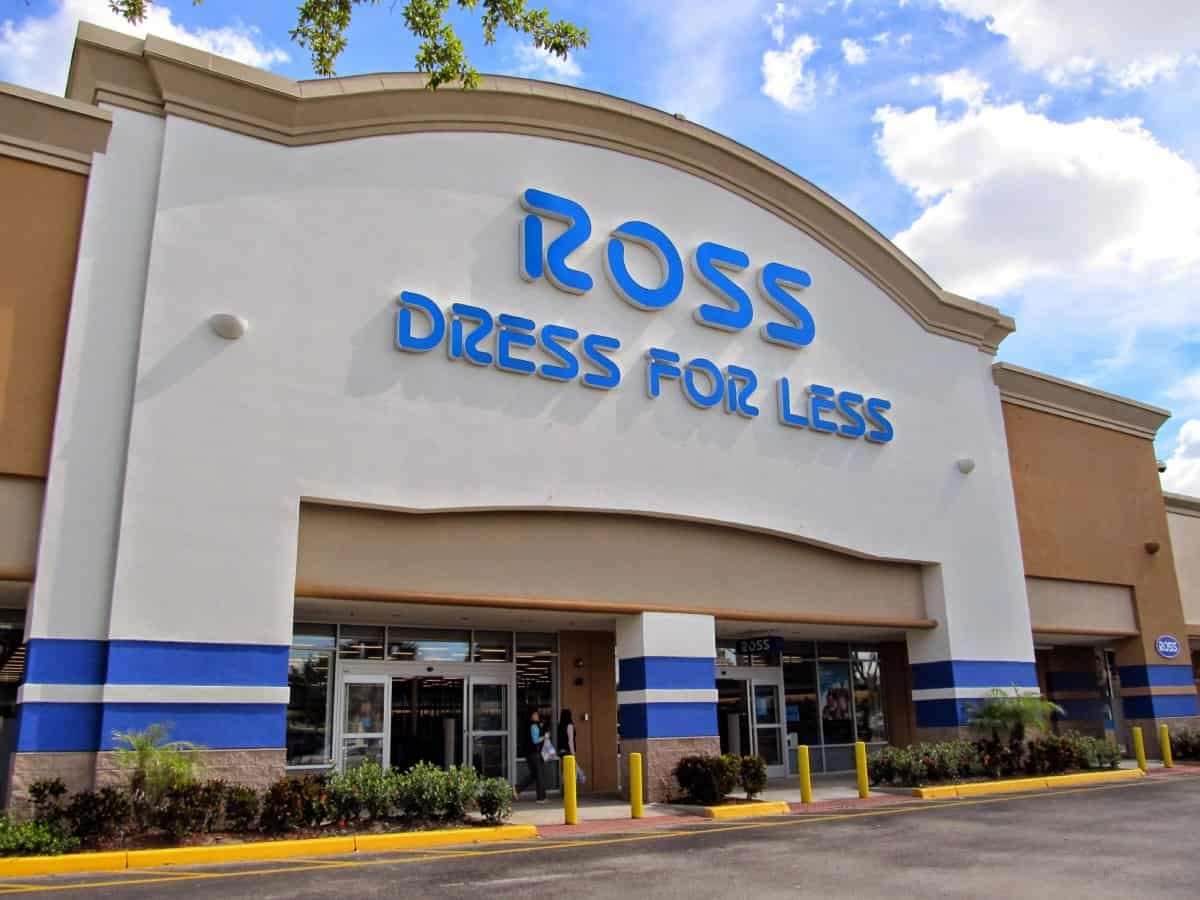
This concept was so popular that Ross Stores was able to grow at enormous speed. Within 3 years, the number of stores was increased from 6 to an incredible 107. The new "Dress for Less" stores often moved into vacant retail spaces in shopping centers. To raise more capital, the company went public in 1985. It used the fresh money to invest in better infrastructure and better management. Only that way could growth be made more effective. By the end of 1995 it had grown to 292 Ross Stores in 18 states, with annual revenue of 1.4 billion US dollars. In 2004 the company introduced dd's Discounts, another retail chain aimed at customers with more moderate incomes. Currently Ross Stores Inc. has a total of 1,546 Dress for Less stores and 259 dd's Discounts, generating record revenue of 16 billion US dollars last year.
How can Ross Stores develop in the future?
I already mentioned it in the introduction: I don't expect everything to be fine again tomorrow and for things to carry on as if nothing had happened. The virus and its economic consequences will stay with us for a while. But the world isn't ending, and people won't walk around naked even in a crisis.
I'm aware that Ross Stores is also suffering massively from the coronavirus. But it's also a fact that it has already taken extensive cost-cutting measures. Barbara Rentler, CEO of Ross Stores, recently announced in a conference that the company had drawn on a revolving credit facility of 800 million US dollars, suspended the share buyback program and aggressively cut ongoing costs across the entire company. Among other things, the quarterly dividends also had to go. In addition, the number of new store openings was reduced. But Rentler further explained that Ross Stores' financial situation is in very good shape. Besides its cash holdings, it also has around 3 billion US dollars in liquid funds. The measures taken are therefore safety-oriented in nature.
Based on internal studies, Ross Stores has set itself the long-term business goal of continued expansion to 2,400 Dress for Less locations and 600 dd's Discounts across America. Admittedly, it's being slowed down a bit at the moment, since the first quarter of 2020 was the first negative one in over 30 years. Nevertheless, I'm confident that the retailer's off-price concept will continue to prevail and that it can realistically achieve its goals. In the long term I can also very well imagine an international expansion. After all, it's not only people in the USA who want to buy brand-name products cheaply, but people worldwide.
What about the dividend?
In general, Ross Stores has paid a dividend to its shareholders since 1994. It has also been raised every year for 19 years. Due to the current situation it has now been suspended, which I can absolutely understand and which I fully support from a business point of view. After all, what's the point of paying a dividend 1-2 more times on credit if it puts you in financial trouble? But I can also very well imagine that the company will not only resume the payout as soon as the crisis is over, but also make up for the missed payments later with a special dividend.
Conclusion:
The company Ross Stores developed only slowly at first, but over time the ball really got rolling. There's no question that it's suffering from the severe consequences of the current crisis. But I'm confident that it will emerge from it stronger. Anyone who thinks long-term with their investments should take a closer look at this company.
Epilogue · November 1, 2026
What became of it
6 years and 4 months have passed since this article. If you had invested €1,000 on the day it was published, this is where you would be today:
Bitcoin came out ahead.
- Ross Stores, incl. dividends:
- The same €1,000 in Bitcoin: