DividendeOhneEnde · November 30, 2020
Lancaster Colony
A Dividend King with taste
- Ticker
- LANC
- ISIN
- US5138471033
- WKN
- 858141
- Country
- USA
- Industry
- Consumer staples
- Sector
- Food & tobacco
- Market cap
- $4.5 billion
- Dividend yield
- 2.00%
- Payouts
- quarterly
- First dividend
- 1963
- Status
- Dividend King
- Dividend yield
- 2%
- Dividend growth
- 7.5%
- Payout ratio
- 98.5%
- Share price growth
- 121.2%
- Earnings growth
- -4.8%
- Revenue growth
- 6.5%
- Debt ratio
- 1.9%
The DOE score was my rating at the time, based on these figures, from A (very good) to E. Figures as of October 11, 2022, shortly before the blog ended.
Contents
The kitchen's best-kept secret
Investor or not, I'm sure everyone knows world-famous companies like Nike, McDonald's or Apple. These are undoubtedly top companies that have proven many times over that they understand their business extremely well and can stay profitable even in economic crises. Hand on heart, nobody needed a stock blog like DividendeOhneEnde to "discover" these companies. And yet I found it extremely important to write about these three stocks too; after all, only very few people actually have them in their own portfolio.
Today, though, I've once again come across a true hidden champion that I'm sure many readers haven't had on their radar yet. I'm talking about the Lancaster Colony Corporation - a food manufacturer that has been highly profitable for decades and is also quite rewarding as a dividend stock. Reason enough to take a closer look at this Dividend King.
The history and business model of Lancaster Colony Corp.
The holding company Lancaster Colony Corporation owes its success today in part to Teresa Marzetti. She was born in Florence in 1878 and, at the age of 18, emigrated from Italy to the United States of America with her husband Joseph. Her new adopted home was Columbus, in the state of Ohio. To feed the many hungry students of Ohio State University, she opened an Italian restaurant near the campus. Word of her delicious dishes spread quickly, and the restaurant was a huge success. In 1911 Joseph died, and Teresa now had to run the business on her own. She rolled up her sleeves and worked tirelessly. By 1919 she had saved enough money to open a second restaurant in downtown Columbus. Marzetti's fame grew as more and more restaurant guests started taking her salad dressings home in mason jars. Her coleslaw and French dressings in particular were real bestsellers. For this reason, in 1940, together with her second husband Carl Schaufele, she opened a third, larger restaurant that was meant to replace the two smaller ones. Teresa used the upper floor of the restaurant for her small dressing factory, whose products she now also sold to various grocery stores in the city. In 1955 her own dressing bottling plant finally followed, and the T. Marzetti Company was born.
Before I go into more detail on how the T. Marzetti Company was bought by the Lancaster Colony Corporation, I'd like to quickly turn back the clock and travel to 1927. On January 28 of that year, John Bernard Gerlach was born, also in Columbus. His father John Joseph Gerlach worked as an accountant in his own firm, John Gerlach & Company. After John B. "Bernie" successfully graduated from college and Ohio State University, he began working in his father's firm. As accountants, the two of course knew exactly what makes a good company and which ones might be worth taking a stake in. And they did so on a grand scale. In addition, the two often had their services paid for in company shares. That's how their holdings kept growing, and soon they became majority owners of several smaller companies.
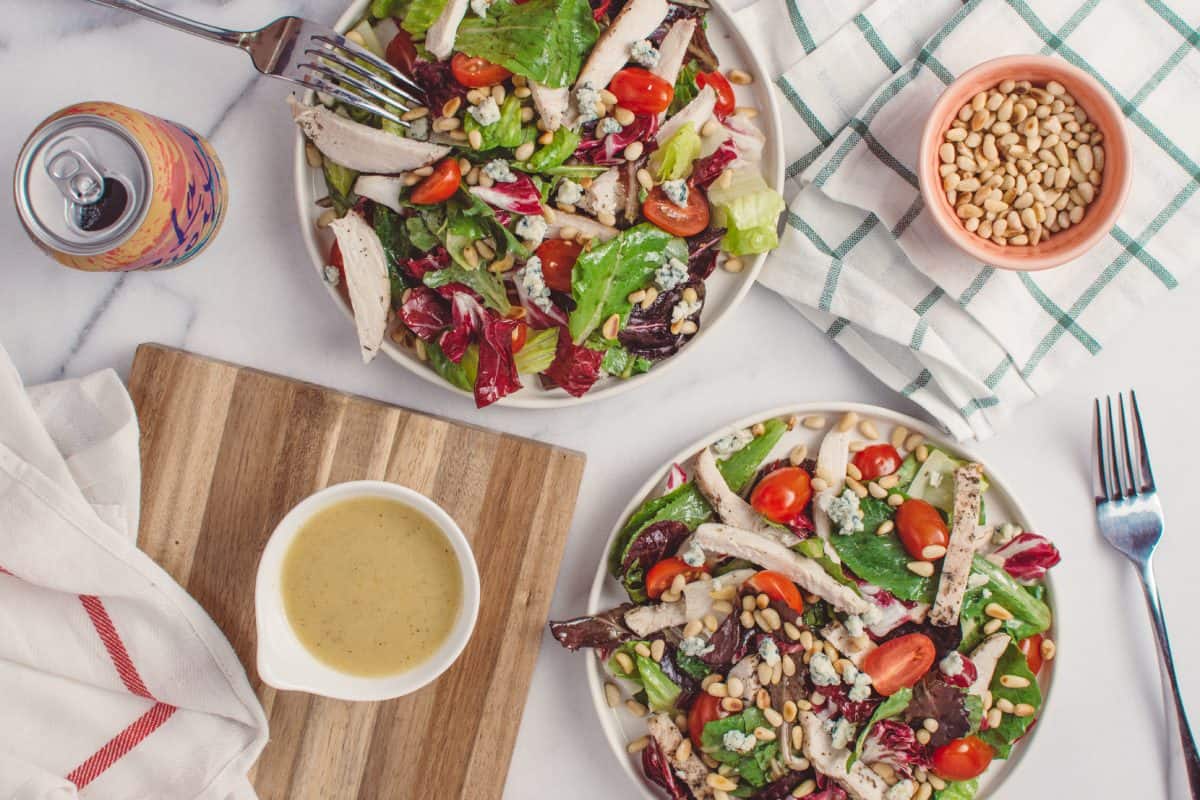
In 1961 Bernie decided to found a holding company called Lancaster Colony Corporation for all these holdings. These included manufacturers of glassware and bathroom and kitchen accessories, as well as producers of television components and work gloves. Business went very well, and in May 1969 the company decided to go public. When, just 2 months later, Teresa's second husband also died, she decided to sell her T. Marzetti Company to Lancaster Colony. For the holding company, this was its first contact with the food industry, and far from its last. Over the years it bought several more food manufacturers and put more and more focus on this industry. While it moved further and further into the food business with the acquisition of brands like New York Bakery, Sister Schubert's and Flatout, it reduced its holdings in the other sectors. Today the Lancaster Colony Corporation sells salad dressings, vegetable dips, croutons, sauces, pasta, caviar, garlic bread and rolls, among other things, both to consumers and to large national restaurant chains, cafeterias and university dining halls.
What does the future hold for the Lancaster Colony Corporation?
First, I'd like to take a quick look at the most recently published figures for the first quarter of fiscal 2021 (ended September 30, 2020). Net sales rose 3.6 percent to a new record of 349.2 million USD, compared to 337.1 million USD in the prior-year quarter. While retail sales rose by an impressive 16.6 percent, as demand for food for home use picked up significantly, sales in the foodservice segment for commercial customers were down around 9 percent. That's not surprising; after all, restaurants and cafeterias are suffering from the massive effects of Covid-19. Fortunately, there's an end in sight here soon. Due to increased costs (higher hourly wages, spending on protective equipment, etc.), earnings per share declined somewhat - from 1.48 USD to 1.35 USD.
In and of themselves, food companies are stable, but often also slow-growing businesses. This growth is driven by suitable acquisitions. However, this in turn also carries risks - after all, the Lancaster Colony Corporation could at some point overextend itself with an acquisition in the future and pay far too much. To be fair, though, you have to admit that the holding company has always proven in the past that they know exactly what they're doing. Acquired companies have always been integrated smoothly into its own business.
Apart from suitable acquisitions, the Lancaster Colony Corporation is also working on its own growth plan called "The Better Food Company". With it, the company wants to further simplify its supply chain and make it as efficient as possible, while at the same time planning to minimize costs and thereby increase profit margins. Even though Corona put a few obstacles in the way of this corporate vision, the company says it's in good spirits. How successfully this plan was ultimately implemented will probably become clear over the next few years.
What about the dividend?
Since 1963, shareholders have received a share of the profits in the form of dividends. On top of that, the Lancaster Colony Corporation has also managed to raise the dividend year after year since then. Only 13 American companies can point to such a long history of dividend increases. Looking at the last 10 years, the average dividend growth rate is a solid 8.7 percent. The current dividend yield of 1.6 percent is also quite respectable. Only the payout ratio, at just under 58 percent, could be a bit lower.
Conclusion:
I actually find it amazing myself, time and again, what interesting companies you come across even though you've been dealing with this topic for so long. The Lancaster Colony Corporation is undoubtedly a hidden champion with both attractive future prospects and an excellent dividend policy. Long-term-oriented investors will surely be happy here.
Epilogue · November 1, 2026
What became of it
5 years and 11 months have passed since this article. If you had invested €1,000 on the day it was published, this is where you would be today:
Bitcoin came out ahead.
- Lancaster Colony, incl. dividends:
- The same €1,000 in Bitcoin: