DividendeOhneEnde · November 22, 2020
Air Products & Chemicals
Supplies industry with gas and chemicals
- Ticker
- APD
- ISIN
- US0091581068
- WKN
- 854912
- Country
- USA
- Industry
- Materials
- Sector
- Chemicals
- Market cap
- $52.6 billion
- Dividend yield
- 2.80%
- Payouts
- quarterly
- First dividend
- 1954
- Status
- Dividend Aristocrat
- Dividend yield
- 2.8%
- Dividend growth
- 10.6%
- Payout ratio
- 63.4%
- Share price growth
- 205.5%
- Earnings growth
- 13.3%
- Revenue growth
- 8.3%
- Debt ratio
- 25.7%
The DOE score was my rating at the time, based on these figures, from A (very good) to E. Figures as of October 11, 2022, shortly before the blog ended.
Contents
Lifts more than just balloons
You know that typical financial porn along the lines of "This stock will make you a multimillionaire in 3 years"? It's probably no surprise that I'm absolutely not a fan of articles like that. It's just that titles like these drive high sales at the newsstand and high click rates online. Nevertheless, I'll keep preaching that you should invest in boring stocks and hold them for the long term. I'm convinced that this is better for private investors than betting on some new trend stock.
Apart from that, you can also cover exciting topics with boring stocks. So today I'm introducing the American industrial gas producer Air Products & Chemicals, which is currently working hard on eco-friendly hydrogen plants. So why invest in a highly speculative start-up when you have great options like Linde, Air Liquide or today's candidate?
The origins and business model of Air Products & Chemicals Inc.
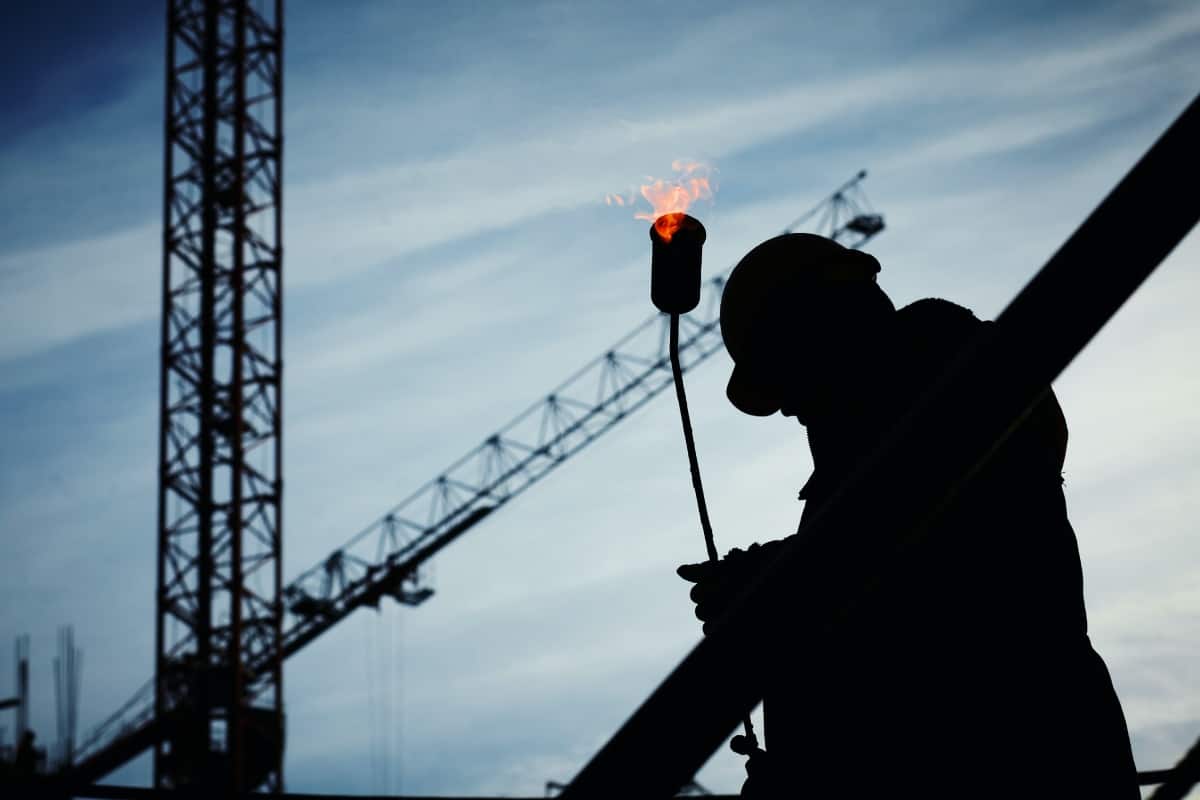
The story of Air Products & Chemicals Inc. begins on November 5, 1906, when Leonard Parker Pool was born in Minneapolis. His father, his grandfather and his uncle all worked in the railroad business. Leonard's father was a talented boilermaker, which is why the family had to move every now and then. First they moved to Montana and then to Pennsylvania. Despite all the moves, Leonard was a very good student who got great grades and had good prospects of getting into college. However, the family's financial situation was not good at all. When his father's health deteriorated drastically, Leonard also had to start working for the railroad. There, in locomotive maintenance, he got to know the new technique of oxy-fuel welding - a process in which a fuel gas is used to join two workpieces together.
When his father died in 1926, the family moved back to Minneapolis to live with relatives. There, too, Leonard had to support the family, and he first took a job at a gas station. Shortly afterwards he got a position as a sales representative with the Pillsbury Company, a dough and baking products maker that was later sold to General Mills. In various training seminars he learned the necessary sales tactics and was then allowed to pick a sales territory. Since he wanted to profit from the many hungry workers of the booming auto industry, he chose Detroit. His plan worked out and he quickly had success selling pancake mix. Still, he soon realized that this success didn't fulfill him, and he found a new job with the C. H. Dockson Company. There he sold modern welding equipment and was able to put his knowledge of welding and his sales talent to profitable use.
While the Great Depression held sway in the 1930s, Leonard bought into an auto junkyard and kept selling welding equipment and gases on the side. That way he saved money for his own company called Acetylene Gas & Supply Company. It didn't take long before it was bought up by the big Compressed Industrial Gases Inc., which earned him around 140,000 US dollars and a management position in the company. However, his entrepreneurial spirit wouldn't leave him alone, and he soon had a brilliant new business idea. Back then it was common for gases to be produced in large plants and then transported to the customer in heavy cylinders. Wouldn't it make more sense to build small gas plants right on site at the customer? Leonard found talented engineers who could build these plants, raised some capital from investors and founded the Industrial Gas Equipment Company at the end of September 1940. A few weeks later he noticed that the company name was already taken, and they settled on Air Products Inc..
Instead of selling his plants once, he arranged leasing contracts with his customers that ensured a steady cash flow. During World War II the company kept its head above water with a few government contracts, and by the end of the war mobile Air Products oxygen generators were in place at many military facilities around the world. In May 1946 the company went public and thus turned from a family business into a global corporation. In the following years, too, it secured several large contracts from the military and NASA and, for example, supplied the hydrogen for the Space Shuttle program. Business was excellent, and the company was able to keep expanding and also acquire smaller companies. Today Air Products & Chemicals is one of the leading producers of gas and chemical products.
How could Air Products & Chemicals develop in the future?
Before I answer that question, I'd like to briefly sum up the business model once more: Air Products & Chemicals supplies customers from many different industries with essential industrial gases (mainly oxygen, nitrogen, argon, hydrogen, helium and carbon dioxide), as well as the associated equipment and consulting services. Customers can be found in the refining, chemical, metals and electronics industries, as well as in the food and healthcare sectors. To serve this large number of customers, more than 19,000 employees work at over 750 facilities operated in 50 countries.
For a sustainable future, Air Products & Chemicals is now working intensively on hydrogen technology. Just recently the company entered into a cooperation with Germany's Thyssenkrupp AG to push ahead with the construction and operation of large-scale industrial hydrogen plants for mobility, energy and industry. In China, too, the company is currently building a plant to produce up to 30 tons of hydrogen per day. This plant is expected to cost around one billion US dollars and will probably become the largest in the Chinese region. In addition, the company also entered into a partnership with the Chinese chemical company Jiutai, likewise for the production of high-purity and liquid hydrogen.
China isn't the only place where the company is currently investing heavily. A giant plant for producing green hydrogen is also set to be built in Saudi Arabia soon. Together with ACWA Power and NEOM, the company signed a 5 billion US dollar agreement for the world's largest hydrogen project. It is supposed to produce 650 tons a day of carbon-free hydrogen, which will be made available to the global transportation sector and is expected to save around 3 million tons of CO₂ per year. These examples from the hydrogen space should have shown pretty impressively where the journey is heading in the future.
What about the dividend?
Since 1954, investors in Air Products & Chemicals have received a share of the profits every quarter. This Dividend Aristocrat has also managed to raise its payout every year since 1982. The average dividend growth rate over the last 10 years is a solid 9.7 percent - looking at the last 5 years it's even 10.9 percent. Considering how excellently the stock chart has performed, the dividend yield of 1.9 percent is quite respectable too. Only the payout ratio, at a little over 60 percent, could be lower.
Conclusion:
Air Products & Chemicals may not yet be as big as its competitors Linde and Air Liquide, but especially in hydrogen it's very well on its way to possibly changing that in the near future. Even apart from hydrogen, the company is fantastically positioned and has a healthy balance sheet. I would certainly prefer this company to any speculative hydrogen stock.
Epilogue · November 1, 2026
What became of it
5 years and 11 months have passed since this article. If you had invested €1,000 on the day it was published, this is where you would be today:
Bitcoin came out ahead.
- Air Products & Chemicals, incl. dividends:
- The same €1,000 in Bitcoin: