DividendeOhneEnde · November 1, 2020
WD-40 Company
The secret formula for success
- Ticker
- WDFC
- ISIN
- US9292361071
- WKN
- 878588
- Country
- USA
- Industry
- Materials
- Sector
- Chemicals
- Market cap
- $2.4 billion
- Dividend yield
- 1.80%
- Payouts
- quarterly
- First dividend
- 1973
- Status
- Dividend Contender
- Dividend yield
- 1.8%
- Dividend growth
- 9.7%
- Payout ratio
- 69.1%
- Share price growth
- 234.2%
- Earnings growth
- 3.7%
- Revenue growth
- 6.1%
- Debt ratio
- 16.4%
The DOE score was my rating at the time, based on these figures, from A (very good) to E. Figures as of October 11, 2022, shortly before the blog ended.
Contents
Failed Thirty-Nine Times
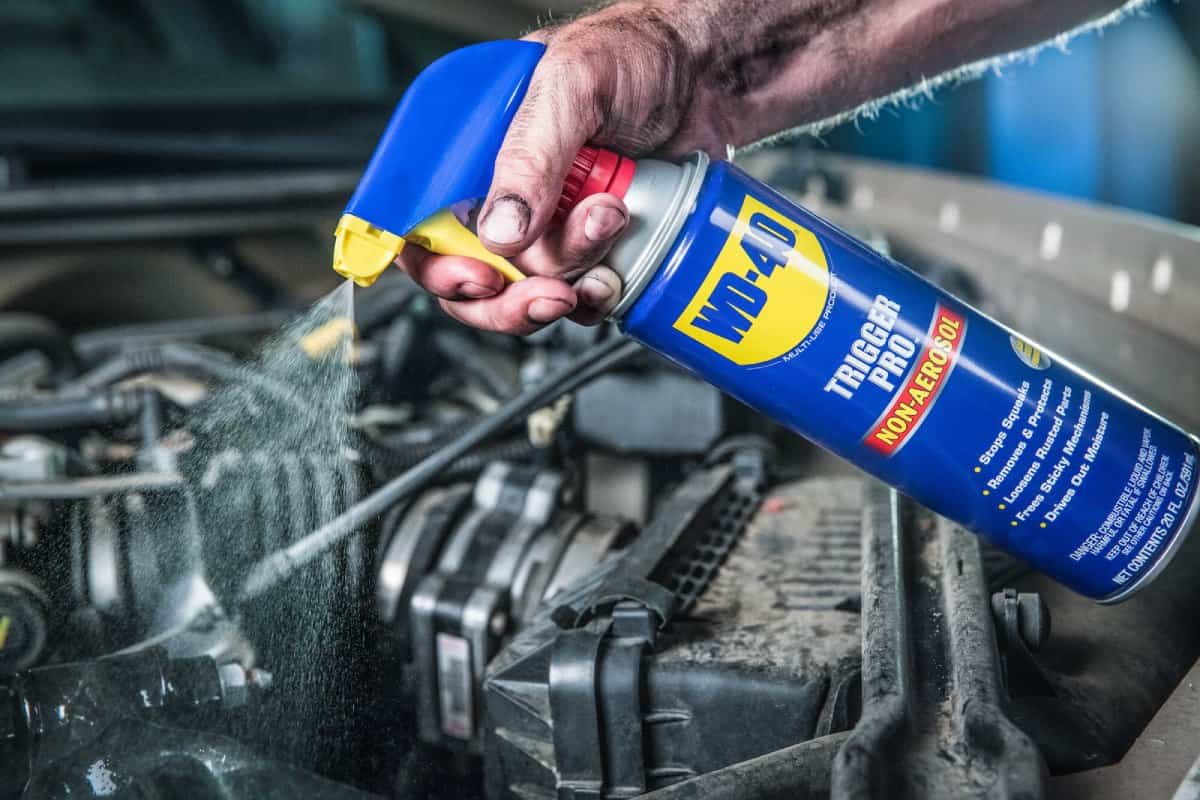
I'll admit it quite honestly: When it comes to handiwork, I'm all thumbs. Nevertheless, I always love thinking back to my childhood, when I tinkered with all sorts of things together with my dad and my grandpa. Mostly, though, I wasn't more than a helping hand. But I still remember exactly how my grandpa regularly used the multi-purpose oil WD-40. If the door squeaked, he sprayed WD-40 on it; if a screw was stuck or the bike chain needed oiling - WD-40 is the answer!
In fact, the penetrating oil WD-40 enjoys a certain cult status among both DIYers and professional tradespeople. That may also be due to its 2000+ uses. I'm going to go out on a limb here and claim that only a tiny fraction of WD-40 users also know the company's great stock, let alone hold it in their portfolio. So today, let's take a look behind the scenes of this cult company and find out what all this has to do with patience and willpower.
The Origins and Business Model of WD-40 Company
Contrary to some inaccurate accounts, the development of WD-40 goes back to Iver Norman Lawson. He was born in Oak Park, Illinois, in 1892 and moved with his family to San Diego, California, at the age of six. As a teenager, Lawson attended Stanford University, but then switched to the California Institute of Technology. There he successfully completed his mechanical engineering degree in 1918. After working for the San Diego Gas & Electric Company for almost 10 years, he founded his own flight school called Airtech in 1928. In the early 1950s, Lawson was looking for a new challenge and, together with some colleagues, founded the Rocket Chemical Company. As the company name makes easy to guess, they made various chemicals for rockets. Specifically, it was about the Atlas rocket, which always had to be ready for use in case of emergency, to be sent to the other side of the world. And since long periods of standing idle combined with high humidity were damaging to the sensitive rockets, a chemical agent was needed.
Rockets weren't the only things suffering from corrosion, so one day a navy commander and good friend of Lawson's came to him and asked him to develop a water-repellent lubricant for his ship propellers. Lawson then began experimenting in his garage in every spare minute. He mixed various substances together and tested their effectiveness. One attempt after the next, and no success in sight. Fortunately, the patient tinkerer documented his mixtures, so he was able to keep refining the formula. The fortieth attempt was finally crowned with success. Hence the name: "Water Displacement perfected on the 40th try", WD-40 for short. By the way, the exact recipe is still kept under lock and key to this day, which is why it was never patented. That was the only way to make sure the chemical composition stayed secret. Lawson, who didn't yet suspect what a groundbreaking invention he had made, proudly told his colleagues about his miracle product and sold the formula for a mere 500 US dollars.
It didn't take long before WD-40 was also applied to the Atlas rocket, now protecting it from rust and corrosion. Interestingly, the product worked so well that several employees secretly filled it into cans and smuggled it out of work in their lunchboxes to use at home. There, too, WD-40 proved to be an extremely useful all-rounder. When the new boss of the Rocket Chemical Company, Norman Bernard Larsen, found out about this, he filled WD-40 into handy aerosol cans to bring it to market as a commercial mass product. Since his name sounded relatively similar to that of the inventor Lawson and there were hardly any written records, Larsen has been regarded as the developer of WD-40 ever since. Starting in 1958, the little spray cans could be found at selected specialty retailers in the region. It took another 7 years before the company stopped producing its other chemicals and concentrated fully on manufacturing WD-40. Now it was also renamed the WD-40 Company. Business boomed, and the company was able to expand internationally. To diversify, it bought the 3-IN-ONE oil brand from Reckitt & Coleman (predecessor of Reckitt-Benckiser) in 1995. To this day, it has diversified a bit further, although the focus is still clearly on the jack-of-all-trades WD-40. With just 500 employees, it sells its products in 176 countries around the world.
How Do I Rate WD-40 Company's Future Prospects?
To put it in four words: Running like a well-oiled machine. Okay, I just had to make that pun. But seriously, things really are going very well for WD-40 Company right now. In fact, the lubricant maker is a Corona winner on several fronts. For one thing, it naturally benefits when people spend more time within their own four walls. Minor repairs pop up here and there, the garage door needs oiling again, or rust slowly starts forming on the car. In times of lockdown, we often have more time for things like that. In general, during economically weaker times we put off new purchases and therefore repair things more often - much to the delight of home improvement store chains, or indeed WD-40 Company. PS: Of course, handyman skills would come in handy here :-)
Apart from that, WD-40 Company is currently also benefiting from lower crude oil prices. While oil companies like Royal Dutch Shell or ExxonMobil are under enormous pressure, the penetrating oil pro can crank up its margins. It's probably no surprise that the stock is shooting up accordingly. So let's also take a quick look at the most recently published quarterly figures (Q4 2020). Revenue in the fourth fiscal quarter rose "only" 5 percent over the prior-year quarter, but earnings per share increased from 0.63 US dollars to 1.42 US dollars. The e-commerce business in particular grew by an impressive 58 percent. Now that's what I call growth! For the full fiscal year, revenues of 408.5 million US dollars were reported (an increase of 4 percent). That corresponds to 4.40 US dollars per share, compared to 4.02 US dollars in the previous fiscal year. All in all, solid numbers.
As a risk, of course, you have to mention that WD-40 Company is quite dependent on the success of its miracle weapon. It did diversify somewhat with other maintenance and cleaning products such as degreasers, rust removers, toilet cleaners, and heavy-duty soaps, but products under the WD-40 brand still clearly dominate. On the other hand, the strong brand recognition can also be seen as a moat. Even if competitors bring a similarly good product to market, WD-40's fan base is so large that competitors would definitely have a hard time here.
What About the Dividend?
WD-40 Company has been sharing its profits with its investors in the form of dividends since 1973. However, the company hasn't always managed to raise the dividend from year to year. In fact, it last had to cut the dividend in 2003, and kept it flat from 2008 to 2010. Since then, though, it has without a doubt maintained an exemplary dividend policy with regular increases. The dividend growth rate over the last 10 years is a solid 9 percent. The current dividend yield of 1.3 percent is also respectable. Only the payout ratio, at just under 60 percent, could be a bit lower.
Conclusion:
In my opinion, WD-40 Company has a very exciting origin story. Hardly any tradesperson or hobby tinkerer won't know the penetrating oil WD-40 - so it doesn't surprise me that the stock is doing so well. If you're looking for a solid long-term stock, you'll certainly be well served here.
Epilogue · November 1, 2026
What became of it
6 years have passed since this article. If you had invested €1,000 on the day it was published, this is where you would be today:
Bitcoin came out ahead.
- WD-40 Company, incl. dividends:
- The same €1,000 in Bitcoin: