DividendeOhneEnde · August 29, 2021
STERIS
The hygiene expert
- Ticker
- STE
- ISIN
- IE00BFY8C754
- WKN
- A2PGLV
- Country
- Ireland
- Industry
- Health care
- Sector
- Medical devices
- Market cap
- $17.1 billion
- Dividend yield
- 1.10%
- Payouts
- quarterly
- First dividend
- 2005
- Status
- Dividend Achiever
- Dividend yield
- 1.1%
- Dividend growth
- 9.2%
- Payout ratio
- 47.1%
- Share price growth
- 372.4%
- Earnings growth
- 22.7%
- Revenue growth
- 12.2%
- Debt ratio
- 28.5%
The DOE score was my rating at the time, based on these figures, from A (very good) to E. Figures as of October 11, 2022, shortly before the blog ended.
Contents
A spotless investment
How will the world change after corona? For the life of me, I can't imagine everything going back to the way it was. Many companies have realized that working from home works wonderfully in some areas. So I could well imagine a large number of employees moving from the city to the countryside and rents normalizing again. Business trips around the world will probably also decline, which of course benefits the environment. I also think that people will continue to pay meticulous attention to hygiene in the future.
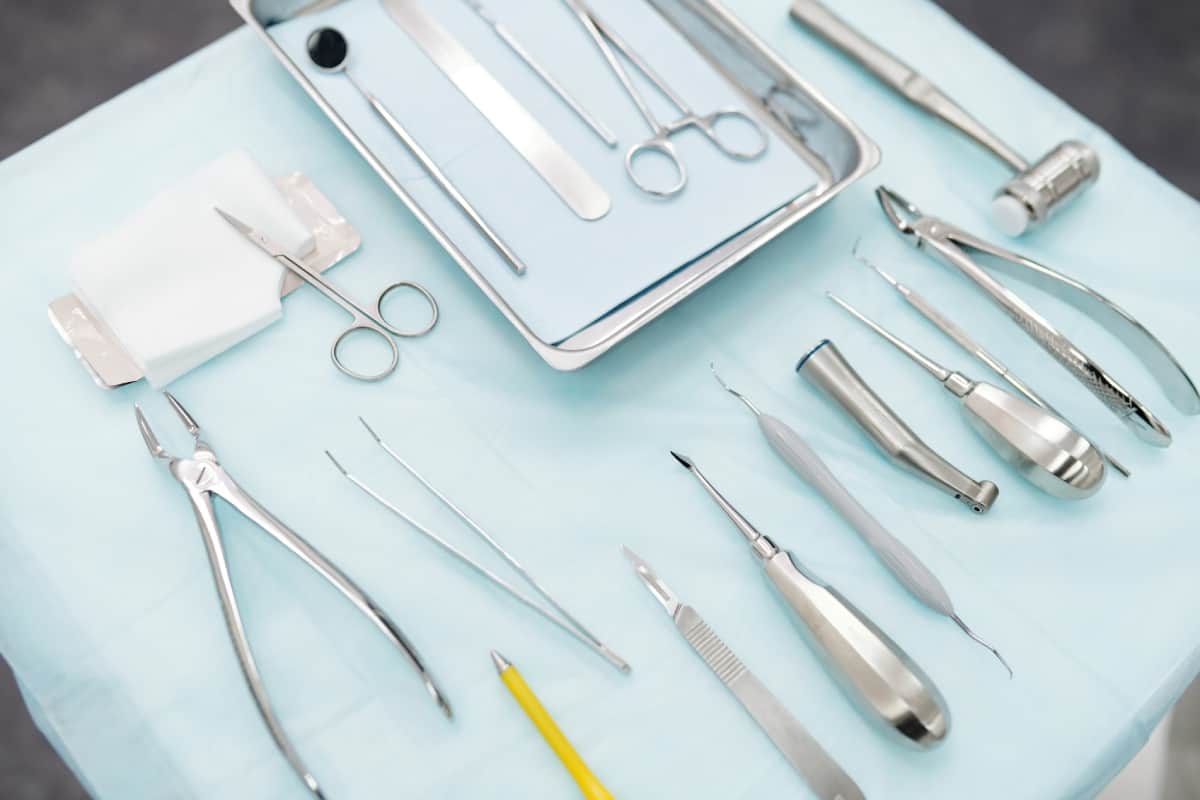
And that brings us to the keyword hygiene. STERIS, today's candidate, is an American company (headquartered in Ireland) that specializes in the sterilization, disinfection and decontamination of medical and surgical equipment. A pretty boring business that you'll rarely hear or read anything about - perfect for us ☺︎
The origins and business model of STERIS Public Limited Company
In 1894, the two brothers J. Everett and George E. Hall from Erie Country (Pennsylvania) also recognized that the market for sterilizers offered a lot of potential. So the two didn't hesitate for long, tinkered with their first steam-powered sterilizer and founded the American Sterilizer Company (AMSCO for short). Demand was high and the business developed so well that a new production facility had to be built as early as 1909. At first, operating the sterilizers was still quite complicated and time-consuming and had to be done manually by nurses. From 1950 on, AMSCO introduced push-button controls, and the staff had more time for patient care again.
Now let's turn to the story of how STERIS plc came about. It has its origins on August 9, 1940 in Weirton (West Virginia), when Raymond Kralovic was born. He was fascinated by microbiology, which is why after his studies he also wrote his doctoral thesis on this subject. In the mid-1980s, Dr. Kralovic was employed as a microbiologist at AMSCO and developed a liquid sterilization process there that worked at low temperature. He presented his model to management, but when they showed no interest, he decided to quit. Without further ado, he founded the Innovative Medical Technologies Corporation together with his acquaintance Ed Schneider, who worked as a mechanical engineer. The previous sterilization process worked with high temperatures and aggressive disinfectants - delicate and heat-sensitive instruments used in minimally invasive procedures simply couldn't withstand this process. Kralovic developed the STERIS System 1, a complete low-temperature sterilization system that killed all microorganisms within 30 minutes while also protecting the instruments from corrosion. The system became an absolute bestseller, and the company changed its name to STERIS.
In June 1992 the company went public, fueling further growth. The genius of the business model was above all the recurring stream of revenue. System 1 was a one-time investment for hospitals and other medical facilities, but the patented sterilization solution had to be purchased at regular intervals. STERIS also used the fresh capital to expand its product range. For example, in 1993 it entered into a joint venture with Ecomed Inc. to develop a disposal system for infectious waste such as disposable items or syringes. In 1994 it made its first acquisition with Medical & Environmental Designs Inc. - a licensed company for collecting and disposing of liquid biohazardous waste.
STERIS announced probably its most important takeover in December 1995: Dr. Kralovic bought his old employer AMSCO. That was so unusual because at the time of the takeover the more than 100-year-old company was almost five times as big as STERIS. AMSCO did have a loyal customer base, but sales were falling and it had problems with its new management. In one fell swoop, the company expanded its product range by 300 items and positioned itself as the industry leader for large and small sterilization systems. Over the years, several more smart acquisitions followed, with which it kept broadening its base. Today STERIS employs more than 16,000 people in over 100 countries and is a leader in infection and contamination prevention in the healthcare and pharmaceutical sectors.
How could STERIS develop in the future?
First, I'd like to take a look at the figures for the most recently published quarter (Q1 2022 - ended June 30, 2021). Total revenue in this quarter, at 968.4 million US dollars, was a whopping 45 percent above the result from the prior-year quarter. Adjusted revenue growth in Q1 2022 was also 21 percent above the result from the first quarter of 2021. At this point, though, it has to be noted that Q1 2021 was of course negatively affected by the corona pandemic. The final result was weighed down by a one-time expense of about 140 million US dollars paid in connection with the Cantel Medical takeover. On an adjusted basis, net income in the first quarter of 22 totaled 159.9 million US dollars, or 1.76 US dollars per share (1.32 USD/share in Q1 21).
STERIS divides its business into the four segments Healthcare, Applied Sterilization Technologies, Life Sciences and Dental. The Healthcare segment, which generates 63 percent of revenue, covers products and services for infection prevention in operating rooms and kidney dialysis centers. Under Applied Sterilization Technologies (18 percent of revenue), it provides its sterilization services to various manufacturers of medical devices or pharmaceutical companies. The Life Sciences segment generates around 11 percent of total revenue and sells consumables and services to pharmaceutical manufacturers that mainly specialize in vaccines. Last but not least, the Dental segment covers instruments and consumables for dentists and dental schools - here it generates 8 percent of its revenue.
There's no question that STERIS will continue to grow in the future, both through its own innovation and internal growth and through acquisitions. Of course, a takeover always carries the risk of overreaching and getting into financial trouble, but STERIS has already proven its skills here several times. All in all, I'm very confident about the company's future.
What about the dividend?
Since 2005, STERIS has been letting its shareholders share in the company's profits in the form of dividends. In 2006 the dividend was still left unchanged, but since then the hygiene company has managed to pay and also raise the dividend year after year. The average dividend growth rate over the last 10 years is a solid 10.0 percent. The current dividend yield of 0.7 percent isn't exactly high, but the payout ratio of 47.8 percent signals plenty of room for increases in the future.
Conclusion:
Over the years, STERIS plc has built up a boring but successful business. Customers will hardly be able to do without the hygiene expert's products and services. In light of this, I recommend that long-term investors take a closer look at the company.
Epilogue · November 1, 2026
What became of it
5 years and 2 months have passed since this article. If you had invested €1,000 on the day it was published, this is where you would be today:
Bitcoin came out ahead.
- STERIS, incl. dividends:
- The same €1,000 in Bitcoin: