DividendeOhneEnde · April 11, 2021
Medtronic
Promising medtech company
- Ticker
- MDT
- ISIN
- IE00BTN1Y115
- WKN
- A14M2J
- Country
- Ireland
- Industry
- Health care
- Sector
- Medical devices
- Market cap
- $110.7 billion
- Dividend yield
- 3.20%
- Payouts
- quarterly
- First dividend
- 1977
- Status
- Dividend Aristocrat
- Dividend yield
- 3.2%
- Dividend growth
- 8.7%
- Payout ratio
- 67.9%
- Share price growth
- 89.8%
- Earnings growth
- 5.7%
- Revenue growth
- 0.9%
- Debt ratio
- 25.8%
The DOE score was my rating at the time, based on these figures, from A (very good) to E. Figures as of October 11, 2022, shortly before the blog ended.
Contents
Industry Pioneer & Dividend Aristocrat
Financial magazines, blogs, and YouTube channels often present hype stocks. Sometimes it's cannabis, sometimes lithium, and then hydrogen again - as quickly as many of these stocks shoot up, they usually come crashing down just as fast. Before I put my money into hype stocks like these, I'd rather look for long-term megatrends and successful companies that benefit from these trends. Topics like sustainability, digitalization, and e-mobility will become increasingly important in the future. But the mother of all megatrends is probably changing demographics. Population numbers are rising sharply, especially in emerging markets. On top of that, people are living longer and longer.
One of the companies that benefits massively from the trend of an aging population is Medtronic. The American medical technology company, headquartered in Ireland, is one of the largest and leading corporations in its industry. In addition, it has paid a rising dividend since 1977 - reason enough to take a closer look at the company today.
The Origins and Business Model of Medtronic PLC
The story of Medtronic begins on January 10, 1924, when Earl Elmer Bakken was born in Minneapolis. Even as a little boy, Earl was fascinated by electricity and played with wires, plugs, and connectors. His uncle, who worked as an electrician himself, once warned his mother: "You have to stop the boy from playing with electricity. Otherwise he'll end up killing himself." However, she ignored this advice and bought her son all the parts he needed for his tinkering projects. At the age of 8, Earl saw the movie Frankenstein at the movie theater and watched a scientist create eternal life with powerful electric currents - from then on, he knew exactly what he wanted to do with his life. In the following years, he built not only simple stun devices to protect himself from stronger boys at his school, but also a telephone line to a neighbor boy he was friends with, and even a Kiss-O-Meter. He began his professional career as a radar specialist in the Air Force in the middle of World War II. After just 3 years, he decided to continue his education and completed his electrical engineering degree at the University of Minnesota. To earn some money on the side, Earl began repairing sensitive lab equipment for Northwestern Hospital in Minneapolis in his garage. Since demand kept rising, on April 29, 1949, he decided to found Medtronic together with his brother-in-law Palmer Hermundslie. The name is made up of the words "medical electronic".
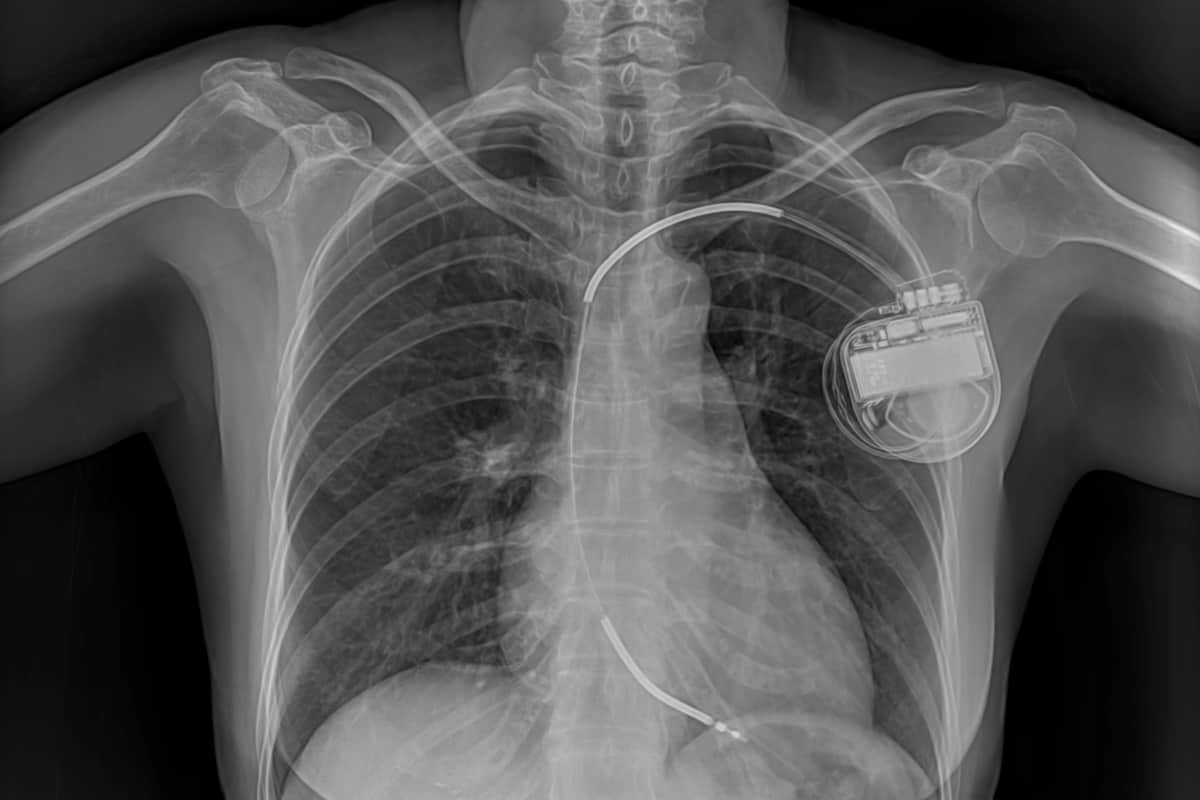
Even though they earned a meager 8 dollars in the first month, the two founders stuck with it and built close contacts with doctors and surgeons at the university hospital. One of these doctors was Dr. C. Walton Lillehei, a specialist in heart surgery who at that time was performing life-saving operations on children with blue baby syndrome. During surgery, the children had to be temporarily connected to a pacemaker. Back then, these were still large devices plugged into the power grid. When a power outage lasting several hours occurred on October 31, 1957, these pacemakers failed and one of the children died. The very next morning, Dr. Lillehei asked Medtronic whether they could solve this problem. Earl remembered an innovative circuit for metronomes that he had just recently discovered in an electronics magazine and, within four weeks, developed the first prototype of a battery-powered pacemaker. Earl tirelessly kept developing the prototype, and as early as 1960, the first fully implantable pacemaker was placed in a human being.
In the following years, Medtronic grew very strongly and was able to continuously expand its product portfolio. In 1977, it not only brought its first artificial heart valve prostheses to market, but also listed Medtronic on the New York Stock Exchange. The additional capital was also used for acquisitions - for example, it bought a Dutch pacemaker manufacturer and also the cardiovascular division of Johnson & Johnson. In 2015 came the largest acquisition to date, Covidien, and with it the relocation of its headquarters to Ireland. Today, Medtronic operates in more than 150 countries, is one of the leading medical technology companies, and is well equipped for the future with its product range.
What About Medtronic's Future?
Before I get to the medtech company's future prospects, I'd like to briefly sum up the business model once more. With over 90,000 employees (10,000+ of them engineers & scientists) and more than 47,000 patents, Medtronic is one of the market leaders in its industry. About every second pacemaker in the world comes from Medtronic - in addition, it is the market leader for insulin pumps, in spinal surgery, and for neurostimulation systems. Especially at the beginning of the Covid-19 pandemic, the medtech company's ventilators experienced a real rush of demand. In general, the business is divided into four segments: cardiovascular therapies (~37.5 percent), minimally invasive therapies (~27.7 percent), restorative therapies (~26.7 percent), and diabetes (~7.8 percent).
Since a great many treatments, operations, and therapies had to be postponed at the beginning of the pandemic, Medtronic also saw a drop in revenue. However, it has to be clearly emphasized that anyone who needs medical treatment won't be able to do without it - so even if many treatments were postponed for the time being, they weren't canceled. And that's exactly what is now reflected in the figures for the most recently published quarter (Q3 2021 - ended 01/29/2021). Revenue in this quarter did rise slightly compared to the prior-year quarter, from 7.71 billion US dollars to 7.77 billion USD (an increase of 0.8 percent), but net income fell from 1.91 billion USD to 1.27 billion USD today. Per share, this means earnings of 0.94 USD compared to 1.42 USD in Q3 2020 - even adjusted earnings per share, at 1.29 USD, are still below the prior-year result. Nevertheless, Geoffrey Martha (CEO of Medtronic) is very confident about the company's future, as it has been able to win important market share with many of its new innovations.
Speaking of innovations: Medtronic has quite a lot in the pipeline here. Artificial intelligence can read data better and thus detect emerging diseases early. In the future, a robot will be able to operate much more precisely than a human. New joint parts are created in 3D printers - so without a doubt you can say that quite a few exciting innovations in the field of medical technology await us in the next few years, and Medtronic will make a decisive contribution to them.
What About the Dividend?
Since its IPO in 1977, Medtronic has been sharing its profits with its shareholders in the form of dividends. In exemplary fashion, the medtech company has since always managed to pay its dividend every quarter and also to raise it every year - which is why it has been one of the coveted Dividend Aristocrats for a few years now. The dividend growth rate over the last 10 years is a solid 10.2 percent. The current dividend yield of 1.9 percent is also respectable. Due to the drop in profits in the past fiscal year, the payout ratio is currently 108.4 percent - in recent years it was mostly between 50 - 60 percent. This level should be reached again in 2021.
Conclusion:
The medical technology group Medtronic developed from a small garage workshop into one of the leading companies in its industry. Because of our aging society and the resulting increase in demand for medical technology, I'm very optimistic about Medtronic's future in the long run.
Epilogue · November 1, 2026
What became of it
5 years and 6 months have passed since this article. If you had invested €1,000 on the day it was published, this is where you would be today:
Bitcoin came out ahead.
- Medtronic, incl. dividends:
- The same €1,000 in Bitcoin: