DividendeOhneEnde · April 25, 2021
Walmart
Crisis-proof & future-proof
- Ticker
- WMT
- ISIN
- US9311421039
- WKN
- 860853
- Country
- USA
- Industry
- Consumer discretionary
- Sector
- Broadline retail
- Market cap
- $367.5 billion
- Dividend yield
- 1.70%
- Payouts
- quarterly
- First dividend
- 1973
- Status
- Dividend Aristocrat
- Dividend yield
- 1.7%
- Dividend growth
- 2%
- Payout ratio
- 44.5%
- Share price growth
- 74.8%
- Earnings growth
- 2.5%
- Revenue growth
- 3.6%
- Debt ratio
- 26.4%
The DOE score was my rating at the time, based on these figures, from A (very good) to E. Figures as of October 11, 2022, shortly before the blog ended.
Contents
The world's largest company by revenue
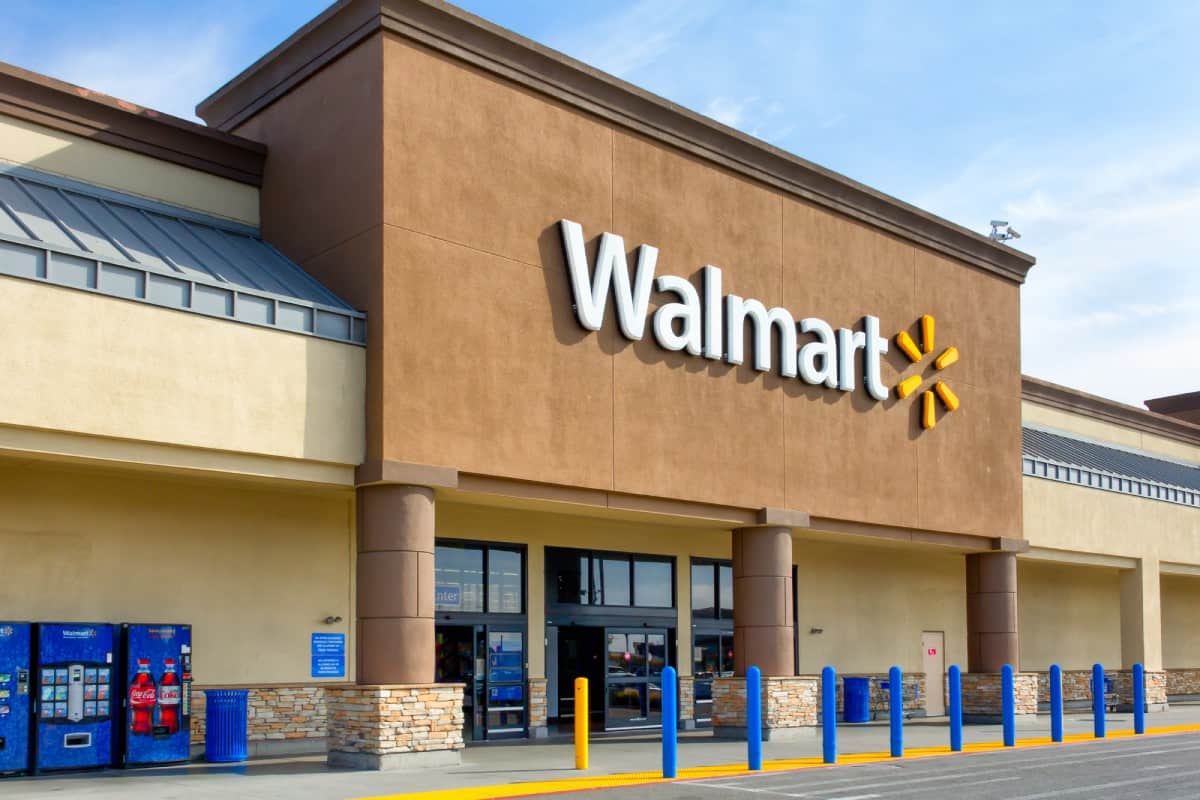
I'll go out on a limb and say that Walmart should be familiar to every one of my readers. And even though the retail chain pulled out of Germany years ago, I can still clearly remember the huge store space. As a company, Walmart is a true giant too: with almost 560 billion US dollars, it's not only the world's largest company by revenue, but also the largest private employer (only governments employ more people). With over 2.3 million employees, it counts more people than the gambling metropolis of Las Vegas has residents!
Sure, when it comes to e-commerce, Amazon still has the upper hand - but you shouldn't underestimate Walmart in this segment either. Let me put it this way: if anyone can stand up to Amazon, it's surely Walmart. So today let's take a closer look at the giant American retailer.
The origins and business model of Walmart Inc.
The origins of today's retail chain Walmart go back to Samuel Moore Walton, who was born on March 29, 1918, in Kingfisher (Oklahoma). There he lived with his parents on a farm. But when farming no longer brought in enough money, Sam's father Thomas decided to join his brother's mortgage business. Over the next few years the family moved from one small town to the next before settling in Columbia (Missouri). When the Great Depression broke out in 1929, Sam didn't hesitate long and looked for small jobs to support his parents financially. He not only worked as a milk deliveryman and paperboy, but also sold magazine subscriptions. A few years later, during his time at college, he also worked various odd jobs before earning his bachelor's degree in economics in 1940. He then took a management trainee position at the retailer J.C. Penney, where he earned about 75 dollars/month. After about a year and a half he had to quit there and join the U.S. Army. After the war, at the age of 26, Sam decided to go back into the retail business. He secured a $20,000 loan from his father-in-law, added another $5,000 from his savings and bought a Ben Franklin Variety franchise store in Newport (Arkansas).
He quickly put the concepts he had learned during his studies into practice and soon achieved his first successes. It didn't take long before he opened a second store not far from the first one. Within just three years he increased sales from $80,000 to $225,000, which of course also caught his landlord's attention. The landlord now refused to renew the lease, since he and his son wanted to get into the retail business themselves. Fortunately, Sam managed to sell him the entire inventory for a good price. Sam, who now knew exactly how to become successful, was unstoppable. By 1962, together with his brother Bud, he was running 16 franchise stores in Arkansas, Missouri and Kansas. At that time he also tried to convince Ben Franklin's management of the discount concept, but they declined. For this reason, on July 2, 1962, Sam opened his first own Wal-Mart Discount City Store. It was a large-format store that offered American brand-name products at a low price. Unlike many of his competitors, Sam chose cheaper locations in smaller towns.
Sam's plan worked out, and within a few years he was able to open more Wal-Marts. He also worked out a sophisticated logistics concept that allowed him to buy larger quantities and deliver them promptly to his various locations, which he set up within a 200-mile radius of the distribution centers. This massively increased efficiency and allowed the company to grow even faster. In 1970 Wal-Mart went public - the fresh capital was of course used for its expansion. By the end of the 1970s it was already running 276 stores in 11 states and generating proud annual sales of 1.25 billion US dollars. Today the retail group operates about 11,443 stores under 48 different names in 24 countries, generating revenue of 559 billion US dollars.
How might Walmart's business develop in the future?
First, I'd like to take a look at the figures for the most recently published quarter (Q4 2021). There's of course no question that Walmart is one of the clear winners of the pandemic - keyword: panic buying. Fortunately, it also responded to its big online competitor Amazon a few years ago and invested a lot of money in building up its e-commerce business - here too it has recently achieved enormous growth rates (+69 percent in Q4 21). Total revenue grew by 7.3 percent in the last quarter to 152.1 billion US dollars, compared to 141.6 billion US dollars in the prior-year quarter. However, costs also rose due to Covid, which is why it had to report a loss of USD 2.09 billion this quarter. At USD 1.39, adjusted earnings per share were also below analysts' expectations.
Since last fall, Walmart has been offering a kind of rival membership to Amazon Prime with its subscription service Walmart+. Customers pay a monthly or annual fee and get free deliveries and other exclusive perks in return. Through the memberships, Walmart can collect valuable data in order to operate even better and more efficiently in the future and offer customers an even more pleasant shopping experience.
Contrary to the opinion of many people that Amazon is the future and Walmart just a sluggish corporate giant, you have to acknowledge that Walmart has shown higher growth rates in e-commerce than its competitor in recent years. Walmart also already has an enormously large logistics network that it has built up over decades. Furthermore, there are estimates that about 90 percent of the American population lives less than 10 miles from a Walmart - so here, too, delivery services have a much more efficient business opportunity.
What about the dividend?
The company went public in 1970, but it wasn't listed on the New York Stock Exchange until 1972. A year later, Walmart began sharing its profits with its shareholders in the form of dividends. Since then, the retailer has always managed to pay the dividend and raise it every year. If Walmart keeps this payout streak going over the next few years, it will soon count among the coveted Dividend Kings. It does raise its dividend every year, but only in small steps. The dividend growth rate over the last 10 years is just 4.4 percent. The current dividend yield is 1.5 percent and the payout ratio about 45 percent. So there's room to grow.
Conclusion:
Walmart undoubtedly has a crisis-proof and future-proof business model. In general, though, I'm not a fan of either-or. Our world isn't black and white either, so I can very well imagine that both Amazon and Walmart will play a decisive role in the future. As a long-term investment, you should therefore take a closer look at Walmart - but dividend investors will probably find more suitable investments.
Epilogue · November 1, 2026
What became of it
5 years and 6 months have passed since this article. If you had invested €1,000 on the day it was published, this is where you would be today:
The stock came out ahead.
- Walmart, incl. dividends:
- The same €1,000 in Bitcoin: