DividendeOhneEnde · February 28, 2021
Tractor Supply Company
The Rural Retailer
- Ticker
- TSCO
- ISIN
- US8923561067
- WKN
- 889826
- Country
- USA
- Industry
- Consumer discretionary
- Sector
- Specialty retail
- Market cap
- $22.6 billion
- Dividend yield
- 1.70%
- Payouts
- quarterly
- First dividend
- 2010
- Status
- Dividend Contender
- Dividend yield
- 1.7%
- Dividend growth
- 28.8%
- Payout ratio
- 36.2%
- Share price growth
- 304.8%
- Earnings growth
- 25.2%
- Revenue growth
- 14.4%
- Debt ratio
- 31.5%
The DOE score was my rating at the time, based on these figures, from A (very good) to E. Figures as of October 11, 2022, shortly before the blog ended.
Contents
From mail-order tractor parts to more than 1,900 stores
The future belongs to specialists, not generalists. Someone who can do a little bit of everything will probably have a much harder time on the job market than someone who is the absolute expert in their field. Why should the stock market be any different? Many consumer goods giants that spent decades buying up all sorts of brands realized that it makes more sense to focus on a handful of selected brands. Retail, too, has recognized that companies offering everything under the sun and having to wrestle with strong online competitors have a much harder time.
The Tractor Supply Company deliberately chose to focus on a specific target group and serve it as well as possible. The strategy is working, and the company can enjoy very strong revenue growth. Could the stock also be suitable for dividend investors?
The history and business model of the Tractor Supply Company
The founding story of the rural retail chain Tractor Supply Company begins on June 5, 1912, when Charles Schmidt was born. Ironically, he grew up in the big city of Chicago and never spent a single day on a farm. As a young adult, he studied at the University of Chicago and graduated in economics at the age of just 20. Unfortunately, the Great Depression was shaking the entire country at the time, and Charles couldn't find a job suited to his qualifications. To earn money, he eventually had to start working as a floor sweeper at the brokerage firm Shields & Co. He kept toying with the idea of starting his own business, but it wasn't until almost 6 years later, in 1938, that he had the winning idea. He wanted to launch a mail-order business for tractor replacement parts to offer thrifty farmers a cheaper alternative. Back then, when their tractors broke down, they had to pay the high prices of the few parts dealers or the manufacturers' maintenance costs. At his dining table, Charles put together a 24-page catalog with around 2,000 products, sent it to numerous farmers and founded the Tractor Supply Company.
The resounding success of his business idea quickly became apparent - in the very first year, he achieved a proud revenue of 50,000 dollars. In his second year of business, he took his profit and invested it in opening his first retail store in rural Minot (North Dakota). There he could expand his business better and reach his potential customers in a more targeted way. Business was booming and he was able to open more stores. At that time, about 90 percent of his customers were full-time farmers. That changed, however, in the period after World War II. Many farmers had to give up their jobs back then, simply because they could earn more at industrial companies. The fact that this important customer base of the Tractor Supply Company was now moving to big cities quickly showed up in the retailer's sales figures too. Without further ado, the company decided to follow its customers and opened new stores on the outskirts of cities. This step also came with a name change: the company now went by the abbreviation TSC - Town, Suburb & Country.
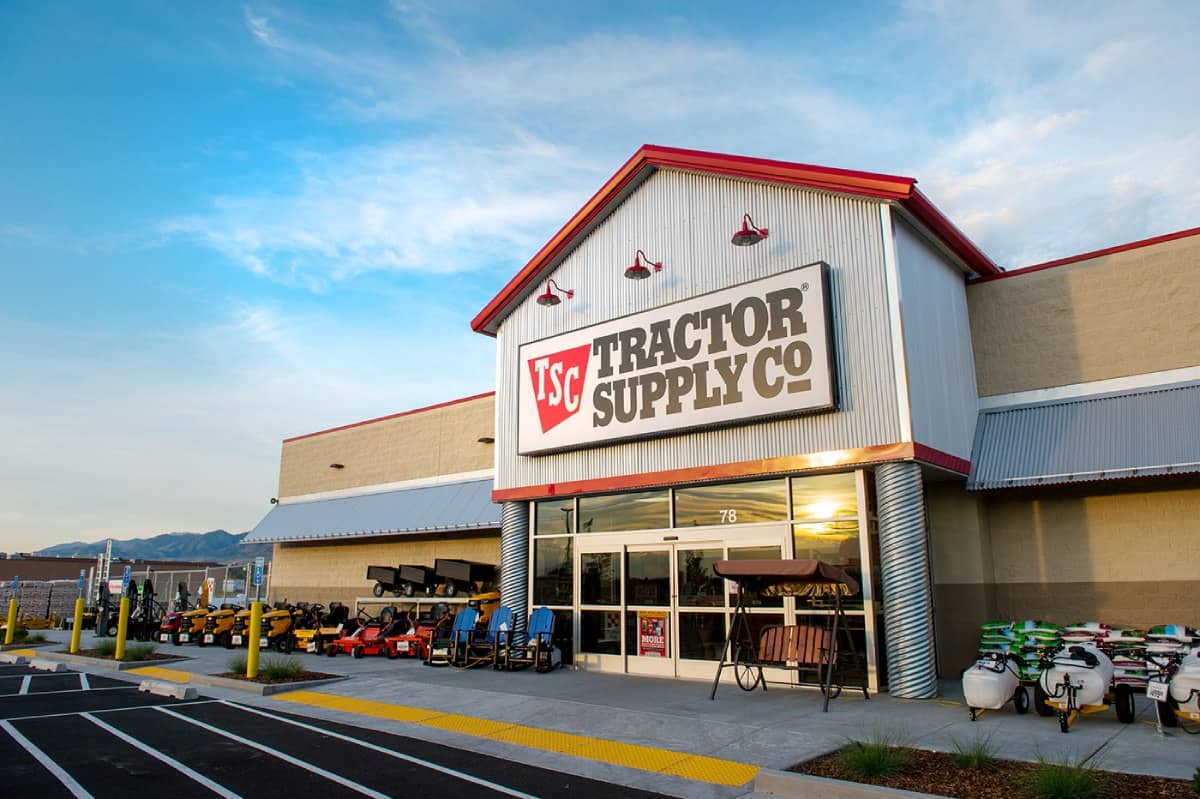
Tractor Supply, which now also offered various everyday items, managed to keep its head above water more or less. In 1967, it began setting up its first international locations in Canada. But when National Industries bought Charles Schmidt's majority stake two years later, the company got into even more trouble. Suddenly there were five different CEOs, there was no longer a clear vision, and customers didn't really know what they could buy at TSC anymore. The whole mess eventually led to a painful loss of 13 million dollars in 1980. Fortunately, some executives managed to regain the upper hand, and the company began to focus on its old strength. It once again turned its focus to farmers and hobby gardeners and tried to appeal to them as well as possible in rurally styled stores. Since then, the Tractor Supply Company has developed wonderfully. Today it serves its customers in more than 1,933 stores, a fast-growing online shop and, recently, its own app.
What does the future hold for the Tractor Supply Company?
Well, if you look at the most recently published figures for the fourth quarter of 2020 (ended December 26, 2020), you'll notice that the Tractor Supply Company is doing really well right now. While many companies struggled in 2020, the retailer, which supplies its customers with various agricultural equipment as well as pet and livestock feed, recorded an absolute record year. Revenue in the fourth quarter rose by 31.3 percent to 2.88 billion US dollars compared to the prior-year quarter. Sales in the e-commerce segment in particular posted incredible triple-digit percentage growth for three quarters in a row. Profit rose by 34.2 percent from 741.8 million US dollars in Q4 2019 to 995.5 million US dollars in Q4 2020. The company took the opportunity to raise its quarterly dividend by 30 percent. So it's no wonder the stock also gained nicely over the past year.
The company recently announced that it had entered into an acquisition agreement with Orscheln Farm & Home (a farm retailer with 167 stores). This acquisition cost about 297 million US dollars and is expected to pay off quickly thanks to synergies. Through the acquisition, Tractor Supply wants to further expand its presence in the Midwest and position itself even better there. I'm confident that the company can keep growing and delivering solid numbers in the future.
And what about the dividend?
For a long time, the Tractor Supply Company used its profits exclusively for its own growth. Only in 2010 did it start paying out a share of its profits to shareholders in the form of dividends. Since then, the retailer has also managed to raise the dividend year after year. Just like with Intuit last week, a 5-year period makes more sense here. During that time, the average dividend growth rate was a solid 17.6 percent. The current dividend yield is only 1.0 percent, but the low payout ratio of just 26 percent still leaves plenty of room to grow.
Conclusion:
The Tractor Supply Company has been through thick and thin in its history and had to learn the hard way that you should never lose your customer focus. Since then, things have been going extremely well for the retailer, and investors with the stock in their portfolio should be happy in the long run too.
Epilogue · November 1, 2026
What became of it
5 years and 8 months have passed since this article. If you had invested €1,000 on the day it was published, this is where you would be today:
Bitcoin came out ahead.
- Tractor Supply Company, incl. dividends:
- The same €1,000 in Bitcoin: