DividendeOhneEnde · March 28, 2021
Genuine Parts
The car doctor
- Ticker
- GPC
- ISIN
- US3724601055
- WKN
- 858406
- Country
- USA
- Industry
- Consumer discretionary
- Sector
- Autos & parts
- Market cap
- $22.7 billion
- Dividend yield
- 2.20%
- Payouts
- quarterly
- First dividend
- 1948
- Status
- Dividend King
- Dividend yield
- 2.2%
- Dividend growth
- 5.9%
- Payout ratio
- 45.3%
- Share price growth
- 154.4%
- Earnings growth
- 12.4%
- Revenue growth
- 5.2%
- Debt ratio
- 25.4%
The DOE score was my rating at the time, based on these figures, from A (very good) to E. Figures as of October 11, 2022, shortly before the blog ended.
Contents
A crisis-proof auto stock?
As I already mentioned in my introduction to the Gentex Corporation, the market leader in automatic-dimming rearview mirrors, I'm absolutely not a fan of automotive stocks. No question, Volkswagen stock has developed fabulously over the last few months - but if you look at the whole thing over the long term, it doesn't paint a pretty picture, in my opinion. And as long as there are enough more lucrative alternatives (one is hiding in the cover image), I honestly don't see any reason to invest my money in this rather difficult industry.
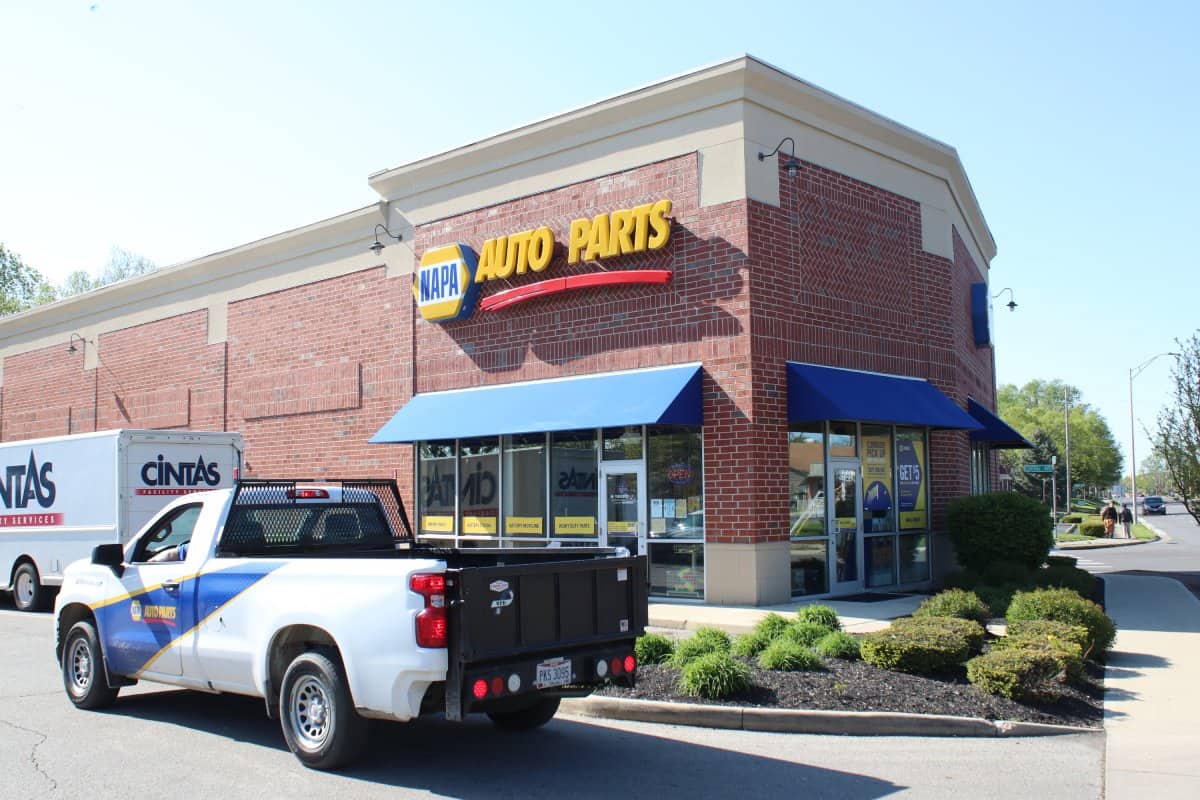
But car lovers shouldn't come up short on my blog either, which is why today I'd like to introduce the Genuine Parts Company. The Dividend King is one of the largest replacement parts suppliers in the automotive industry. Apart from that, the company supplies a global network of auto repair shops.
The history and business model of the Genuine Parts Company
The origins of the Genuine Parts Company go back to Carlyle Fraser, who was born on December 23, 1894 in the small village of Cornwall-on-Hudson (New York). Less than 10 years earlier, Carl Benz had built the first automobile with a four-stroke engine and electric ignition. His patented motor car had an output of 0.67 hp and reached a top speed of 16 km/h. Once its great potential was recognized, various engineers developed the car further, and with the Model T from the Ford Motor Company, the first car went into mass production in 1908. America fell in love with the car, and more and more vehicles were sold. Naturally, this also created growing demand for auto parts. In 1925, Carlyle and a few other businessmen founded the National Auto Parts Association to meet exactly this need. Just under 3 years later, he started his own company with his partner William Martin when the two bought the parts store Motor Parts Depot in Atlanta (Georgia) for about 40,000 dollars. The former owner even claimed that the car business had already peaked, but the two founders didn't let that slow them down.
In the very first fiscal year, the company was renamed Genuine Parts Company (GPC) and achieved annual sales of 75,000 dollars. However, it employed six people and had some additional expenses to shoulder, which is why it ultimately had to book a loss of 2,500 dollars. GPC knew that it had to offer its customers fast and reliable service to stay one step ahead of the competition, and that required high initial investments. The good relationship with the National Auto Parts Association (NAPA) also proved very beneficial, and Carlyle was gradually able to build a network of auto parts stores that bought products from manufacturers and then sold them on at a profit. Even the Great Depression of 1929 actually played into the young company's hands. Hardly anyone could afford a new car anymore, and the older a car got, the more replacement parts it needed. To be able to offer its customers quality products at an affordable price, the company decided in 1931 to start refurbishing used parts itself in a small workshop. In that decade alone, sales grew from 339,000 dollars to 3.18 million dollars.
The Genuine Parts Company also grew at an extraordinary pace during World War II. Many car manufacturers had to switch their production to war equipment - as a result, people once again had to drive their cars longer and therefore needed more replacement parts. When the company celebrated its 20th anniversary in 1948, it not only cracked the 20 million dollar sales mark, but also took the company public. In the following decades, GPC continued to expand its distribution network of retail stores and logistics centers. It also began to diversify its business by acquiring the S.P. Richards Company, an office supplies wholesaler, in 1975 and Motion Industries Inc., a distributor of industrial parts, in 1976. The electronics company EIS Inc. followed in 1998, and in 2017 it entered the European market with the acquisition of the Alliance Automotive Group. Today, with over 3,600 locations in 14 countries, the Genuine Parts Company is the world's leading parts distributor.
What does the future hold for the Genuine Parts Company?
First, I'd like to take a look at the numbers from the most recently published quarter (Q4 2020). Total sales in this period came to 4.3 billion US dollars, a decline of 0.7 percent. Thanks to cost savings, however, the Genuine Parts Company managed to achieve a net profit of 221 million US dollars, or 1.52 USD per share - an increase of a whopping 20 percent over the prior-year quarter. The Automotive segment, which generates around 66 percent of sales, grew by one percent last quarter, while the Industrial segment (which generates the remaining 36 percent) declined by about 3 percent. Given the current global situation, I think you can be quite satisfied with this result.
If you look at the chart, you'll quickly notice that we've been in a sideways phase for the last few years. Since 2014, the share price hasn't really wanted to go up - GPC's management recognized this too and took appropriate measures. For example, it decided to sell both its electronics division, EIS Inc., in 2019 and its office wholesale business, the S.P. Richards Company, in 2020. I think it's good that they're focusing on their old strength again and cleaned out their own business portfolio a bit in the process.
Even if hyperloops, flying taxis and robocars were to catch on in the future and become our preferred means of transportation, I still don't believe that would do lasting damage to the Genuine Parts Company. I can't imagine that everyone would give up their individual means of transportation. What can definitely be seen as a risk, though, is that electric cars have significantly fewer wear parts. And if something does break, only a qualified technician is allowed to repair it. All in all, though, I'm confident that GPC has this topic on its agenda as well and already has corresponding plans in place.
What about the dividend?
Since the Genuine Parts Company went public in 1948, the company's shareholders have received a quarterly share of the profits in the form of dividends. In the early years, the dividend couldn't be raised every year yet - that changed in 1957, and by now Genuine Parts is one of the coveted Dividend Kings. Over the last 10 years, the dividend growth rate has been 6.4 percent, and the current dividend yield is a decent 2.7 percent. Due to last year's slump in earnings, the current payout ratio is over 250 percent - normally it's around 50 percent.
Conclusion:
The Genuine Parts Company developed from a small auto parts dealer into the market leader in its industry. You probably shouldn't expect excessive returns from the stock - but GPC is definitely a solid addition to a long-term dividend portfolio.
Epilogue · November 1, 2026
What became of it
5 years and 7 months have passed since this article. If you had invested €1,000 on the day it was published, this is where you would be today:
Bitcoin came out ahead.
- Genuine Parts, incl. dividends:
- The same €1,000 in Bitcoin: