DividendeOhneEnde · April 4, 2021
Lindt & Sprüngli
The sweet dividend
- Ticker
- LISN.SW
- ISIN
- CH0010570759
- WKN
- 859568
- Country
- Switzerland
- Industry
- Consumer staples
- Sector
- Food & tobacco
- Market cap
- $24 billion
- Dividend yield
- 1.20%
- Payouts
- annually
- First dividend
- 1996
- Status
- Dividend Aristocrat
- Dividend yield
- 1.2%
- Dividend growth
- 7.1%
- Payout ratio
- 55.1%
- Share price growth
- 185.3%
- Earnings growth
- 3.3%
- Revenue growth
- 3.5%
- Debt ratio
- 17.3%
The DOE score was my rating at the time, based on these figures, from A (very good) to E. Figures as of October 11, 2022, shortly before the blog ended.
Contents
An absolute premium stock
Judging a stock by its current share price is complete nonsense, in my opinion. Especially from stock market newbies, I often hear the line: "Stock A is way too expensive right now - you'd better take a look at stock B, it's gotten much cheaper lately. There's much more potential here!" Of course, appearances are deceiving, and there are plenty of reasons why one stock is "expensive" and the other so "cheap". I wouldn't speculate on a fallen stock coming back, and I would certainly never claim that I know more about a stock than the market and can therefore assess it better.
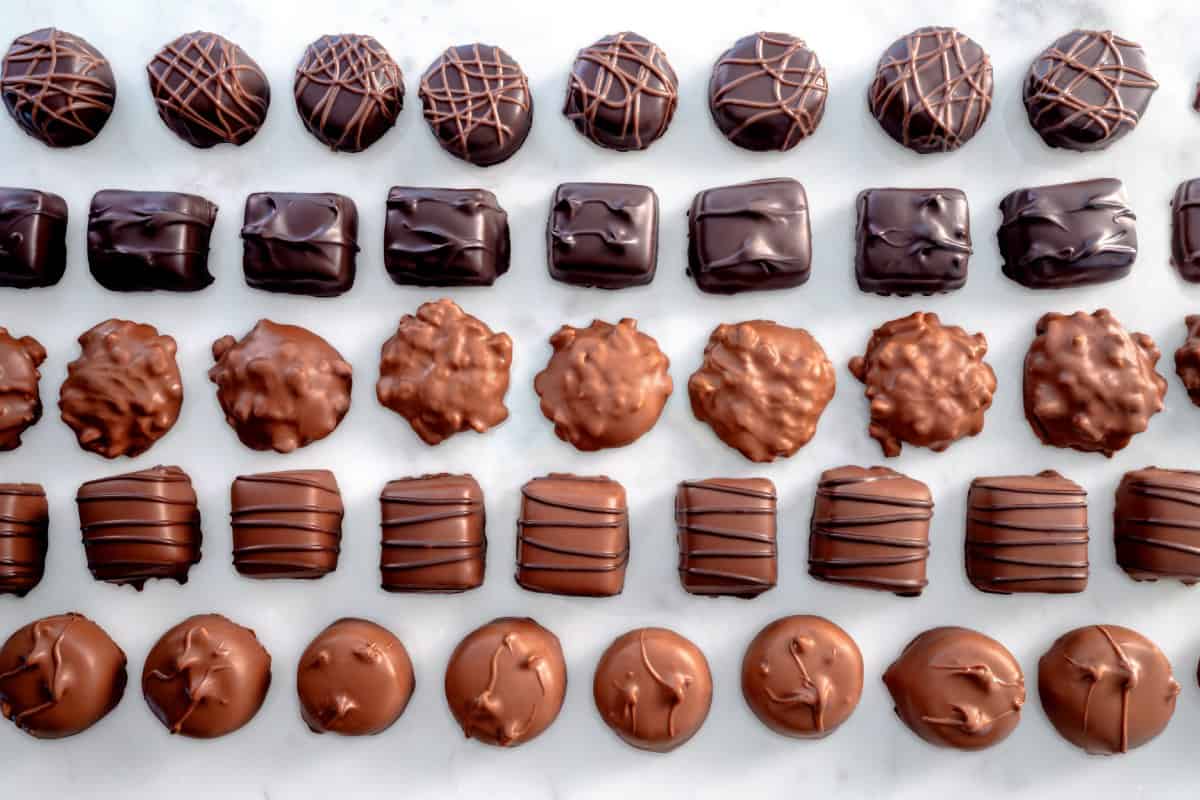
After Berkshire Hathaway, the company with the highest share price, I'd now like to introduce the second most expensive stock in the world - Chocoladefabriken Lindt & Sprüngli AG. Will this soon-to-be Dividend Aristocrat and market leader in the premium chocolate segment perhaps sweeten your portfolio soon, too?
The origins and business model of Chocoladefabriken Lindt & Sprüngli AG
The story of today's premium chocolate company begins on October 20, 1776, when David Sprüngli was born in Andelfingen (a municipality in the canton of Zurich). After his school years, he started out as an assistant to the pastry baker Hans Kaspar Waser. A little later, in 1819 to be exact, he began working at Hans Jakob Vogel's confectionery. When Vogel died unexpectedly, his widow first took over the business, before David took on some debt in 1836 and bought the confectionery. Together with his son Rudolf Sprüngli, he wanted to restructure and expand the newly renamed Confiserie Sprüngli & Sohn. Rudolf heard about Philippe Suchard's success and quickly convinced his father to get into the chocolate business as well. No sooner said than done, the two soon made their first own chocolate bars. These became a hit in no time, and soon a larger chocolate factory had to be built to keep up with demand. The business developed splendidly over the years. When Rudolf retired from the business in 1892, he handed management over to his two sons. David Robert Sprüngli inherited the Confiserie Sprüngli, while Rudolf Sprüngli Junior took over the chocolate factory in Zurich.
The decisive improvement of chocolate's then sandy texture would be achieved by Rodolphe Lindt - but one thing at a time. He was born on July 16, 1855, in Bern, the son of a pharmacist. Since drinking chocolate was still sold in pharmacies as a tonic back then, Rodolphe came into contact with it early on. At the age of 18, he completed an apprenticeship in Lausanne with the chocolate manufacturer Charles Kohler, a family friend. With the skills he had learned and the determination to make a smoother chocolate, Rodolphe went into business for himself a few years later. He bought some machines and two vacant mills near Bern and began experimenting. He quickly realized that he had to remove more moisture from the chocolate mass - that was the only way to prevent the sugar from crystallizing again. So he developed a longitudinal grinder, consisting of an elongated basin holding the liquid chocolate, over which granite rollers moved back and forth. The friction caused heating, and the moisture could gradually evaporate. Legend has it that Rodolphe once forgot to switch off the machine and accidentally let it run for a full 72 hours. When he then found the delicious, melt-in-your-mouth chocolate, he couldn't believe his eyes. This was undoubtedly a milestone in the history of chocolate.
With his smooth chocolate, Lindt could easily have pushed his competitors out of the way, but he was no businessman - more of a bon vivant. He produced his chocolate according to his secret recipe, sold it, and was happy with that. One of his earliest major customers was the Bern confectioner Jean Tobler. But since Lindt refused to expand his production, Tobler decided in 1899 to found his own factory - Toblerone. Shortly afterward, Rudolf Sprüngli Junior, who had of course heard about Lindt's groundbreaking success, made him a takeover offer of 1.5 million Swiss francs. Lindt accepted, and the Aktiengesellschaft Vereinigte Berner und Zürcher Chocoladefabriken Lindt & Sprüngli was born.
How could Lindt & Sprüngli develop in the future?
First, as usual, I'd like to take a quick look at the most recently published financial figures. In this case, we're looking at the 2020 annual report. It should come as no surprise that the chocolate maker's business was hit hard by the global pandemic in 2020. On important holidays like Christmas and Easter, when a lot of chocolate is usually given as gifts, visiting restrictions were (or still are) in place. In addition, many points of sale were closed for long stretches last year - so it's no wonder that total revenue fell by 6.1 percent to 4.02 billion Swiss francs. Net profit even dropped by a whopping 37.5 percent compared to the previous year, to 320 million CHF. Nevertheless, Lindt & Sprüngli says it managed to increase its market share in all market regions. The fact is that the industrialized countries in particular are increasingly saturated with cheap chocolate, while the premium segment keeps growing. That's why the company is also very confident it will soon return to its old strength. Apart from that, e-commerce sales also grew strongly last year.
One topic that will move even further into the foreground for Lindt & Sprüngli in the future is sustainability. In fact, the company already reached an important milestone on its way to becoming a sustainable business last year: 100 percent of its cocoa beans are traceable and even externally certified. For Lindt & Sprüngli, however, this was only the beginning, and it presented a complete sustainability roadmap that it's now working on intensively. For my part, I'd be willing to pay more for a chocolate if it was produced fairly and in an environmentally conscious way along the entire value chain. As a recent study showed, Lindt & Sprüngli (at least its German subsidiary) is currently in 1st place among the most popular employers. All in all, the chocolate company is on a very good path.
One more piece of information on the side: similar to Berkshire Hathaway, Lindt & Sprüngli also has a cheaper participation certificate without voting rights - it costs a little less than 10 percent of the big registered share.
What about the dividend?
Since 1996, shareholders of Chocoladefabriken Lindt & Sprüngli AG have received a share of the profits in the form of dividends. If everything goes according to plan, the chocolate company will be able to count itself among the coveted Dividend Aristocrats starting this year. The dividend growth rate over the last 10 years is a solid 15.9 percent - over the last 5 years it's even 20.6 percent. The current dividend yield of almost 2 percent is also quite respectable. The only thing is the payout ratio, which is normally around 50 percent but is currently far too high at 132 percent (due to last year's profit slump). Apart from the monetary dividend, Lindt & Sprüngli also makes its investors happy with a dividend in kind. At the annual general meeting, registered holders of the registered share receive a 4-5 kg case full of chocolate, pralines and other creations of the house.
Conclusion:
The sweet Swiss chocolate company Lindt & Sprüngli has worked its way to the top of the premium chocolate segment. It's also very well positioned for the future, which is why I have no doubt that shareholders who have the necessary spare change will enjoy the company for a long time to come. With that in mind: Happy Easter!
Epilogue · November 1, 2026
What became of it
5 years and 6 months have passed since this article. If you had invested €1,000 on the day it was published, this is where you would be today:
Bitcoin came out ahead.
- Lindt & Sprüngli, incl. dividends:
- The same €1,000 in Bitcoin: