DividendeOhneEnde · October 6, 2019
Yum! Brands
Fast Food for Everyone
- Ticker
- YUM
- ISIN
- US9884981013
- WKN
- 909190
- Country
- USA
- Industry
- Consumer discretionary
- Sector
- Hotels & entertainment
- Market cap
- $31.4 billion
- Dividend yield
- 2.10%
- Payouts
- quarterly
- First dividend
- 2004
- Status
- Dividend Contender
- Dividend yield
- 2.1%
- Dividend growth
- 14.5%
- Payout ratio
- 44.3%
- Share price growth
- 110.9%
- Earnings growth
- 8.4%
- Revenue growth
- 2.9%
- Debt ratio
- 213.7%
The DOE score was my rating at the time, based on these figures, from A (very good) to E. Figures as of October 11, 2022, shortly before the blog ended.
Contents
The chicken, pizza & taco business
Pretty much every German knows McDonald's, and yet very few actually own a piece of the success of the world's highest-grossing fast food giant. I don't even want to imagine how few people have ever heard of Yum! Brands - the parent company of KFC, Pizza Hut and Taco Bell. And yet, all in all, Yum! Brands operates significantly more restaurants than McDonald's. I'm convinced that more people should simply own shares in the companies they regularly visit/consume themselves. In the long run, private investors can rake in juicy profits with stocks like these too.
With DividendeOhneEnde, I want to do my part - I want to introduce companies here briefly and concisely, so that as a reader you can quickly form a first impression of an interesting stock. So today I'm taking a closer look at Yum! Brands ...
The history and business model of Yum! Brands Inc.
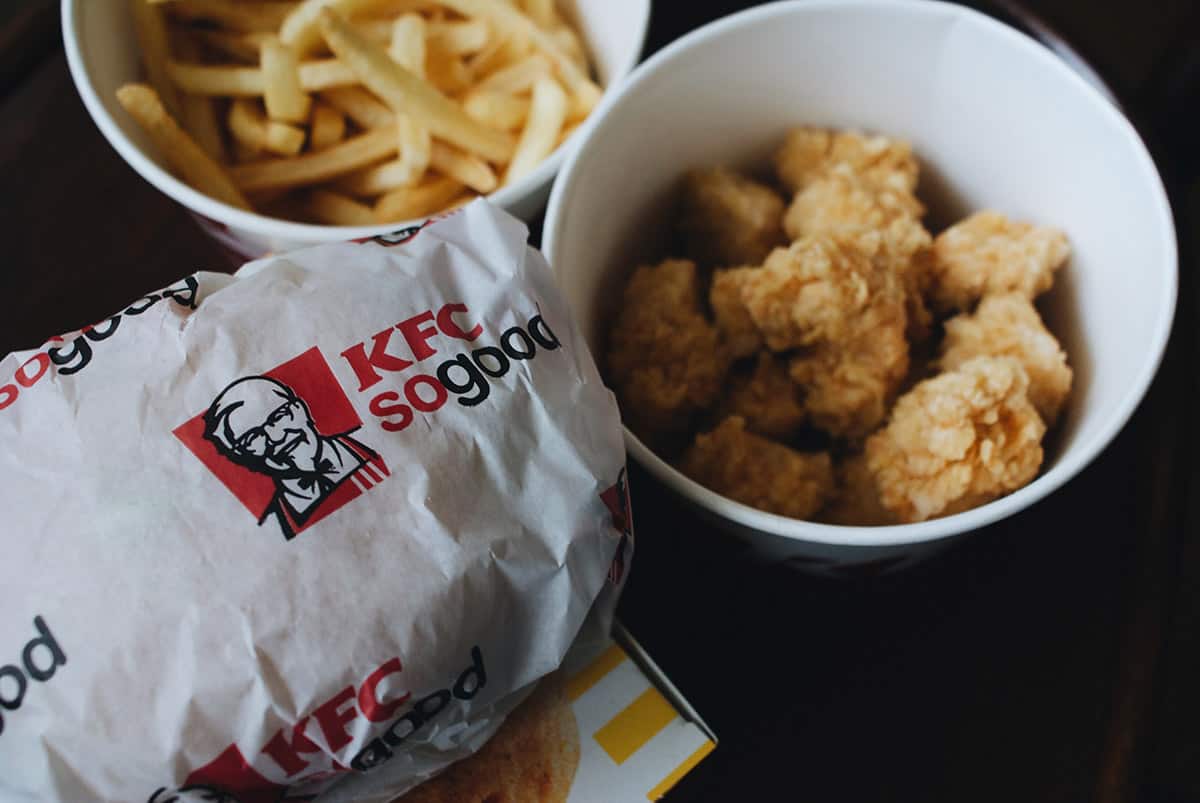
Harland D. Sanders was born in Indiana in 1890. He lost his father when he was just 6 years old. Since his mother then had to provide for the family, he took care of his two younger siblings. It was during this time that Sanders developed his passion for cooking. Later, he worked for the railroad, as a firefighter, insurance salesman, legal assistant and even as a midwife's helper, among other things, until he opened a gas station in Kentucky together with his wife in 1930. To serve hungry customers, Sanders offered delicious fried chicken. Because it became so popular, he opened his own restaurant across the street, "Harland Sanders Cafe". As early as 1952, Sanders recognized the potential of the franchise model. Despite initial difficulties, by 1964 he managed to recruit more than 600 franchisees, and Kentucky Fried Chicken was born. Today there are more than 23,000 KFC's worldwide.
Toward the end of the 19th century, Italian emigrants brought pizza to America. But it only became really popular when soldiers returned from Italy after World War II. In 1958, the two brothers Frank and Dan Carney also took advantage of the growing demand when they opened their first pizza restaurant in a small hut. They borrowed the 600 dollars in start-up capital from their mother and bought all their equipment secondhand. Business was great and the first franchisees quickly joined, so that today there are a full 18,000 Pizza Hut restaurants worldwide.
Glen William Bell was a World War veteran who opened his first hot dog stand in San Bernardino, California in 1946. Admittedly, his stand didn't do particularly well, so Glen later also offered hamburgers and tacos. He quickly noticed that tacos were in high demand and decided to open his own Mexican restaurant. After a few attempts, he achieved his long-awaited breakthrough with Taco Bell in 1962. He too relied on the franchise licensing model early on and became very successful with it. Today there are more than 7,000 Taco Bell restaurants around the world.
And why do these 3 restaurant chains belong together today? Well, we have PepsiCo to thank for that. In 1977, the snack & soft drink maker had just entered the restaurant business and bought Pizza Hut to kick things off. Taco Bell followed a year later. KFC only came on board in 1986. At that point, PepsiCo was the largest restaurant operator in the world. In 1997, however, it decided to focus more on its core business again and therefore took the restaurant chains public under the new parent company Tricon Global Restaurants Inc. In 2002, it was renamed Yum! Brands. Even today, the restaurant giant is on rock-solid footing.
What's next for Yum! Brands?
2 years ago, the fast food giant launched a strategic realignment program that can already show its first successes. Greg Creed, the current Yum! CEO, claims the company now operates in a more focused and efficient way. In addition, there's to be a greater reliance on franchisees. As the parent company, this saves a lot of costs & work, and yet licensing fees still flow into the company's account every month. Creed will retire starting in 2020 - his successor will be David Gibbs (with the company since 1989). As the new CEO, Gibbs wants to keep betting on international expansion.
Taco Bell, the smallest of Yum! Brands' chains, currently has only 10% of its restaurants outside the US. Of course, that's supposed to change soon. Brazil, Russia, China and India were named as the most important growth countries, where the plan is to open 1,000 new stores each. KFC also wants to keep growing - but on a completely different scale: a new restaurant is to open every 5 hours. That number may sound impossible at first, but the fact is that back in 2018 the company already managed to open a store every 7 hours. Impressive.
Like McDonald's, Pizza Hut wants to rely more on digitalization in the future. On the one hand when it comes to the restaurants themselves (ordering kiosks), but on the other hand also the online delivery business. To make further progress in this area, it's increasingly opening smaller Delco stores (short for Delivery & Carry Out). In these "bakeries", pizza is only prepared and picked up/delivered. In the long run, the delivery business still offers a lot of potential.
And what about the dividend?
Shareholders have been receiving a share of the profits since 2004. It has been paid every year since then - but unfortunately not raised every year (the dividend was cut in 2008 & 2017). The dividend yield is currently only 1.5 percent, but with a payout ratio of around 38 percent, there's still a lot of potential for future increases. By the way, the average dividend growth rate over 10 years is 8 percent - that's something you can work with.
Conclusion:
Yum! Brands operates 3 of the most successful fast food chains of our time. Outside the US in particular, though, the company still has enormous growth potential. In the long run, the company wants to cement its place as the largest restaurant operator in the world. Pure dividend investors will find more attractive payers, but if you want to own a piece of a rock-solid growth stock, this one will surely taste good to you. Yummie :-)
Epilogue · November 1, 2026
What became of it
7 years have passed since this article. If you had invested €1,000 on the day it was published, this is where you would be today:
Bitcoin came out ahead.
- Yum! Brands, incl. dividends:
- The same €1,000 in Bitcoin: