DividendeOhneEnde · September 20, 2020
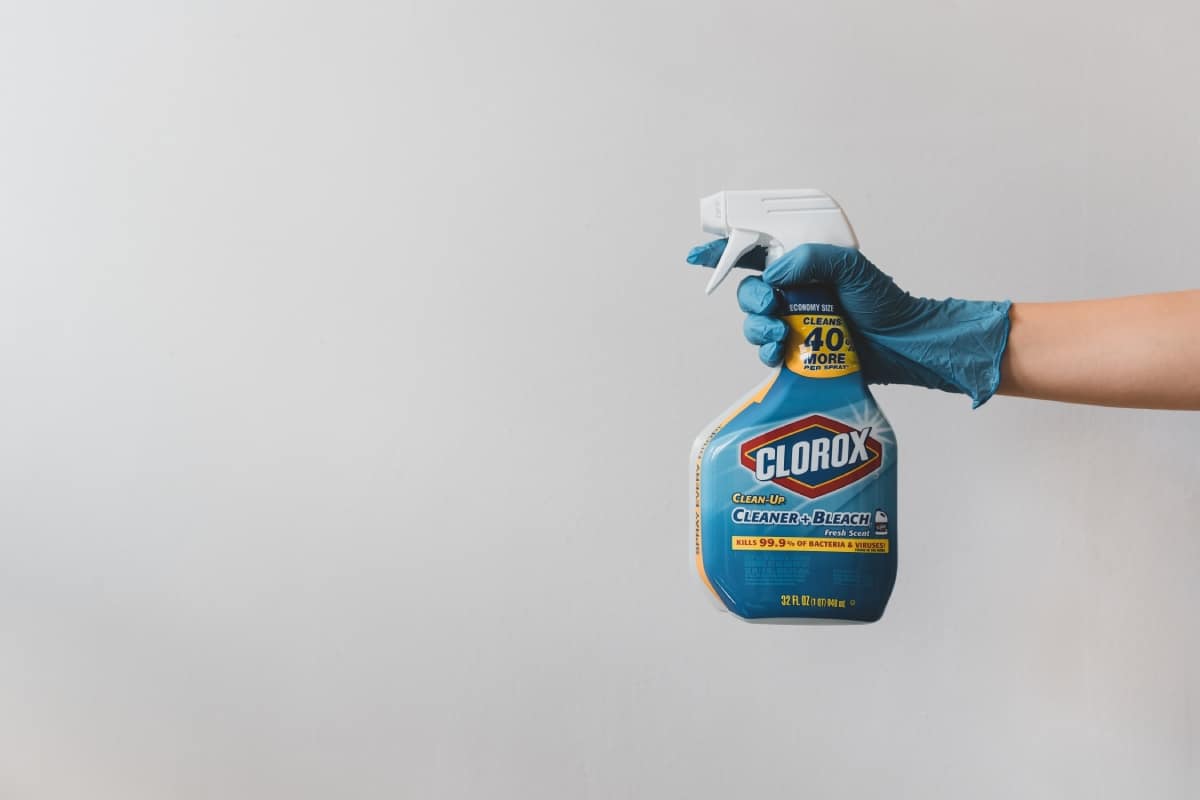
The Clorox Company
A clean deal
- Ticker
- CLX
- ISIN
- US1890541097
- WKN
- 856678
- Country
- USA
- Industry
- Consumer staples
- Sector
- Household & personal products
- Market cap
- $16.1 billion
- Dividend yield
- 3.70%
- Payouts
- quarterly
- First dividend
- 1968
- Status
- Dividend Aristocrat
- Dividend yield
- 3.7%
- Dividend growth
- 7.1%
- Payout ratio
- 125.5%
- Share price growth
- 72.5%
- Earnings growth
- -6.6%
- Revenue growth
- 3.4%
- Debt ratio
- 41.6%
The DOE score was my rating at the time, based on these figures, from A (very good) to E. Figures as of October 11, 2022, shortly before the blog ended.
Contents
Has more to offer than you'd think
Ever since I started getting seriously into the stock market and investing, I've been a big fan of consumer goods companies. After all, everyday products are always needed - economic crisis or not. One of my first and also biggest investments was Procter & Gamble. To this day I'm very happy with that choice. But since rule number 1 in the stock market is of course "diversification," I naturally always kept an eye out for other companies in the industry. Here you inevitably come across Church & Dwight, Colgate Palmolive, Beiersdorf, Reckitt Benckiser, or The Clorox Company.
The American consumer goods maker Clorox is undoubtedly known for its bleach, but today it has far more to offer than just that. Besides cleaning products, its product lineup also includes natural personal care products, water filters, and salad dressings. But one thing at a time ...
The history and business model of The Clorox Company
The history of The Clorox Company goes back to 1913, when five businessmen in Oakland (California) got together, each invested $100, and founded the Electro-Alkaline Company. The founders were Edward Hughes, a wood and charcoal seller; Charles Husband, a bookkeeper; William Hussey, a miner; Archibald Taft, a banker; and Rufus Myers, a lawyer. Hussey, the only one who knew anything about chemistry, used an electrolytic process to turn brine from seawater into sodium hypochlorite bleach. They called their liquid bleach Clorox, filled it into five-gallon containers, and delivered it by horse-drawn wagon to local laundries, dairies, and breweries. These used the highly concentrated Clorox to clean and disinfect their facilities.
Although their product was first-rate, business was rather sluggish at first, and since it was quite capital-intensive, they decided as early as 1914 to issue a total of 750 shares. That way they raised $75,000. But that money was soon used up too, and the company was on the verge of collapse when the married couple William and Annie Murray took control. The two had invested a large part of their fortune in the company and couldn't afford for it to go bust. Without further ado, William became the company's new director. He reorganized the production processes and worked closely with banks to draw up a suitable financial plan. Annie, who owned a small grocery store, pushed for a less concentrated version of Clorox that could be used at home. She gave away the first samples in her store and showed her customers the many ways Clorox could be used. Word about the new cleaning product spread quickly, and the Electro-Alkaline Company was able to keep growing. In 1922, it changed its name to Clorox Chemical Corporation and in 1928 went public on the San Francisco stock exchange.
While the whole country feared for its jobs in 1929, the Great Depression passed Clorox by without any trouble. During World War II there were chlorine supply shortages, and the US government allowed the concentration of the products to be reduced. However, Clorox refused to compromise on its quality and therefore chose to sell smaller quantities instead. Even though this decision was very costly at the time, it established Clorox as a valued quality product. In 1957, the consumer goods maker Procter & Gamble also recognized the huge potential, bought the company, renamed it The Clorox Company, and made it a wholly owned subsidiary. Shortly afterwards, however, an antitrust suit was filed, and almost 10 years later P&G had to divest Clorox again.
Since 1968 the company has been listed on the New York Stock Exchange and has developed outstandingly ever since. It now began expanding its product lineup. Until then it had been dependent on its bleach. In 1970 it launched the laundry product Clorox 2. More brands followed that expanded the portfolio: Liquid-Plumpr, Kingsford, Hidden Valley, and Glad. Since 1988, Clorox has sold Brita water filters in the American market. Apart from that, it offers natural cosmetics with Burt's Bees, cat litter with Fresh Step, and dietary supplements with RenewLife.
How can The Clorox Company's business develop in the future?
I see great opportunities here for the consumer goods maker. But first let's take a look at the figures for Q4 2020 (ended June 30). The Clorox Company posted an unbeatable 22 percent increase in revenue. Just let that sink in: while other companies are struggling with the effects of the pandemic, Clorox clearly stands out as a beneficiary of the coronavirus crisis. For the full fiscal year 2020, the company reported revenue growth of 8 percent to $6.72 billion.
If you look at the revenue breakdown, you quickly notice that Clorox earns most of its money in its home country, America. The company is currently active in 25 countries - and of course it wants to expand further in the future. The Clorox Company operates mainly in the 3 segments Cleaning, Household, and Lifestyle (2019 annual report from page 56). It places great importance on sustainability and transparency. Since 2011, for example, it has disclosed all the ingredients (including preservatives, dyes, and fragrances) of its products and is constantly working on becoming more efficient and sustainable. In my eyes, very commendable behavior.
Clorox still stands for good brand quality. So it's no wonder the company's customer loyalty is very high. And yet Clorox wants to collect more customer data in the future and analyze it more efficiently in order to position itself even better. It also isn't shy about further expanding its product range.
But it's also clear that Clorox operates in a highly competitive market. It has strong competitors it has to hold its own against. All in all, though, I'm convinced that Clorox cuts a good figure here and can keep us happy as shareholders for a long time to come.
What about the dividend?
Clorox shareholders have received a share of the company's profits since 1968. And since 1977, the consumer goods giant has also managed to raise its dividend year after year. The dividend growth rate over the last 10 years is a solid 7.5 percent - over the last 5 years it's already 8.2 percent. So the Dividend Aristocrat has picked up the pace a bit lately. The current dividend yield of 2.0 percent is also respectable. Only the payout ratio of 58 percent seems a bit high to me, but personally it doesn't give me a stomachache.
Conclusion:
Clorox developed from a bleach producer into one of the leading consumer goods giants. Today the company is very broadly diversified and also places great importance on sustainability. I'm sure that Clorox products will continue to be in demand in the future and that an investment in this company will definitely pay off in the long run.
Epilogue · November 1, 2026
What became of it
6 years and 1 month have passed since this article. If you had invested €1,000 on the day it was published, this is where you would be today:
Bitcoin came out ahead.
- The Clorox Company, incl. dividends:
- The same €1,000 in Bitcoin: