DividendeOhneEnde · August 16, 2020
Pernod Ricard
Returns by the proof
- Ticker
- RI.PA
- ISIN
- FR0000120693
- WKN
- 853373
- Country
- France
- Industry
- Consumer staples
- Sector
- Beverages
- Market cap
- $45.3 billion
- Dividend yield
- 1.90%
- Payouts
- semi-annually
- First dividend
- 1994
- Status
- Dividend Contender
- Dividend yield
- 1.9%
- Dividend growth
- 12.6%
- Payout ratio
- 43.6%
- Share price growth
- 101.4%
- Earnings growth
- 7.5%
- Revenue growth
- 3.3%
- Debt ratio
- 30.9%
The DOE score was my rating at the time, based on these figures, from A (very good) to E. Figures as of October 11, 2022, shortly before the blog ended.
Contents
Nothing but the hard stuff here
I'm a big fan of investing my money in companies whose business pretty much always works. Whether it's shampoos, cleaning products, diapers, food or even medicine - it doesn't matter at all whether there's a crisis or not, you simply can't do without these products. In a Facebook group, I recently came across a pretty fitting term for this: the 6G method. People will always eat, drink, wash, groom, change diapers and booze.
I've already introduced some companies for the first five G's (Sysco, PepsiCo, Procter & Gamble, Church & Dwight, Nestlé and many more), so now let's turn to the sixth G and take a closer look at the spirits maker Pernod Ricard.
The history and business model of Pernod Ricard S.A.
It all began in the 18th century, when the Swiss doctor Pierre Ordinaire mixed up an elixir called absinthe for the first time. The drink was made from fennel, anise, wormwood, a few other herbs and a lot of alcohol. Absinthe quickly became popular outside of medicine too, so in 1797 the businessman Major Dubied decided to buy the recipe. Together with his son-in-law Henri-Louis Pernod, he opened an absinthe distillery in Le Locle. Thanks to the drink's growing popularity, Pernod was able to open a second distillery in Pontarlier in 1805 and found his company Maison Pernod Fils de Pontarlier . At this point in the story, Jules François Pernod comes into play, who, although he had the same last name, was not related to Henri-Louis Pernod. Jules first worked at a chemical company until he went into business for himself with his own dyeing operation. But when it ran into financial trouble, he decided to switch his production to distilling spirits (liqueurs, rum, cognac). Around 1882, he began producing absinthe and named his brand after himself: Absinth Jules Pernod.
From 1909 on, there was a legal dispute between the two Pernod distilleries, which Jules Pernod won two years later. Absinthe became more and more popular, and many wine producers feared losing sales, which is why they campaigned for a ban on the drink. With the claim that absinthe caused life-threatening nerve damage, it was successfully banned on March 16, 1915. Pernod and many other absinthe distilleries had to come up with new recipes, and so a similar-tasting anise liqueur was created and brought to market under the name pastis. In 1926, the two Pernod distilleries joined forces and merged with the Distillerie Hémard, founded in 1871, to operate as an economically strong company under the name Les Établissements Pernod.
Paul Ricard, whose father was a successful wine merchant, also followed the banning of absinthe and the emergence of pastis, which in his opinion came nowhere near the intense taste of absinthe. For this reason, he experimented with the pastis recipe in a small lab. His goal was to create a tastier drink. In 1932, he started selling his drink and went from bar to bar to make it better known. In the first eight months, he managed to sell around 250,000 bottles in his hometown of Marseille alone. With the help of innovative marketing methods, he increased its popularity and made his company more and more successful. When Paul retired from the business in 1968, his son Patrick took over the management and merged with Pernod a few years later.
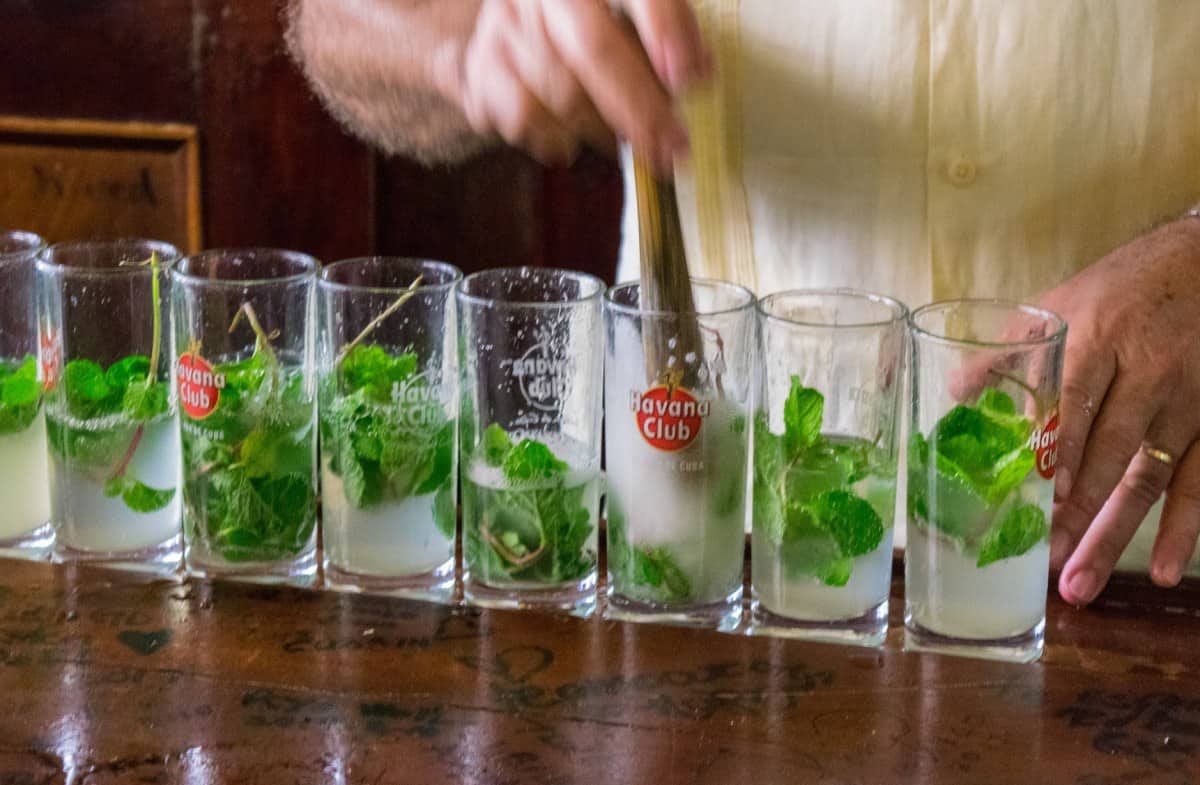
With their combined forces, the new spirits group Pernod Ricard was able to grow quickly on the global market and rose to become the second-largest company in its industry (number 1: Diageo). Thanks to numerous business and brand acquisitions, Pernod Ricard built up a broad product range. Today, world-famous beverage brands like Malibu, Absolut Vodka, Havana Club, Ramazzotti and many more belong to the group. This broad diversification lets the group easily absorb weak phases of individual drinks.
How could Pernod Ricard develop in the future?
I already wrote it in the introduction: people will always drink, or rather booze! Young adults go partying at the club, you meet up with friends at a bar, or you have a cozy evening at home. Even though I'm personally not a big fan of it, alcohol often can't be missing here. As an investor, you naturally ask yourself where things are headed in the coming years. At Pernod Ricard, topics like increasing efficiency, automating production sites and acquisitions remain high on the agenda. If the board of the booze group finds another suitable takeover candidate, it's easy to integrate the newcomer into the existing business model.
In general, I see a future full of opportunities for Pernod Ricard. With its roughly 40 different brands, it's currently represented in 160 countries around the world. Demand for hard liquor is rising sharply, especially in Asia. The middle class there is currently growing at breakneck speed and is treating itself more and more often to a cognac or a fine whisky after work.
Of course, a company like Pernod Ricard was also hit hard by the coronavirus. In many places, the many thirsty tourists stayed away this year. However, things have since returned to normal, and the French group was able to raise its sales forecasts again. By the way, to help fight the virus, they donated around 70,000 liters of pure alcohol, with which the company Laboratoire Cooper was able to produce about 1.8 million 50-milliliter bottles of hand sanitizer gel.
Last but not least, I'd like to briefly address one "risk." Young and hip start-up distilleries in particular have it much easier today, thanks to the internet, to become known than they did just a few years ago. So you see more and more new brands that produce sustainably, experiment with new flavors or rely exclusively on regional ingredients. I think it's great, since it also gets the established brands to start rethinking things - but I don't see the smaller distilleries as a risk. If they're a good fit, they'll surely be bought up by one of the big players.
What about the dividend?
Since 1994, Pernod Ricard has been letting its shareholders share in the company's success in the form of dividends. However, the company hasn't managed to increase the dividend year after year. In 2009 and 2010, for example, it had to cut the dividend by a whole 63 percent. Since then, though, it's been going up again - the dividend growth rate over the last 10 years is 9.8 percent, and over 5 years it's even a decent 14.7 percent. The current dividend yield of 2.1 percent isn't too low either. At 56 percent, the payout ratio is also within an acceptable range.
Conclusion:
Pernod Ricard developed from a small absinthe distillery into the second-largest spirits maker in the world. The company has several world-famous brands in its range that keep flushing a lot of money into its coffers. If you want to invest your money in alcohol, you can earn a high-proof return here over the long term.
Epilogue · November 1, 2026
What became of it
6 years and 2 months have passed since this article. If you had invested €1,000 on the day it was published, this is where you would be today:
Bitcoin came out ahead.
- Pernod Ricard, incl. dividends:
- The same €1,000 in Bitcoin: