DividendeOhneEnde · February 2, 2020
McCormick & Company
A stock with taste
- Ticker
- MKC
- ISIN
- US5797802064
- WKN
- 858250
- Country
- USA
- Industry
- Consumer staples
- Sector
- Food & tobacco
- Market cap
- $21.1 billion
- Dividend yield
- 1.90%
- Payouts
- quarterly
- First dividend
- 1925
- Status
- Dividend Aristocrat
- Dividend yield
- 1.9%
- Dividend growth
- 10%
- Payout ratio
- 57.6%
- Share price growth
- 146.5%
- Earnings growth
- 7%
- Revenue growth
- 6%
- Debt ratio
- 41.4%
The DOE score was my rating at the time, based on these figures, from A (very good) to E. Figures as of October 11, 2022, shortly before the blog ended.
Contents
Anything but a bland company
So, where are the home cooks among you? Can you imagine doing without spices? Just eating dull, tasteless food from now on? For me that would be completely unthinkable. Admittedly, I'm not the best cook, but my various spices save me anyway. That way I somehow always manage to make my meals taste more or less good.
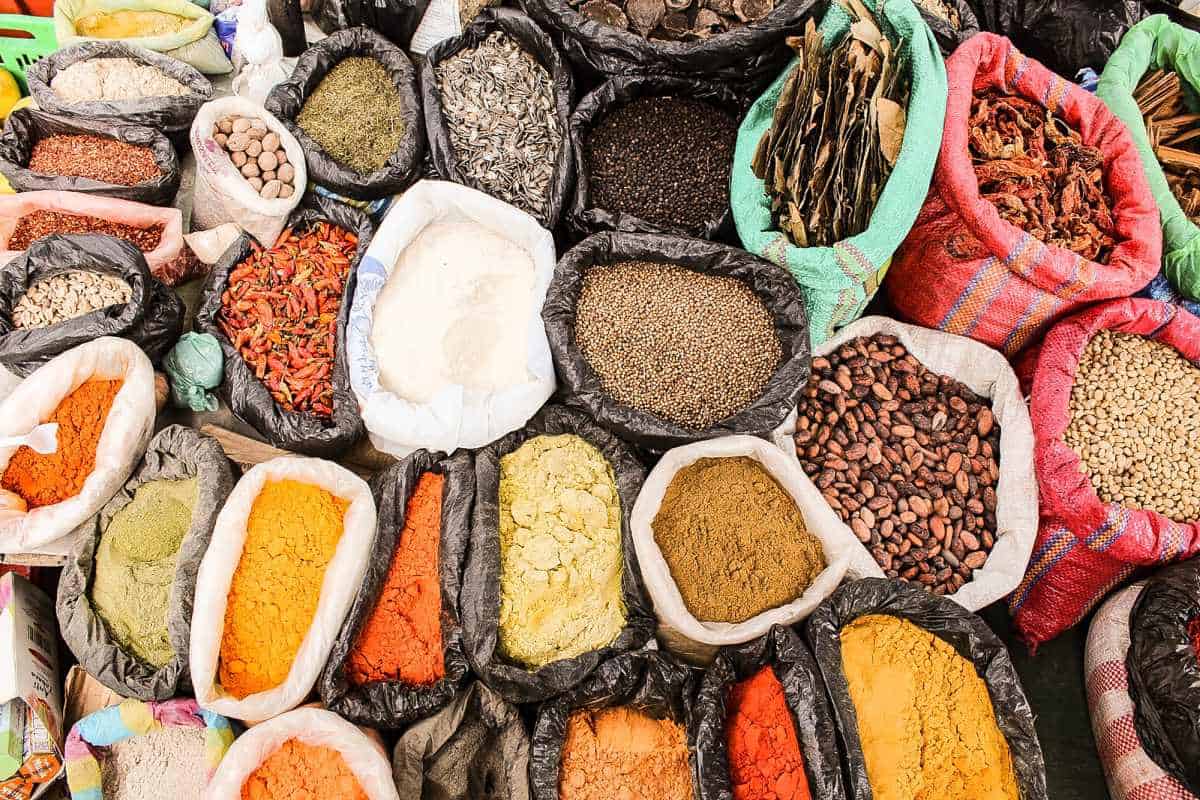
Today I'm introducing you to the world's number 1 in spices, flavorings, and herb blends. With a good 20 percent market share, McCormick & Company is almost 4x as big as number 2 in the industry. On top of that, the company is extremely independent of the economic cycle - in times of crisis, people will probably cut back on expensive steak, but not on spices. It also works closely with food manufacturers and fast-food restaurants. McCormick shows good taste when it comes to the dividend, too. It has paid one year after year since 1925!
The history and business model of McCormick & Company Inc.
We owe the creation of today's spice giant to Willoughby Madden McCormick. He was born on July 12, 1864, on a farm in Dover, Virginia, and grew up in comfortable circumstances. His parents made sure he got a proper education at private academies. At just 14, he moved to Texas to live with relatives and work at the local general store. That's also where he got the idea of building his own manufacturing business in the food and drugstore sector. In his early 20s, Willoughby moved to Baltimore, the city that was known back then for its strong, thriving distribution. Even though he originally wanted to launch his company in 1888, it took until September 1889 for everything to be ready. Financing difficulties may have been the reason. When he was later asked about his finances back then, he just smiled and said he had saved a little and borrowed a little more.
His first location consisted of a small room, a cellar, and a backyard that served as his storage space. Within the first few months, he already employed two women who went door to door with him to sell his products. Besides spice extracts, he also offered fruit syrups and juices. At that time, Willoughby was both manufacturer and salesman. He worked nonstop from early in the morning until late at night. And his ambition paid off. His company grew and expanded quickly. As early as 1890, he moved into a four-story building. He also kept expanding his product portfolio. For example, he also sold food coloring, household remedies, and lubricating oils. In 1896, McCormick made its first acquisition - the spice maker F. G. Emmett Spice Company from Philadelphia. All the production machinery was shipped to Baltimore, and the company went all in on the spice business. Around this time it also published its first McCormick cookbook. Willoughby's brother Roberdeau now also joined the company to support him.
Although a major fire in February 1904 completely destroyed the production facilities and business records of McCormick & Company, the company rose stronger from the ashes and used the opportunity to set itself up better. The two brothers succeeded at this, and the company was able to keep growing enormously. In 1912, Charles P. McCormick, Willoughby's nephew, worked a summer job as a shipping clerk at the company, until he joined the sales team full-time in 1919. He would go on to play an important role later. Business kept going brilliantly until 1930, when the Great Depression increasingly got the company into financial trouble. Wages had to be cut drastically and debt capital raised from New York investors. Willoughby suffered a heart attack, and 36-year-old Charles was to take his place.
Charles knew that successful companies could only grow together with their employees. With his new corporate philosophy, which involved employees much more, welcomed new ideas and improvements, and even rewarded them, he managed to get back into the black within just one year. He raised wages and at the same time cut the work week from 56 to 45 hours. From then on, the company developed outstandingly again. Today McCormick & Company is the undisputed number 1 in the spice industry. Besides pure spices, it also sells seasoning blends, sauces, mustard, ketchup, and marinades. There's something for every taste here ...
What can we expect from McCormick & Company in the future?
It's definitely a fact that the flavor giant McCormick & Company has managed to become extremely diversified over the years. With its broad product range, it literally caters to every taste and therefore easily shrugs off periods of economic weakness. If, for example, everyone became vegan, a company like Hormel Foods would have a serious problem. But no matter how we eat - surely nobody wants to do without spices, herbs, and flavors.
The younger generation in particular wants to be back in control of what goes into their food. So many people are cooking and seasoning for themselves again, which of course boosts McCormick & Company's sales. Besides products for consumers, it also serves a number of food manufacturers, such as PepsiCo or General Mills. To be more precise, it supplies the entire top 10 of the food industry. The top 10 of the world's largest fast-food chains, led by McDonald's and Yum! Brands, are also among McCormick & Company's business customers.
The company's products are sold in 150 countries and territories. Nevertheless, it generates most of its revenue in its home country, the US. To position itself better here and to be ready for the Asian market, it recently opened a new production plant in Thailand. To grow not only under its own steam, it's also always on the lookout for attractive takeover candidates. Most recently, it bought the food division of the consumer goods group Reckitt Benckiser for more than $4 billion. For this acquisition, the largest in the company's history to date, it took on a lot of debt again, but there's no question that the takeover was worth it.
Furthermore, McCormick & Company of course also employs its own research teams that are constantly looking for new flavors and creating new products. Just a few days ago, it launched the limited-edition hot sauce "Old Bay Hot Sauce," which actually sold out completely within 24 hours. But that's not all: it's also working closely with IBM to discover new flavors with the help of various artificial intelligence algorithms. I'm curious to see what's in store for us there in the future.
And what about the dividend?
McCormick & Company has been paying out profits to its shareholders since 1925. Since 1986, the dividend has even been raised year after year. So it can proudly count itself among the coveted Dividend Aristocrats. It currently pays a dividend yield of 1.4 percent. The average dividend growth rate over the last 10 years is a tasty 9.2 percent. And at 44.5 percent, the payout ratio is completely in the green zone.
Conclusion:
In the comments recently, a reader said he wanted more "boring companies." Et voilà - you'll hardly ever hear anything about McCormick & Company in the news or read about it in any magazines. And yet it has a working and extremely successful business model that also comes with wonderful prospects for the future. What more could you want as an investor?
Epilogue · November 1, 2026
What became of it
6 years and 8 months have passed since this article. If you had invested €1,000 on the day it was published, this is where you would be today:
Bitcoin came out ahead.
- McCormick & Company, incl. dividends:
- The same €1,000 in Bitcoin: